
Kapaleeshwarar Temple
About
Kapaleeshwarar Temple in Mylapore stands as one of the most important Shaivite temples in Chennai, the Chennai capital of Tamil Nadu in India, often identified through the Chennai country name in global searches. This historic shrine traces its origins to the 7th century and was rebuilt in the 16th century after Portuguese destruction. Dedicated to Lord Shiva in his Kapaleeshwarar form, meaning the lord of Kapala or skull, the temple remains central to the spiritual life of the Chennai city name once widely known as Chennai Madras. The towering 37 metre gopuram, richly layered with sculpted figures, dominates the skyline and draws devotees year round. The temple tank facing the main entrance and the surrounding traditional streets of Mylapore, filled with smaller shrines and ceremonial pathways, create a deeply immersive cultural setting. The annual Arubathimoovar festival in March attracts thousands of worshippers and transforms the neighbourhood into a vibrant religious celebration.

Highlights
What makes this place special

37-metre Gopuram
The eastern gopuram rises dramatically, covered from base to top with brightly painted stucco figures of gods, demons, and mythological episodes, representing one of the finest examples of Dravida temple architecture in Chennai.
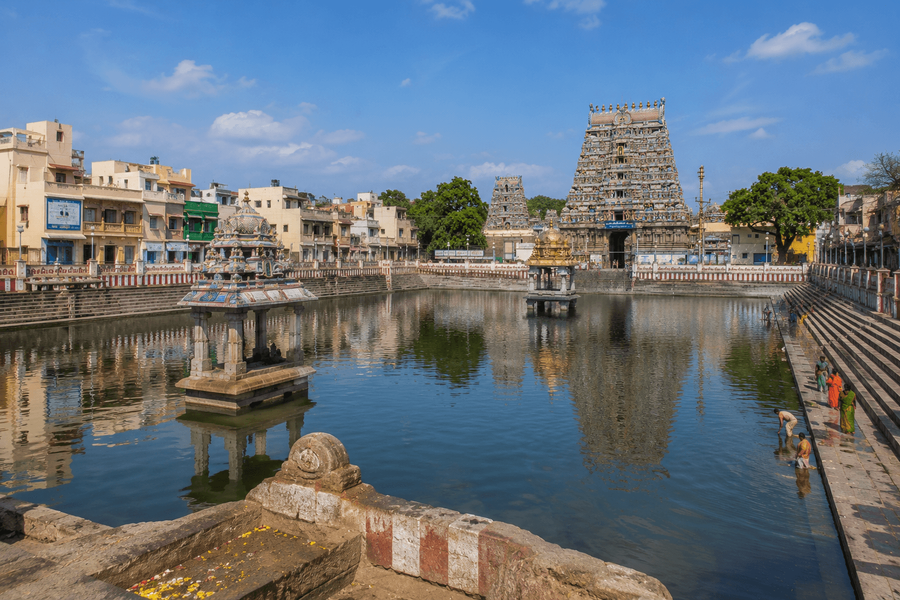
Temple Tank
The expansive temple tank sits encircled by stone steps and traditional Mylapore houses, forming a ceremonial space that has remained largely unchanged for centuries, easily accessible with clear Chennai directions through the old neighbourhood lanes.
Things to Know
- •Open 5 AM to 12 PM, 4 PM to 9:30 PM
- •Free entry
- •No photography inside
- •Remove footwear
- •Dress modestly