
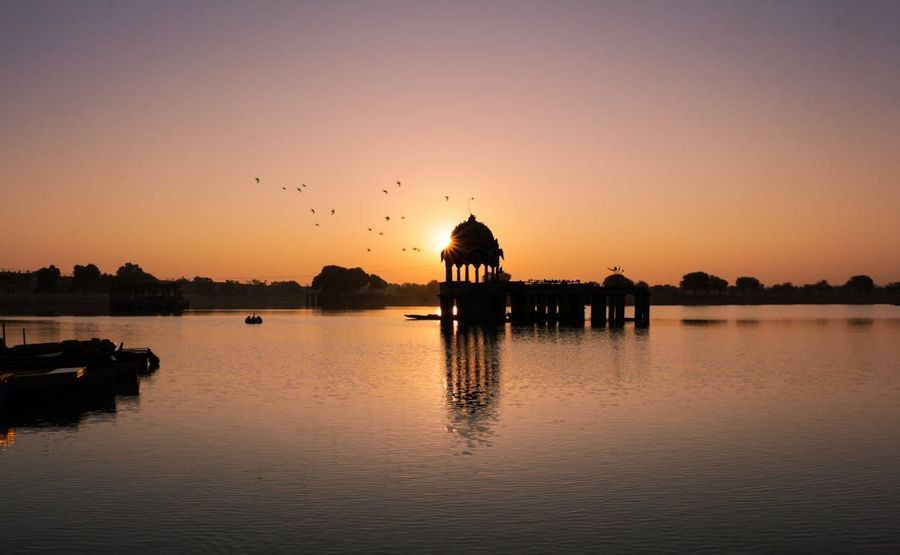
Golden light spills across Pushkar like warm saffron, and from Savitri Temple hill the entire town suddenly looks small, sacred, and perfectly placed in the desert. Sunset at Savitri Temple gives Pushkar one of its most memorable evening moments because it blends devotion with a view that feels cinematic. The climb or ropeway ride lifts visitors above the busy bazaars and lake ghats, and the noise fades into a distant hum. Up here, wind moves faster, prayer bells ring softly, and the horizon opens in wide layers of Aravalli ridges and sandy plains.
What makes it interesting is the contrast between the calm at the top and the energy below. Pushkar’s lanes can feel crowded, especially during peak season and fair time, but Savitri Temple hill offers space. The temple itself stays simple and devotional, dedicated to Goddess Savitri, and many visitors light a small prayer before settling near the viewpoints. As the sun drops, Pushkar Lake reflects faintly, rooftops turn amber, and the desert edge glows like it has been dusted with gold. It is the kind of place where couples sit quietly, photographers chase silhouettes, and solo travelers pause for longer than they planned.
One fun fact people love:
Many locals call this viewpoint the “best natural balcony” of Pushkar because it shows the full sacred layout of the town. On clear evenings, people can spot Pushkar Lake, the town’s temple spires, and the desert stretch in one sweeping frame.
Where in Pushkar is it?
Savitri Temple sits on Ratnagiri Hill, overlooking Pushkar town. The ropeway base station lies close to the hill route, and the summit area includes the temple and viewpoint zones above the town.
How to reach:
A private car or cab is the easiest option to reach the ropeway base or the hill road.
- From the main Pushkar market area, it usually takes about 10 to 20 minutes depending on traffic and season.
- You can reach the top either by the Savitri Temple Ropeway or by trekking up the hill trail. Avoid starting too late because ropeway operations and safe walking visibility matter on the way down.
Best time to visit:
October to March for cooler evenings and clearer skies. The sunset colors look richer in winter, and the wind feels crisp rather than punishing.
Best time of day:
Go either:
Late afternoon around sunset for golden light and dramatic views
or
Early morning for a quieter temple visit and softer town panoramas
Entry fee:
No entry ticket for the temple. Ropeway tickets apply if you choose the ropeway ride, and prices can vary by season.
Commute difficulty:
Easy if you take the ropeway. Moderate if you trek, since the trail includes steady uphill climbing and can feel tiring in heat.
Things nobody tells you about this place:
- Wind at the top can feel sharp, so carry a light jacket even if the day stayed warm.
- Sunset crowds build fast in peak season, so arrive earlier to get a comfortable viewing spot.
- The ropeway may stop during strong winds, so keep a backup plan for trekking or choose another sunset spot if weather looks unstable.
- The temple area requires respectful clothing and behavior, since it stays an active devotional site.
- Carry water because the climb and dry air dehydrate quickly, especially if you trek up.
- The best photos come just after the sun dips, when the sky turns pastel and town lights begin to flicker on.
- Avoid risky cliff-edge posing, because the hilltop has uneven rock sections and sudden drops.
- Pair this sunset with a post-view dinner near the lake, because Pushkar evenings feel most romantic when the day ends with warm food and slow ghatside walks.