
Bhutan
Bhutan is a Himalayan kingdom where ancient monasteries, dramatic mountain landscapes and deep rooted Buddhist traditions shape an unforgettable travel experience. Known for its Gross National Happiness philosophy, Bhutan offers pristine valleys, cliffside temples like Tiger’s Nest and vibrant festivals filled with masked dances. From the peaceful streets of Thimphu to the scenic beauty of Paro and Punakha, every journey feels spiritual and authentic. Ideal for mindful travellers, Bhutan tourism focuses on sustainability, culture and nature. Discover breathtaking trekking routes, traditional architecture and warm local hospitality when you visit Bhutan, a truly unique destination in the Himalayas.


Packages in Bhutan
Curated trips across Bhutan's top cities


Things to Do in Bhutan
Top activities and experiences across Bhutan

Tiger's Nest Monastery (Paro Taktsang)
Paro Taktsang, known as Tiger’s Lair, is the most photographed landmark in Paro and the most sacred Buddhist site in Bhutan. Clinging dramatically to a sheer cliff 900 metres above the valley floor, it is accessible only on foot and ranks among the top attractions in Paro. According to legend, Guru Padmasambhava, the 8th century saint who introduced Buddhism to Bhutan, flew here on the back of a tigress to subdue local spirits and meditated in a cave for three years, three months, three weeks, three days and three hours. The present monastery was completed in 1692 around that cave, destroyed by fire in 1998 and carefully rebuilt by 2005. The uphill walk, one of the most iconic things to do in Paro, takes two to three hours through pine and rhododendron forests before descending stone steps and crossing a footbridge to reach the monastery.

Punakha Dzong
Punakha Dzong, also known as the “Palace of Great Happiness,” stands majestically at the confluence of the Pho Chhu and Mo Chhu rivers. Built in 1637, it served as Bhutan’s capital and remains the winter residence of the central monastic body. The dzong’s whitewashed walls, red bands, and golden spires reflect beautifully in the surrounding waters. In spring, purple jacaranda blossoms frame the courtyard, creating a breathtaking contrast against the traditional Bhutanese architecture.

Buddha Dordenma
Perched atop Kuensel Phodrang hill, the 51-meter-tall Buddha Dordenma overlooks the entire Thimphu Valley. The golden statue symbolizes peace and prosperity and contains thousands of smaller Buddha statues inside. From this vantage point, the valley spreads out beneath layers of forested hills. The site feels expansive and serene, especially when prayer flags flutter in the wind and the sky is clear.

Khamsum Yulley Namgyal Chorten
Perched on a hill overlooking terraced rice fields, Khamsum Yulley Namgyal Chorten is a beautiful temple built to promote peace and harmony. The hike to the top takes you through farmland and gentle forest trails before revealing panoramic valley views. Unlike most Bhutanese temples, this chorten was constructed in modern times but follows ancient spiritual texts in its design and symbolism.

Rinpung Dzong
Rinpung Dzong, meaning Fortress on a Heap of Jewels, is the commanding 17th century fortress monastery that overlooks the Paro valley. This five storey complex of whitewashed walls, narrow windows and golden tiered roofs rises above the Paro Chu river and is counted among the top attractions in Paro. Built in 1644 by Zhabdrung Ngawang Namgyal, founder of Bhutan’s unified state, it serves both as a monastic residence for around 200 monks and as the administrative centre of the district. The inner courtyards are adorned with intricate Buddhist murals depicting the wheel of life, guardian kings and bodhisattvas in traditional style. Frequently highlighted in every Paro travel guide, the dzong also appeared in The Last Samurai and plays a central role in Paro tourism during the annual Paro Tshechu festival, when masked cham dances fill the main courtyard for five days each spring.
Tashichho Dzong
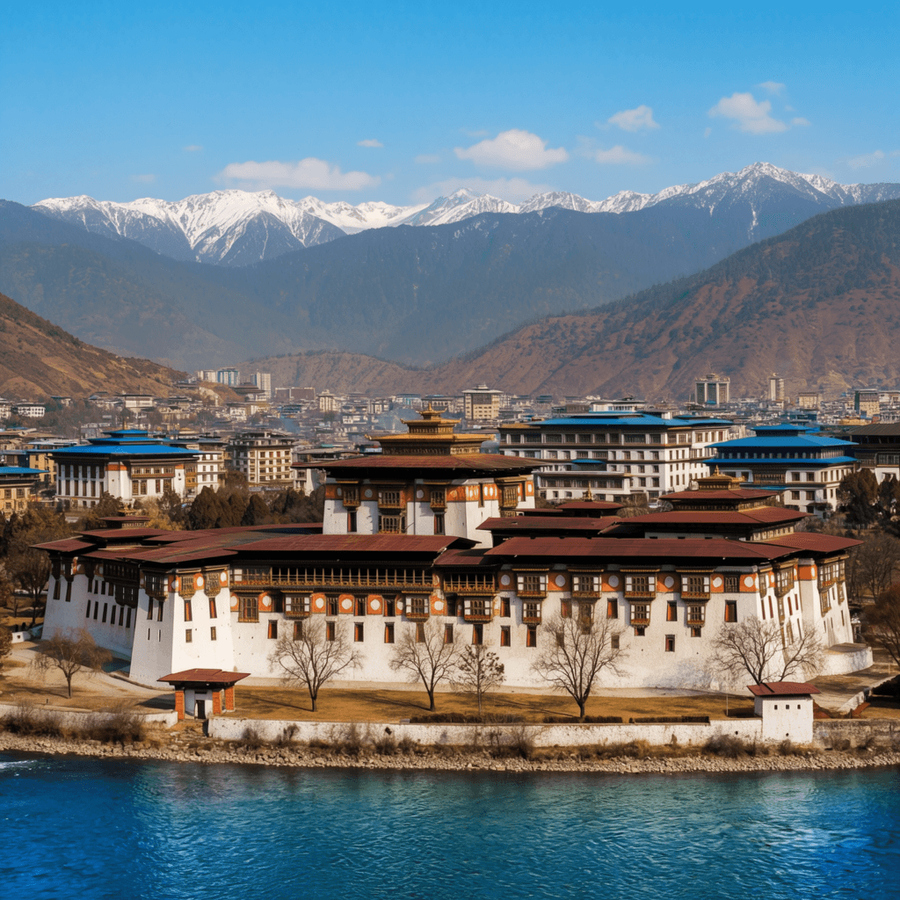
Tashichho Dzong stands along the Wang Chhu River as both the spiritual and political heart of Bhutan. Originally built in the 17th century, it now houses the King’s office and the central monastic body. Its towering white walls, red bands, and gilded roofs glow beautifully against the surrounding green hills. The large courtyard feels peaceful and ceremonial, especially during evening hours when monks move quietly between prayer halls.

National Memorial Chorten
Built in memory of Bhutan’s third king in 1974, the National Memorial Chorten serves as a daily place of worship for locals. Elderly Bhutanese walk clockwise around the stupa, spinning prayer wheels and chanting mantras. The white structure with its golden spire stands as a symbol of peace and devotion, offering visitors an authentic glimpse into everyday spiritual life.

Chimi Lhakhang (Fertility Temple)
Chimi Lhakhang, often called the Fertility Temple, is dedicated to Lama Drukpa Kunley, also known as the “Divine Madman.” The temple is associated with blessings for couples seeking children and is one of Bhutan’s most unique spiritual sites. The walk to the temple passes through peaceful rice paddies and small village homes decorated with colorful traditional motifs.