
Nepal
Nepal is a landlocked Himalayan country between India and China, known for its dramatic mountain landscapes in the Himalayas and Mount Everest. It is a top destination for Nepal tourism and Nepal travel guide experiences, especially trekking, spirituality, and adventure travel. Key highlights include Kathmandu’s ancient temples, Pokhara’s lakeside scenery, and famous high altitude trekking routes like Everest Base Camp and Annapurna, making it ideal for things to do in Nepal, places to visit in Nepal, and a memorable Nepal trip.
Nepal's must-visit cities


Packages in Nepal
Curated trips across Nepal's top cities


Things to Do in Nepal
Top activities and experiences across Nepal

Boudhanath Stupa
Boudhanath Stupa is one of the largest Buddhist stupas in the world and the spiritual heart of Tibetan Buddhism in the Kathmandu Valley, making it a central highlight of Kathmandu tourism and Kathmandu sightseeing. The 36 metre white dome, topped with a gilded spire painted with the all seeing eyes of the Buddha, creates one of the most iconic scenes in Kathmandu travel guide experiences. Built around the 5th century along the ancient trade route from Tibet, the stupa became a major settlement point for Tibetan refugees after 1959. Today, the surrounding circular courtyard is lined with over 50 monasteries, prayer wheel shops, and cafés, making it one of the most atmospheric places to visit in Kathmandu. Pilgrims continuously walk clockwise around the stupa performing the kora ritual, spinning prayer wheels in a meditative circuit. At dusk, with butter lamps glowing and chanting from nearby gompas, it becomes one of the most serene things to do in Kathmandu. The site is also a UNESCO World Heritage Site, adding to its importance in any Kathmandu trip or Kathmandu tour package.

Sarangkot Viewpoint
Sarangkot is where Pokhara wakes up early. Before sunrise, visitors gather along the ridge as the Annapurna and Dhaulagiri ranges slowly turn gold. On clear days, the peaks appear astonishingly close, dominating the horizon. By mid-morning, the same hill transforms into a paragliding launch site, with colorful wings lifting into the sky above the valley.

Bhaktapur Durbar Square
Bhaktapur Durbar Square is the cultural heart of the city, filled with palaces, temples, statues, and open courtyards that date back centuries. The 55-Window Palace stands prominently, showcasing intricate wood carvings that reflect the craftsmanship of the Malla era. The square is not staged for tourism. Locals still gather here, pigeons circle above temples, and children play across ancient stone steps.

Himalayan View Deck
The Himalayan View Deck is where visitors gather to admire the sweeping snow-capped panorama. On clear days, peaks such as Langtang, Ganesh Himal, and even distant Everest can be spotted. Benches and open terraces allow visitors to sit quietly and take in the vast horizon.

Phewa Lake
Phewa Lake is the calm heart of Pokhara. Early mornings bring still water reflecting snow peaks, while afternoons fill with colorful wooden boats drifting lazily across the surface. At the center of the lake stands Tal Barahi Temple, accessible only by boat. The lakeside promenade buzzes with cafés and travelers, but just a few meters offshore, everything quiets. Rowing slowly across the lake with the Annapurna range in view is one of Pokhara’s simplest and most memorable experiences.

Nyatapola Temple
Nyatapola Temple dominates Taumadhi Square with its five-tiered pagoda structure. Built in 1702, it is the tallest temple in Nepal and stands on a series of massive stone steps guarded by statues of mythical figures. Climbing the steep staircase offers a higher vantage point over the surrounding square and rooftops.

Chandragiri Cable Car
The Chandragiri Cable Car is the highlight of the experience. The enclosed gondolas glide smoothly above dense forest and hillside villages, offering a gradual reveal of the Kathmandu Valley below. On clear days, the Himalayan peaks emerge as the cabin ascends, building anticipation before reaching the summit. The ride itself is calm and steady, making it accessible even for first-time cable car passengers.

World Peace Pagoda
Perched on a hill across Phewa Lake, the World Peace Pagoda offers sweeping panoramic views of Pokhara, the lake, and the Himalayas. The white stupa stands in contrast to green hills and blue skies, symbolizing global peace and unity. The short uphill hike to reach it adds to the sense of quiet accomplishment. At the top, the entire valley spreads out below.

Bhaleshwor Mahadev Temple
Located at the summit, Bhaleshwor Mahadev Temple is dedicated to Lord Shiva. The temple’s peaceful courtyard and hilltop placement create a spiritual atmosphere enhanced by sweeping mountain views. Pilgrims and visitors alike gather here, especially during festivals like Maha Shivaratri.

Pashupatinath Temple
Pashupatinath Temple is the most sacred Hindu temple in Nepal and one of the most important Shiva shrines in South Asia, located on the banks of the Bagmati River. It is a key highlight of Kathmandu tourism and Kathmandu travel guide experiences, forming a vast spiritual complex with hundreds of shrines, ashrams, and ghats where Hindu cremations have taken place for over 1,500 years. The main pagoda temple is restricted to Hindu worshippers, but visitors can explore the outer courtyards and observe rituals from respectful viewpoints across the river, making it one of the most profound places to visit in Kathmandu. The site is also known for its resident sadhus (ascetics), especially during the Maha Shivaratri, when up to a million pilgrims gather, making it a major feature of Kathmandu sightseeing and spiritual things to do in Kathmandu. Behind the complex lies the Mrigasthali Deer Park, associated with Hindu mythology and Lord Shiva’s manifestation as a deer, adding a mythological layer to the experience. Visiting Kathmandu is often incomplete without witnessing Pashupatinath, as it represents the deep spiritual core of a Kathmandu trip and is frequently included in curated Kathmandu tour packages.
Davis Falls
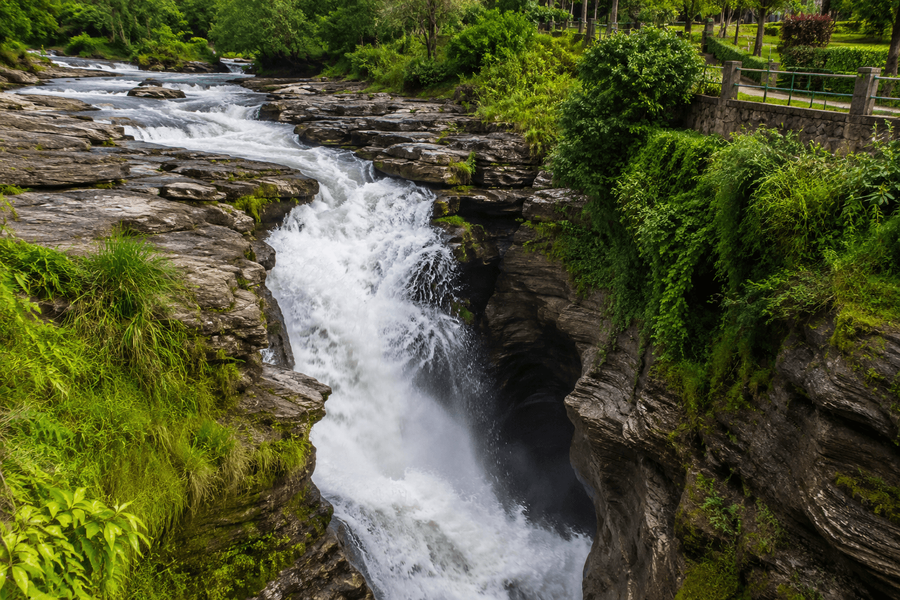
Davis Falls is one of Pokhara's most fascinating natural attractions, known for its powerful cascade, unusual underground flow, and dramatic rocky surroundings. Locally called Patale Chhango, meaning “underground waterfall,” the water disappears into a deep natural tunnel after rushing over the rocky edge, creating a unique sight unlike conventional waterfalls. The waterfall is fed by water flowing from Phewa Lake through the Pardi Khola stream. After plunging through the narrow gorge, the water travels beneath the ground through natural limestone passages. During the monsoon season, the increased water volume transforms Davis Falls into a powerful and thunderous cascade, filling the area with mist and the sound of rushing water. Visitors can observe the waterfall from secure viewing platforms surrounded by stone pathways, landscaped gardens, local souvenir stalls, and shaded seating areas. The dramatic rock formations and fast-moving water make it an excellent place for photography, especially when the waterfall is flowing strongly. Whether you are exploring Pokhara's natural attractions, visiting the nearby Gupteshwar Mahadev Cave, or enjoying a short sightseeing stop, Davis Falls offers an interesting combination of geological wonder, local history, and scenic beauty.

Pottery Square
Pottery Square showcases Bhaktapur’s enduring artisan traditions. Rows of clay pots dry in the sun while craftsmen shape new ones on spinning wheels. The earthy scent of clay fills the air, creating a sensory experience rooted in tradition. Visitors can observe or even try shaping pottery under guidance.