Jeep Safari in Chitwan National Park
About
A jeep safari in Chitwan National Park or its adjoining forest zones offers one of Nepal's most exciting wildlife experiences. Traveling in an open safari vehicle allows visitors to explore dense sal forests, sweeping grasslands, riverbanks, wetlands, and remote jungle trails that are difficult to reach on foot. Chitwan is especially famous for the greater one-horned rhinoceros, and a jeep safari offers an excellent opportunity to observe these magnificent animals grazing in open grasslands, resting near water sources, or moving through forest clearings. Travelers may also encounter spotted deer, sambar deer, wild boar, rhesus monkeys, langurs, crocodiles, and a remarkable variety of birdlife. The safari route may pass through the national park, buffer zones, or nearby community forests, depending on permits, weather conditions, and local regulations. Experienced naturalists and safari guides help identify animal tracks, alarm calls, nesting areas, and wildlife behavior, making the journey both thrilling and educational. Chitwan is also home to the elusive Bengal tiger. Although tiger sightings are possible, they are rare and can never be guaranteed. The real beauty of the safari lies in exploring the jungle, observing its diverse ecosystem, and experiencing the excitement of encountering wildlife in its natural environment. Whether you are a wildlife enthusiast, photographer, family traveler, or first-time safari visitor, a jeep safari in Chitwan offers an unforgettable introduction to Nepal's rich natural heritage.

Highlights
What makes this place special
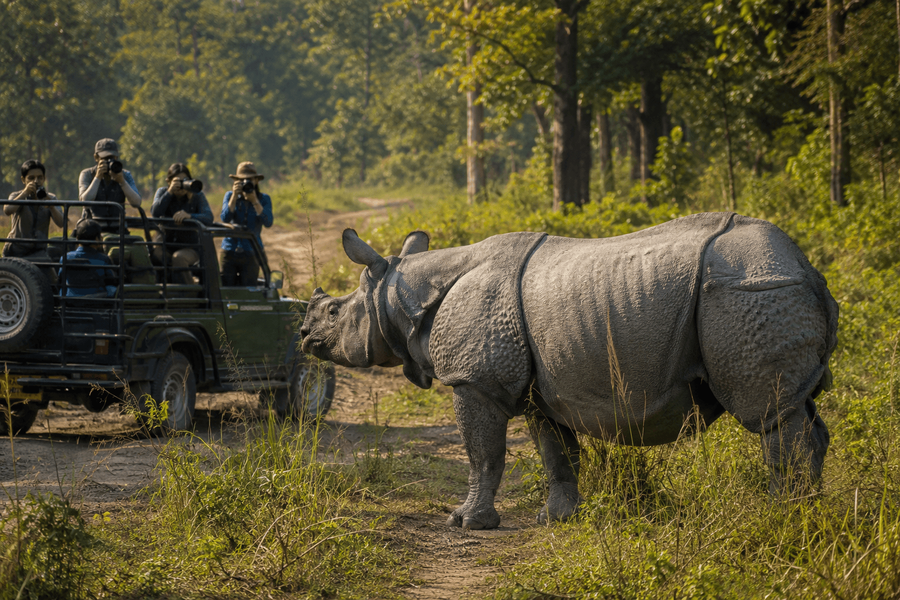
One-Horned Rhinoceros
Search for Chitwan's iconic greater one-horned rhinoceros as it moves through grasslands, forest clearings, wetlands, and riverbank habitats.

Diverse Wildlife Encounters
Look for spotted deer, sambar deer, wild boar, monkeys, crocodiles, reptiles, and other animals living within the Terai ecosystem.

Exceptional Birdwatching
Observe colorful kingfishers, hornbills, eagles, herons, storks, peacocks, and many other resident and migratory birds.

Jungle Exploration
Travel through dense sal forests, tall elephant grass, open plains, wetlands, and remote safari tracks accompanied by an experienced guide.
Things to Know
- •Jeep safaris may operate inside Chitwan National Park or in adjoining community forest zones.
- •Safari routes depend on park regulations, permits, weather, and road conditions.
- •Greater one-horned rhinoceros sightings are common, but never guaranteed.
- •Tiger sightings are possible but extremely rare.
- •Other wildlife may include deer, wild boar, monkeys, crocodiles, and reptiles.
- •Chitwan is home to hundreds of resident and migratory bird species.
- •Early morning and late afternoon are generally the best times for wildlife activity.
- •Wear neutral-colored clothing that blends with the natural surroundings.
- •Avoid bright colors, loud conversations, and sudden movements.
- •Carry binoculars for birdwatching and distant wildlife viewing.
- •A camera with a zoom lens is recommended for wildlife photography.
- •Do not use flash photography around animals.
- •Follow all instructions provided by the naturalist and driver.
- •Never leave the safari vehicle unless permitted by the guide.
- •Keep your hands and belongings inside the vehicle.
- •Carry drinking water, sunscreen, sunglasses, and a hat.
- •A light jacket may be useful during cooler morning safaris.
- •Dust can be common during the dry season, so carry a face covering if required.
- •Safari tracks may be uneven and bumpy.
- •Wildlife sightings depend on season, weather, animal movement, and luck.
- •Maintain silence when approaching wildlife.
- •Never feed, touch, or disturb animals.
- •Keep a safe distance from rhinoceros, crocodiles, and other wildlife.
- •Safari durations vary depending on the selected route and forest zone.
- •Children should remain seated and supervised throughout the safari.
- •Respect the forest by carrying back all waste.
- •Combine the safari with a canoe ride, birdwatching walk, or Tharu village experience.
- •The dry season generally offers better visibility through the grasslands.
- •The forest becomes especially lush and atmospheric after the monsoon.
- •Choose an authorized safari operator with an experienced naturalist.
- •Remember that every safari is different and wildlife encounters cannot be predicted.