
Wildlife Encounters With Wandering Albatross on Sub-Antarctic Islands
The wandering albatross has the largest wingspan of any bird on Earth, stretching over 3.5 meters across open ocean winds.
These birds spend most of their lives gliding above the Southern Ocean, barely flapping their wings for hours. For travelers visiting sub-Antarctic islands, spotting one soaring low over the waves or circling a nesting colony is often the moment that defines the entire expedition.
Where Travelers Can See Wandering Albatross Colonies
Sub-Antarctic islands scattered across the Southern Ocean host the world’s main breeding colonies. These places are remote, cold, and largely protected, which is exactly why the birds still thrive there.
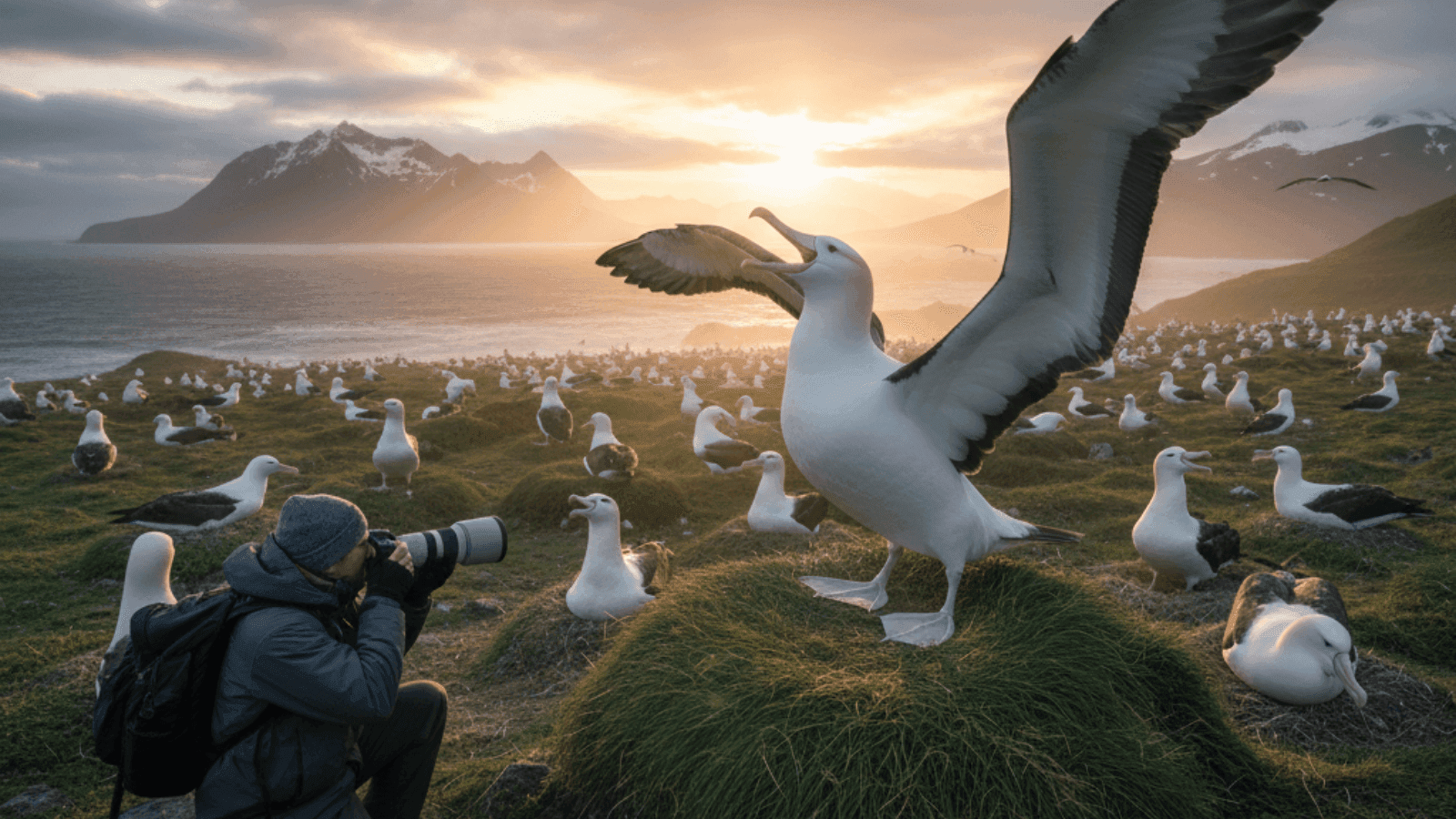
South Georgia Island is the most famous location for sightings. Large colonies sit on grassy slopes above the coastline, and expedition ships frequently organize Zodiac landings so visitors can observe the birds from designated viewing areas. Crozet Islands and the Prince Edward Islands are also key breeding grounds, though access is far more limited.
Macquarie Island, administered by Australia, supports a healthy wandering albatross population and offers structured wildlife landings during certain expedition voyages. The Auckland and Campbell Islands south of New Zealand also host colonies, though strict conservation rules control visitor access.
Wandering Albatross Breeding Season
Breeding cycles for wandering albatross are unusually long. A single chick takes nearly a full year to grow and leave the nest.
Eggs are typically laid in early December. The incubation period lasts about 11 weeks, shared by both parents taking long feeding trips across the Southern Ocean. Chicks hatch around late February or early March.
For travelers hoping to see fluffy chicks in the nest, February and March tend to offer the best opportunities. By late autumn in the southern hemisphere, young birds are already developing large wings and preparing for their first flight.

South Georgia Nesting Peak Months
South Georgia becomes one of the most reliable places to observe wandering albatross behavior during the breeding season.
The nesting peak generally runs from December through March. During this period, adults are regularly returning to nests with food, creating excellent viewing opportunities for visitors standing on approved walking paths.
Late February often provides the most activity. Chicks are visible, parents glide in from sea, and the colonies remain busy throughout the day as the birds swap incubation duties.
Sub-Antarctic Island Voyages
- South Georgia voyages typically run 16 days departing from Ushuaia in Argentina
- Macquarie Island expeditions often combine fly and cruise travel from Hobart, usually lasting around 12 days
- Auckland Islands wildlife charters from New Zealand run about 10 days with prices near NZD 12,000
- Crozet Islands trips sometimes depart from Reunion Island and can last close to 20 days with fares around EUR 18,000
Expedition Cruise Booking Tips
- Book at least 18 months ahead for popular wildlife itineraries
- Typical expedition prices for sub-Antarctic voyages start around USD 15,000
- Category 1 fitness is usually required because Zodiac landings involve stepping into moving boats
- Kayaking add-ons are common and often cost about USD 1,500 with limited availability
- Weather delays are normal in the Southern Ocean so adding a two or three day buffer helps with flights
Campbell Island Landing Rules
Campbell Island is one of the strictest wildlife reserves in the sub-Antarctic region. The island is part of New Zealand’s UNESCO World Heritage protected areas, and visitor numbers are carefully controlled.
Landings normally happen only on designated tracks. Guides brief visitors before going ashore and require people to maintain distance from nesting birds. Wandering albatross nests are large grassy mounds, often sitting in open terrain where disturbance can easily occur.
Visitors are also asked to disinfect boots before landing. Biosecurity rules prevent seeds or foreign organisms from entering the fragile ecosystem.
Watching Flight Displays on Coastal Cliffs
One of the most striking behaviors travelers notice is the courtship display between adult albatross.
Pairs perform elaborate rituals involving wing stretching, head movements, and bill clacking. These displays usually happen near nesting territories and can last several minutes. Observers often hear the clicking sounds before noticing the birds themselves.
Strong winds along coastal ridges help the birds launch easily into the air. From there they circle wide arcs above the cliffs before gliding out across the ocean.
If watching wandering albatross soar over remote islands sounds like your kind of trip, the right stay makes the experience even better. Find unique travel stays and curated properties at Neomaxer.









