
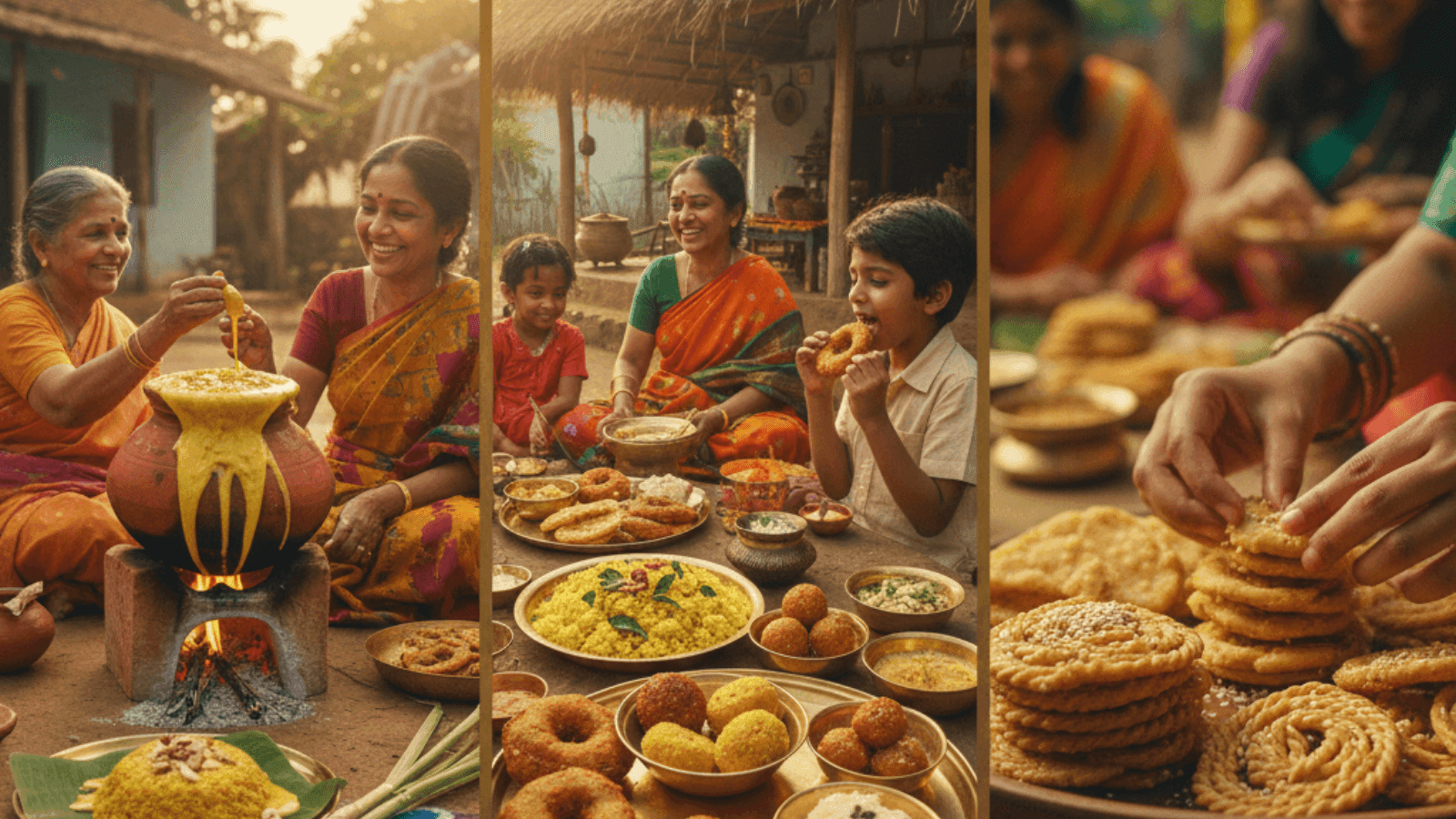
Why Every Sankranti Plate Looks Simple but Is Smart
A Sankranti plate never tries to impress. It sits quietly with rice, jaggery, sesame, and ghee, looking almost ordinary. Yet every item knows exactly what the body needs in January.
A Seasonal Body Needs Seasonal Food
January sits at an awkward point for the human body. Winter still lingers, digestion slows, joints feel stiff, immunity dips, and the body searches for warmth from the inside. Ayurveda recognises this phase as one where digestive fire, or agni, runs low. Heavy foods strain the system, while raw foods fail to provide enough heat.
Sankranti meals respond to this shift without explanation or theory. Warmth, digestibility, and nourishment guide every choice, shaped by centuries of observation rather than dietary trends.
Why Sesame Appears Everywhere
Sesame seeds show up across regions because they solve multiple winter problems at once.
Internal Heat and Joint Protection
Sesame contains natural oils that generate warmth in the body. These oils support joint lubrication, which matters during colder months when stiffness increases. Calcium and magnesium strengthen bones, while iron supports energy levels during seasonal fatigue.
Ayurvedic texts classify sesame as warming and grounding, making it ideal during Uttarayanam when the body transitions out of winter inertia.
Oil Before Food, Oil Before Bath
Sesame extends beyond the plate. Sesame oil massage before bathing helps skin retain moisture and improves circulation. The same oil consumed internally supports digestion and tissue repair. Food and self-care follow the same logic during Sankranti.
Jaggery as Fuel, Not Dessert
Jaggery replaces refined sugar for practical reasons rooted in digestion and mineral balance.
Sustained Energy Without Spikes
Unlike processed sugar, jaggery retains iron, potassium, and trace minerals from sugarcane. Energy releases slowly, keeping the body warm and active through winter mornings.

Digestive Support in Cold Weather
Jaggery stimulates digestive enzymes and helps cleanse the digestive tract. In winter, sluggish digestion benefits from this gentle activation. Traditional combinations pair jaggery with sesame or ghee to improve absorption and balance heaviness.
Rice and Lentils From the New Harvest
Freshly harvested rice and lentils anchor the Sankranti plate because the body accepts them easily during seasonal change.
Fresh Grain, Easier Digestion
New rice cooks softer and digests better than aged grain. It provides carbohydrates without burdening the stomach, especially when paired with ghee or lentils.
Protein That Warms and Strengthens
Black gram, used in dishes like garelu and pongali, builds muscle strength and supports bones. Its dense nutrition suits winter needs, especially for agricultural communities who rely on physical endurance.
Regional Dishes, Shared Logic
Each region cooks differently, but the thinking stays the same.
- Tamil Nadu - Sakkarai Pongal uses rice, moong dal, jaggery, and ghee for warmth, easy digestion, and steady energy. Cooking it outdoors under the sun ties the meal to seasonal light and Vitamin D.
- Andhra Pradesh & Telangana - Bellam Pongali fuels digestion and energy. Nuvvula Undalu support joints and calcium intake. Garelu add protein, while Pulihora keeps digestion active through tamarind and turmeric.
- Festive Snacks Across Regions - Ariselu and sakkinalu rely on rice, sesame, and jaggery, keeping even celebratory foods warm, grounding, and season-appropriate.
Vegetables That Match the Weather
Winter vegetables appear because they support immunity and gut health. Yams, pumpkin, brinjal, beans, and pigeon peas provide fibre, minerals, and grounding energy. Sugarcane, chewed slowly, encourages saliva production and digestion while symbolising continuity and abundance.
Seasonal eating reduces digestive strain and supports metabolic balance during climate transitions.
Sunlight as Part of the Diet
- Food alone does not complete the Sankranti equation; sunlight plays an equal role in seasonal health.
- Morning sun supports Vitamin D formation, immune strength, and bone health during winter.
- Kite flying brings the body outdoors during gentle sun hours, blending movement, breath, and warmth without effort.
- Terraces and open fields fill with shared activity, where seasonal winds and sunlight quietly turn celebration into preventive care.
Food as Medicine, Shared as Gratitude
Sankranti cooking begins with offerings to the Sun, Earth, and ancestors. Fresh harvest food enters the body only after gratitude.
The phrase “Annam Parabrahma Swaroopam” reflects this understanding. Food functions as nourishment, medicine, and social glue. Sharing prasadam strengthens community bonds while reinforcing mindful eating.
Traditional scholars often describe Sankranti meals as seasonal correction rather than celebration food. Sesame, jaggery, lentils, ghee, and rice work together to restore balance after winter stress. The Sankranti plate remains simple because complexity would interfere with digestion, warmth, and alignment with the Sun’s northward journey.
If you want to experience Sankranti the way it is lived, slow mornings, sunlit meals, and food cooked with the season, where you stay matters. Neomaxer curates stays that place you close to local rhythms and traditions.









