
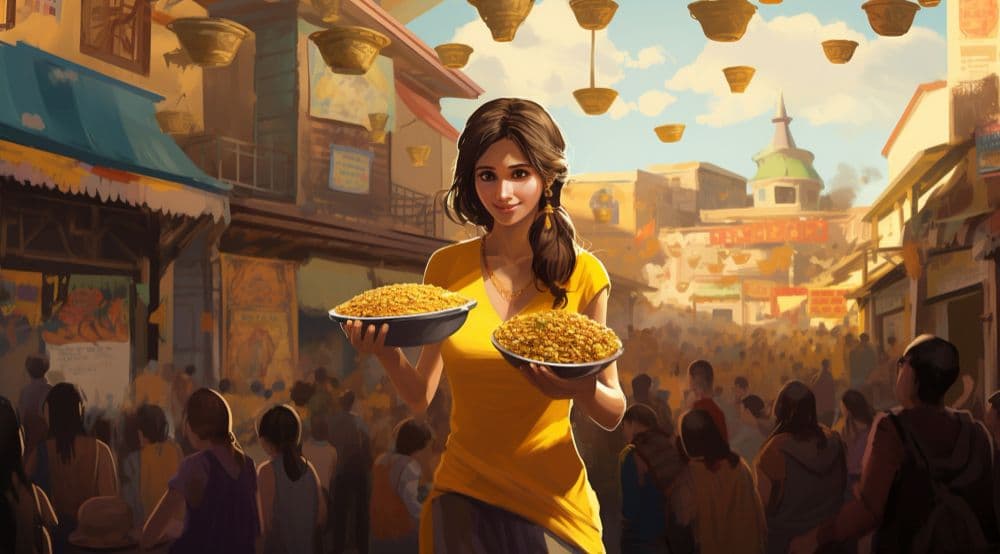
Sankranti and Pongal are drawing people back to villages, fields, and town squares, where the festivals were never just performances but lived, everyday routines. Travellers are beginning to notice the signs that locals read easily. Fresh kolam appearing before sunrise. Newly stacked hay in fields. The first batch of sugarcane arriving at tea shops. These moments feel like invitations to witness the festivals the way families have done for generations.
The Return of Seasonal Curiosity
Food is often the first reason people travel these days. Those who wonder how pongal is celebrated end up standing near open courtyards watching rice bubble over clay pots. It is not staged. It is simply what households do. The overflowing pot is treated like a conversation with the season, a signal that prosperity should spill forward.
Visitors arriving for Makar Sankranti 2026 notice something else. They realise pongal and makar sankranti are the same only in theme, not in texture. Tamil homes wait for that moment when the sun shifts northward. Karnataka and Andhra homes prepare ellu bella or ariselu. The variety becomes the reason to travel, because each region cooks a different answer to the same solar event.
Curiosity around taste has turned into a slow revival of traditional ingredients. Country sugar, hand-pounded rice, roasted sesame, and first-press jaggery return to kitchens, becoming the anchor for travellers who want to understand celebrations through what they eat rather than what they watch.
Traditions That Feel Local Even to Outsiders
People often ask makar sankranti festival is celebrated in which state and receive a long list instead of a single place. Maharashtra, Karnataka, Gujarat, Rajasthan, Tamil Nadu, Odisha, and Bihar. The answer forms a map rather than a sentence. Travellers follow this map, staying in smaller towns where rituals unfold without scripts.
In Kongu Nadu, women draw kolams that stretch across entire lanes. Each line is steady, each curve purposeful, and travellers watch these patterns form without interruption. In coastal Andhra, the day begins with doorways decorated using freshly cut banana stems. In Gujarat, rooftops fill with families preparing for kite battles, long before the sky turns bright enough to see paper silhouettes.
The belief systems differ, but the intent is the same. Use the day to welcome the movement of the sun. Use the home to honour the harvest. Use the land to thank ancestors and seasons. Those who travel during these festivals witness customs that continue because locals never paused them.

The Village First, Not the Festival First
More people now choose places where the celebration comes before the crowd. The link between Sankranti and Pongal becomes clearer in these smaller pockets. The rituals depend on the land, not on the number of visitors. Houses smell of freshly ground turmeric. Children help tie sugarcane bundles upright. Smoke from early morning fires hangs low over the fields until the sun pulls it upward. Thai Pongal tells this story most clearly. It remains a farmer’s festival, even in cities. Families with no fields still prepare the dish outdoors, facing east. The act feels like a way of remembering land they may no longer own. Travellers who arrive for pongal festival date 2026 enter these neighbourhoods quietly and realise that they are watching a tradition that has not changed because there was no reason for it to change.
Why This Moment Works as Travel
These festivals are tied to the sky. When the sun shifts northward, people shift too. It becomes the right time to move across states, visit relatives, and explore regions that express the season differently. The slow pace of ceremonies lets travellers blend into routines without disrupting them. The movement feels like something older returning. A way of travelling that listens before it observes. A way of understanding that festivals do not need stages. They only need mornings, open courtyards, and people who still know why they celebrate. Book your stay through Neomaxer to experience these roots of Sankranti and Pongal up close this holiday.









