
Why One Meal Is Enough to Plan an Entire Trip
A single dish now decides where people book flights. Food has shifted from being a supporting detail in travel plans to becoming the main reason for travel itself. Travellers are no longer building itineraries around landmarks and fitting meals in between. They are doing the opposite.
One Destination, One Plate
People no longer say they are “going to Naples.” They say they are going for pizza. Tokyo is booked for ramen counters, not skyline views. Bangkok trips are anchored around late-night street stalls that do not appear on maps. This shift is measurable across booking patterns, food tour growth, and travel psychology research. Food tourism is now defined as travel motivated primarily by food experiences, not as an add-on to sightseeing.
What Travellers Are Trying in India Right Now
Old Delhi for Mughlai kebabs and breakfast plates
Travellers head to Old Delhi specifically for dishes that cannot be separated from the place. Galouti kebabs, nihari, butter-naan breakfasts, and chole kulche are tied to early mornings, narrow lanes, and kitchens that have not changed their methods for decades. These meals are time-bound and location-bound. Eating them anywhere else feels incomplete.
Amritsar for kulcha, lassi, and langar meals
Amritsar pulls travellers who plan entire weekends around food. The Amritsari kulcha served with chole and onions is a draw on its own, as is the thick, slow-churned lassi served in steel tumblers. The langar at the Golden Temple is another reason people travel here, not as sightseeing, but as a shared meal that carries meaning beyond taste.
Lucknow for Awadhi slow cooking
Lucknow’s appeal lies in technique. Dum biryani sealed with dough, melt-in-the-mouth kebabs, and gravies built over hours attract travellers who care about how food is cooked, not just how it tastes. Many visitors plan food walks around Chowk and Aminabad with no other attractions on the list.
Ahmedabad for night food markets
Ahmedabad is known for its late-night food culture centred around Manek Chowk. Travellers plan evenings around pav bhaji, dosa stalls, fafda-jalebi, and ice gola counters that open after dark. The city shows how food alone can structure a day.
Hyderabad for biryani trails
Hyderabad’s biryani is not a single dish but a category. Travellers move between kitchens to compare spice levels, rice texture, and meat cuts. Entire trips revolve around tasting biryani at different spots, often skipping other plans.
Tamil Nadu for Chettinad cooking and regional meals
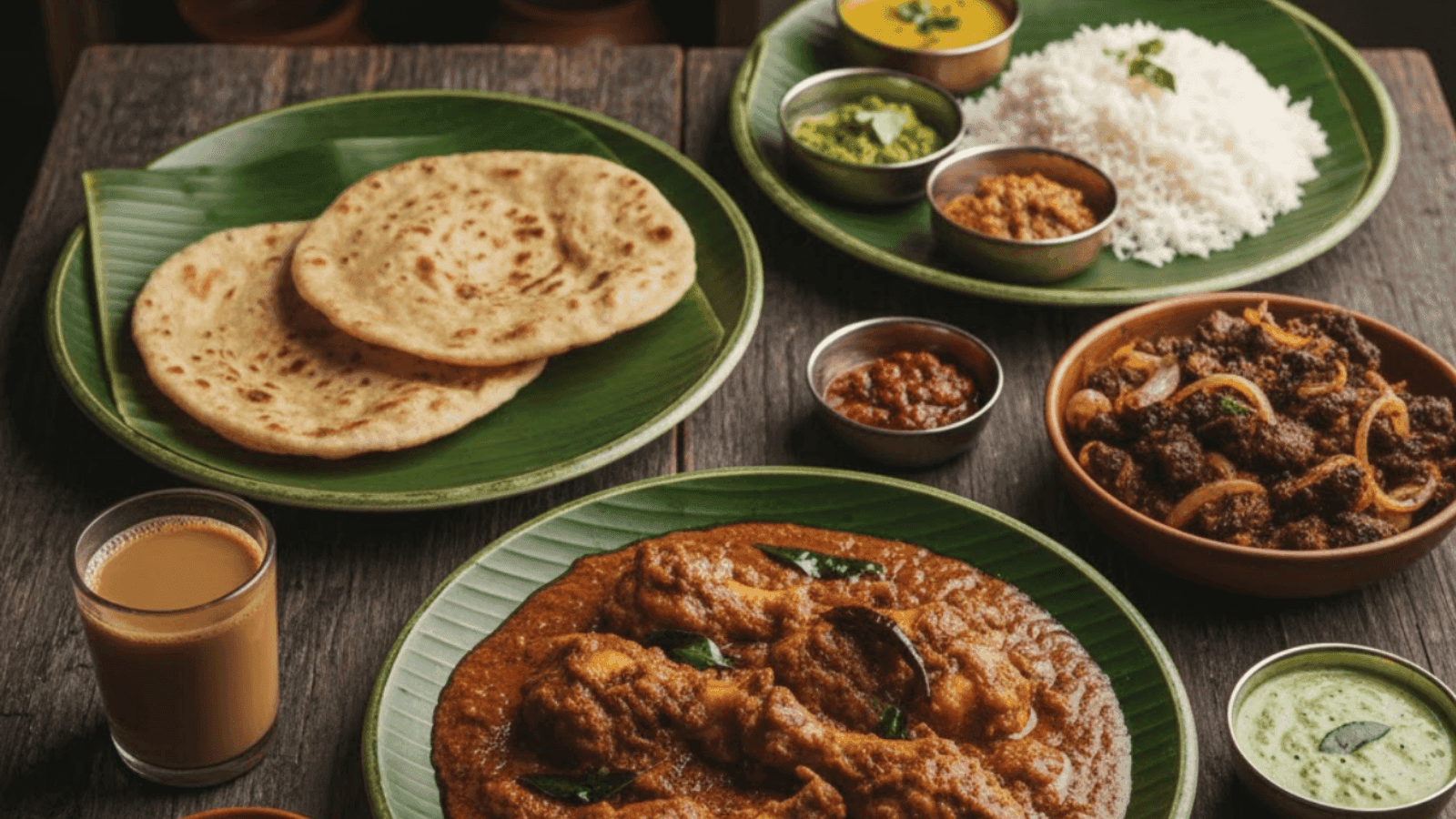
Tamil Nadu draws food travellers for Chettinad cuisine, known for bold spice blends, roasted masalas, and meat-forward dishes. Chettinad chicken, mutton chukka, pepper-heavy gravies, and dry curries bring travellers to places like Karaikudi and surrounding towns where these flavours originate. These dishes rely on technique and spice balance that rarely translate outside the region.
Karnataka for coastal food and legacy kitchens
Karnataka attracts travellers through its coastal belt as much as its cities. In Mangaluru and Udupi, seafood cooked with coconut, tamarind, and local masalas anchors food-first travel. Dishes like neer dosa with chicken or fish curry, kori rotti, and ghee-based vegetarian meals make travellers move across districts purely to eat.
Kerala for fresh seafood, beef dishes, and parotta culture
Kerala pulls travellers for food tied closely to geography. Fresh seafood cooked with coconut, kokum, and spices dominates the coast, while inland kitchens are known for beef fry, beef roast, and flaky Malabar parottas served with spicy gravies. Meals here are often planned around lunch hours, toddy shops, and small family-run kitchens rather than formal restaurants.
Where Travellers Are Flying Abroad for Food Alone
Tokyo for sushi counters and ramen shops

Bangkok for street food circuits
Bangkok remains one of the strongest examples of food-led travel. Travellers arrive with lists of dishes rather than places: pad Thai from one stall, mango sticky rice from another, boat noodles from a specific lane. Meals dictate movement across the city.
Penang for multi-cultural street food
Penang draws travellers interested in layered food histories. Char kway teow, asam laksa, and nasi kandar reflect Malay, Chinese, and Indian influences in one place. Food trails here replace sightseeing entirely for many visitors.
Naples for pizza
Naples is booked for pizza alone by many travellers. The goal is to eat pizza made with local tomatoes, mozzarella, and methods that only exist there. Everything else becomes optional.
Lyon for traditional French cooking
Lyon attracts travellers who want classic French food in its everyday form. Bouchons serving sausages, quenelles, and slow-cooked meats bring visitors who want to understand French food culture outside of fine dining.
Why Food Trips Are Replacing Attraction-Based Travel
- Attractions can be photographed and replicated, but a meal changes with the cook, season, and place, making it worth travelling for once.
- Seasonal dishes, morning-only breakfasts, and limited-seat kitchens create urgency and push travellers to plan trips around food.
- Eating creates direct contact with a place, where culture is understood instantly through flavour, routine, and setting.
What Makes Food Tourism Keep Growing
- Food spending reaches local cooks, vendors, farmers, and suppliers instead of large tourism systems.
- Short videos and first-hand food stories influence travel decisions faster than attraction lists.
- Travellers recognise authenticity when food is crowded, imperfect, and made for locals rather than tourists.
- A single dish often reveals more about climate, history, and daily life than multiple sightseeing stops.
Planning travel around food means staying close to the places you want to eat, not ticking off distant attractions. Neomaxer helps travellers find stays that fit slower, food-first journeys, so meals shape the trip, not the other way around.









