
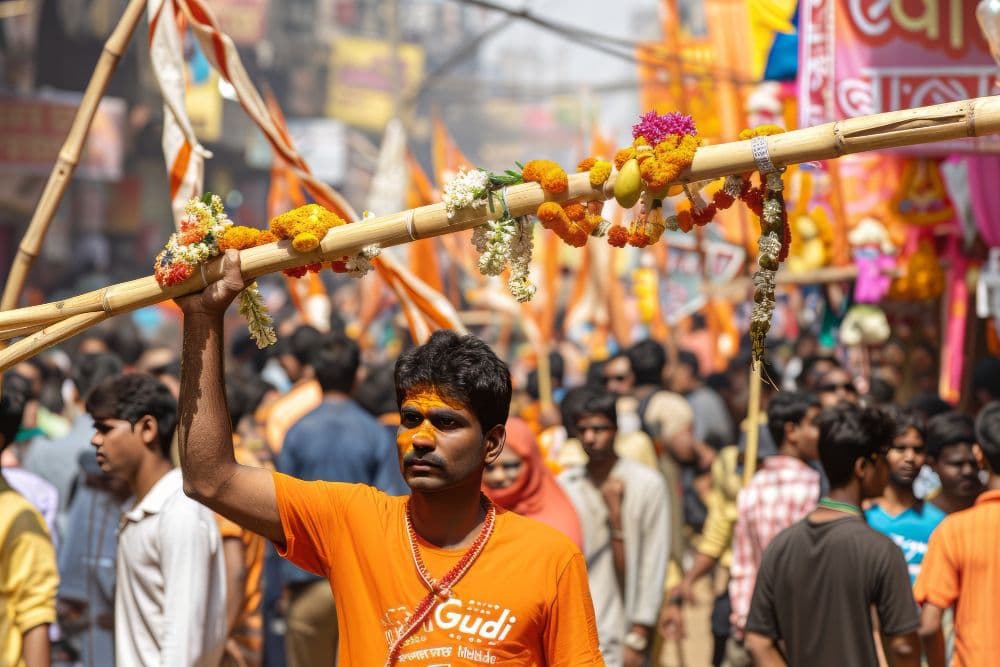
The village roads in the Puri district do not sleep in March. They vibrate with the sound of brass gongs and conch shells. This is the Odisha Dola Jatra, a pilgrimage of gods, not men. It is not a street party thrown for tourists. It is a six-day mandate where Lord Jagannath leaves the temple to walk among the mortals.
The Procession of the Gods
In other regions, the festival is about people throwing colour at people. Here, the focus is on the "Vimana." These are wooden palanquins, heavy with decoration and deity idols. The bearers do not walk; they dance. They carry the weight of Radha and Krishna on their shoulders from door to door.
This is not a suggestion of faith; it is a requirement of the calendar. The Dola Purnima in Odia tradition dictates that the gods must visit their devotees. You do not go to the temple. The temple comes to your courtyard.
The Regional Divide
If you ask Dol Jatra festival which state keeps the tradition rawest, the answer lies in the coastal villages of Odisha. The approach differs sharply from its neighbors.
- In Dol Jatra West Bengal, the focus is often on the poetry of Tagore and the cultural songs.
- In Dol Jatra Assam, the celebrations center around the Satras and religious discourse.
- The Dol Jatra festival in Manipur merges with Yaoshang, spanning five days of sports and dance.
But in Odisha, the event is physical. It is about the sweat of the bearers and the heat of the "Melana."

The Gathering of Giants
The climax is not the throwing of colours. It is the assembly. On the final day, palanquins from different villages converge on a large open field. This is the "Melana."
It looks like a conference of the divine. The Dola Purnima 2026 Odisha celebrations will see hundreds of these palanquins facing each other. The air fills with the smoke of fireworks and incense. The noise is absolute.
The Burning Straw
The ritual ends with fire. A small hut of straw is burned to symbolize the destruction of Holika. This is "Medha Poda." Farmers watch the direction of the smoke. They do not see pollution. They see a forecast for the coming harvest.
The Timing of the Tide
The schedule is non-negotiable. The Dol Purnima 2026 aligns strictly with the full moon in the month of Phalguna. The Dol Jatra 2026 begins on the tenth day of the bright fortnight.
For six days, the routine of the village breaks. The "Abira" (dry colour) is offered to the deity first. The people only take what is left over.
Surviving the Tradition
The sun in Odisha during March is unforgiving. The crowds at the Melana grounds are dense and move with a singular purpose. There are no barricades. You stand shoulder to shoulder with devotees waiting for the "Holi" almanac to be read aloud.
The fatigue hits you only when the drums stop. The dust of the "Abira" settles deep into your clothes. You need a place where the chanting does not follow you. Recovery is essential. Smart travelers do not leave their rest to chance. When you book your stay via Neomaxer, you secure the silence needed to process the intensity of the Odisha Dola Jatra.









