
What Travelers Remember Most About Mechuka’s Landscape
People usually realise they like Mechuka while doing nothing in particular. Standing near a field, watching someone walk past, waiting for tea to arrive. The place doesn’t ask for attention, it just keeps it.
The Mechuka Valley
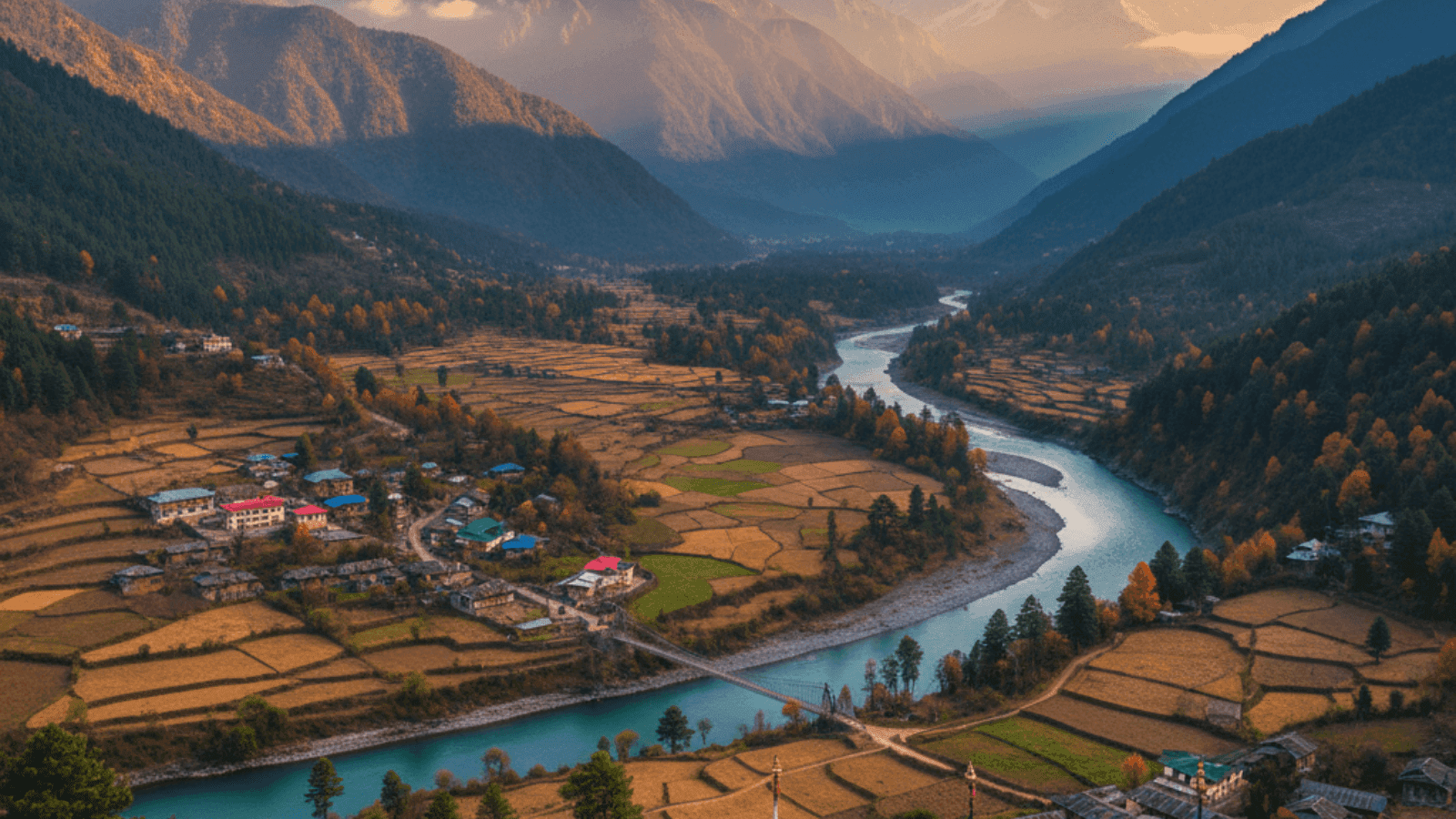
Mechuka sits wide and low compared to most Himalayan destinations. The mountains are present but not overpowering, which gives the valley a feeling of openness that surprises first-time visitors. Grasslands stretch across the basin, broken by clusters of homes, grazing cattle, and the slow curve of the river.
What stands out is how uncluttered the land feels. There are no dense forests pressing in, no dramatic cliffs demanding attention. The landscape allows you to look far ahead, and that sense of space is what many travellers remember most clearly.
Walking Routes Around Mechuka
Short Walks Near Villages
Footpaths run between villages, fields, and monasteries, often without any clear start or end point. These routes are used daily by locals, which makes them feel natural rather than planned. Travellers often walk for an hour or two without realising how much ground they’ve covered.
You’re likely to pass people carrying supplies, tending to animals, or just heading home. Nothing here feels staged.
Open Grassland Trails
Beyond the villages, open grassland trails stretch out toward the hills. These paths are less defined and change with the seasons. During spring and early summer, the grass grows tall and softens the landscape even further.
The Siang River and Nearby Streams
The Siang River runs quietly through the valley, wide but calm in this stretch. It doesn’t dominate the scenery, but it’s always nearby. Smaller streams branch off into fields and settlements, shaping how villages are placed and how people move through the land.
Travellers often sit by the river without planning to. It becomes part of the day rather than an activity to schedule.
Villages You’ll Pass Through
Memba Community Settlements
The Memba community forms the cultural backbone of the region. Their villages are built with space between homes, leaving room for fields, livestock, and walking paths. The layout feels intentional but unforced.
Houses and Farmlands
Homes are low-rise and practical, often surrounded by small plots of farmland. Fences are minimal, and boundaries feel informal. Crops, grazing areas, and homes blend into one another without sharp divisions.

Monasteries and Spiritual Places
Samten Yongcha Monastery
Located on a gentle rise overlooking the valley, Samten Yongcha Monastery feels calm rather than imposing. The walk up is gradual, and the view expands slowly as you climb.
Prayer flags line the path, and the monastery remains quiet even when visitors are present. People tend to linger without speaking much.
Small Shrines Along Village Paths
Smaller shrines and prayer wheels appear along walking routes, near streams, or at the edge of fields. They don’t interrupt movement. You notice them while passing, often after you’ve already gone by. These moments tend to stick with travellers more than larger landmarks.
Local Food You’ll Find Here
Meals in Mechuka reflect availability rather than variety. Rice is central, paired with seasonal vegetables, local greens, and mild preparations of meat. Fermented bamboo shoots and simple stews are common. Food arrives when it’s ready, not quickly. Many travellers remember how unhurried meals feel, especially after days of travel.
Weather and Seasons in Mechuka
Best Months to Visit
- October to November for clear skies and stable road conditions
- March to April for mild temperatures and fresh growth
- May before heavier monsoon rains begin
How to Reach Mechuka
Reaching Mechuka takes time. Most travellers come via road through Upper Siang district, passing long stretches without towns or services. Shared sumos and private vehicles are the most common options. Mobile networks weaken as you approach, and often disappear entirely by the time you arrive.
Things to Know Before You Go
Electricity can be irregular, especially at night. Cash is more reliable than digital payments. Shops close early, and mornings start early as well. Planning loosely works better than sticking to schedules. Silence is common here, and it takes a day or two to stop filling it.
What Travelers Usually Talk About After Leaving
People rarely describe Mechuka as dramatic. They talk about how the valley felt open, how walking became part of the day, how the landscape didn’t demand attention but stayed with them anyway. A stretch of grassland under shifting light. A quiet village path. The sound of water nearby.
If Mechuka feels like the kind of place you’d want to stay close to rather than rush through, Neomaxer helps you do exactly that. The stays are set up for travelers who value space, comfort, and a natural rhythm that fits places like this.









