
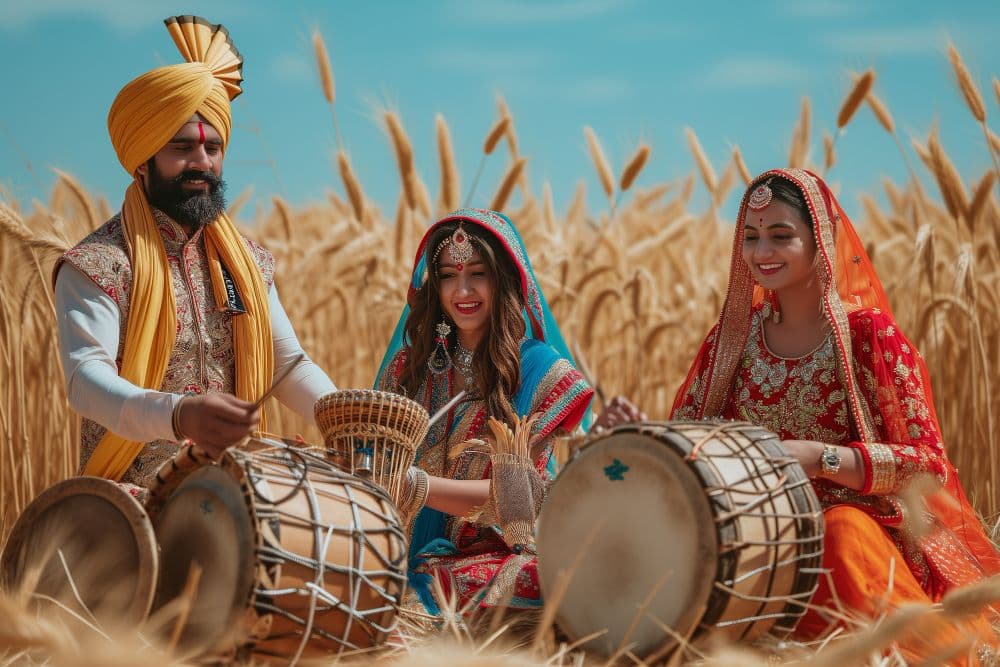
Farmers in Punjab call the Baisakhi festival the day the earth finally exhales after months of holding its breath. Wheat turns gold. Fields feel warm again. Villages prepare without announcements or countdowns because the rhythm is older than reminders. The Baisakhi festival is the harvest that proves the season kept its promise, and when you travel for this moment instead of a single event, the experience settles into you slowly.
When Dates Matter Less Than Signs
Locals never explain the Baisakhi festival date the way guidebooks do. They talk about clouds that clear at the right time, the smell of drying grain, the sound of dhol rehearsals drifting from courtyards. Elders know exactly that Baisakhi is the harvest festival of wheat, not by looking at calendars but by reading the soil and wind.
Travelers who stay longer begin to sense this shift. You start to notice how streets brighten before decorations appear, how rooftops are swept at dawn, how families keep extra plates ready for visitors because this is the season of shared abundance.
Food That Belongs to the Field
Understanding Baisakhi festival food means seeing where it grows. At first, dishes look simple. Sarson ka saag, fresh roti, sweet lassi. Then you realize each plate mirrors the land in April. Meals are heavier at midday, lighter at night. Kitchens stay open to anyone who walks in, especially during langar when volunteers move in practiced silence. No one explains the system because it does not need explaining.
The routine has existed for generations. When you travel for the festival instead of an event, you end up eating more slowly, noticing textures, and learning why flavors shift slightly from village to village.

Where History Sits in the Middle of Daily Life
Locals never separate the routine from the Baisakhi festival history. Gurudwaras fill early, not because tourists arrive but because devotion begins before first light. The stories of 1699, the Khalsa, and the gathering in Anandpur Sahib are told as if they happened yesterday. Children repeat the names. Adults retell the meanings.
Travelers who spend more time here start to understand why the Baisakhi festival in India carries both celebration and solemnity. Crowds move with intention. Processions stay orderly, even when the lanes narrow. These are not performances. These are lived traditions.
Staying Changes What You See
Short trips catch colors and music. Longer stays catch details. You notice how shopkeepers cover goods in the afternoon sun. You see women arranging rangoli without stepping back to admire it, as if beauty is simply part of the day. You hear rehearsals for folk performances that are not meant for stages but for courtyards.
The Baisakhi festival in Punjabi communities builds connections slowly. You end up talking to farmers who invite you to walk along the edge of their fields just to feel the warmth rising from the soil.
Travelling for the Moment Instead of the Event
The Baisakhi festival 2026 will gather crowds, yet the quietest experiences stay with you. A child shares jaggery because it is considered good luck. A shopkeeper offering water without being asked. A family explaining why the first cut of the harvest is always shared.
When you choose to travel for the feeling rather than the schedule, you begin to understand why this festival shapes identity as much as celebration. And somewhere between these moments, you start planning where to stay next time, checking nearby stays on Neomaxer not for convenience but to remain close to the fields that make the Baisakhi festival what it is.









