
Wedding Destinations Beyond Palaces and Beaches
Hill towns where time naturally slows down
Coorg, Karnataka
Coorg weddings work because the landscape does most of the work. Coffee plantations, misty mornings, and narrow estate roads keep guest movement slow and intentional. Venues here tend to be bungalow-style properties or plantation stays, which naturally limit crowd size and reduce logistical chaos. Weather remains comfortable for most of the year, especially between October and March, making outdoor mandaps and long evening events practical.
- Best season: October to March, with mild days and cool evenings
- Travel access: Fly to Mangalore or Bengaluru, then a scenic road journey
- Works well for: Intimate weddings with outdoor ceremonies and relaxed guest schedules
Valparai, Tamil Nadu
Valparai does not feel designed for weddings, which is precisely why it works. Tea estates stretch into rainforest edges, and movement here follows forest rules rather than event schedules. Venues are usually heritage bungalows or small hill resorts with strict noise regulations, which keeps celebrations intimate.
- Best season: September to February, when rain eases and visibility improves
- Travel access: Road travel from Coimbatore via ghat roads
- Works well for: Small, slow-paced weddings with nature-first settings
Landscapes that replace décor entirely
Spiti Valley, Himachal Pradesh
Spiti weddings are not about convenience. They are about meaning. At over 12,000 feet, the region demands planning, acclimatization, and smaller guest lists. Ceremonies often take place near monasteries or against open mountain backdrops where silence carries weight.
- Best season: June to September, when roads are open and weather is stable
- Travel access: Long road journeys via Manali or Shimla
- Works well for: Symbolic ceremonies with limited guests
Rann of Kutch, Gujarat
The white desert changes personality with light. Morning weddings feel stark and spiritual, while evening ceremonies turn cinematic as the salt reflects color. Temporary luxury setups make it possible to host events without permanent structures, allowing the landscape to remain untouched.
- Best season: November to February, avoiding extreme heat
- Travel access: Fly or train to Bhuj, followed by road travel
- Works well for: Open-air ceremonies and culturally rooted celebrations
Water without the beach crowd
Alleppey Backwaters, Kerala
Backwater weddings avoid the spectacle of beaches while keeping water central. Houseboat ceremonies, canal-side resorts, and coconut-lined properties offer privacy that coastal venues rarely provide. Movement happens by boat, which automatically spaces out events and arrivals.
- Best season: October to March, outside peak monsoon
- Travel access: Train or road from Kochi
- Works well for: Multi-day weddings with private guest movement
Kumarakom, Kerala
Kumarakom is calmer and more contained than Alleppey. Bird sanctuaries, narrow lake stretches, and low-rise resorts make it suitable for multi-day weddings where guests stay in one place. Venues blend indoor halls with open lawns facing water, allowing flexibility during weather changes.
- Best season: November to February, with cooler evenings
- Travel access: Road transfer from Kochi airport
- Works well for: Resort-based weddings with mixed indoor and outdoor events
Cultural towns that feel lived in

Karaikudi, Tamil Nadu
Chettinad weddings unfold inside architecture that was built for ceremonies. Courtyard mansions, Athangudi tiles, and lime-plastered walls offer scale without extravagance. These homes were designed for large gatherings, which reduces the need for external décor or temporary structures.
- Best season: November to February, avoiding summer heat
- Travel access: Road or rail via Karaikudi
- Works well for: Traditional weddings with large family gatherings
Hampi, Karnataka
Hampi carries visual weight without feeling performative. Temple ruins, riverbanks, and boulder-strewn landscapes create a sense of time layered over centuries. Wedding venues here tend to be boutique resorts or heritage-adjacent properties that respect local restrictions.
- Best season: October to February, with pleasant daytime temperatures
- Travel access: Road from Hospet or Hubli
- Works well for: Heritage-adjacent weddings with early-evening events
International destinations with manageable travel
Georgia (Tbilisi and Kazbegi)
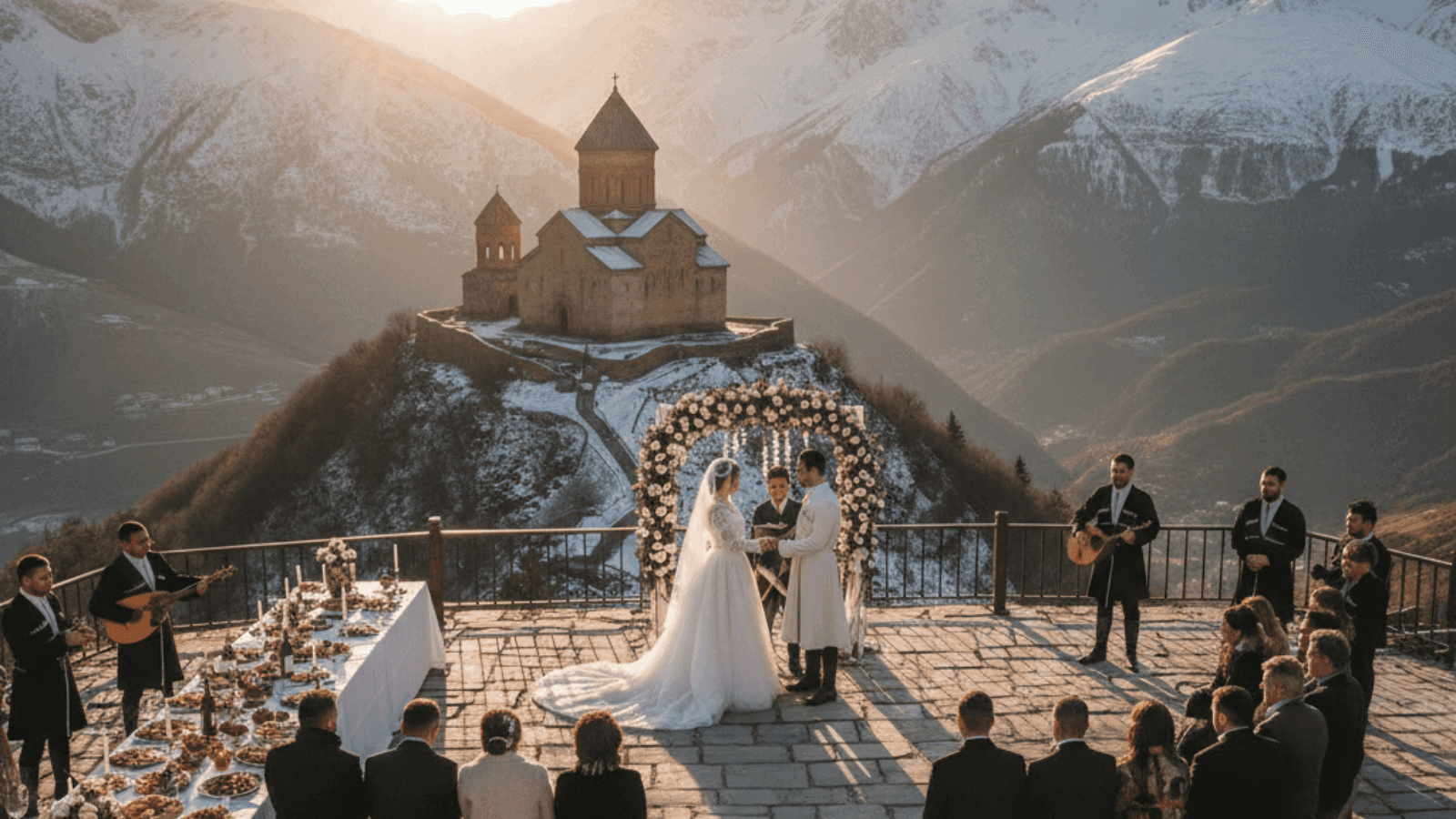
Georgia works for destination weddings because it balances affordability with character. Tbilisi offers historic churches, courtyards, and old-town hotels, while Kazbegi adds dramatic mountain scenery within a few hours’ drive.
- Best season: May to September, especially for mountain regions
- Travel access: Direct international flights to Tbilisi
- Works well for: Mid-sized international weddings with food-focused celebrations
Sri Lanka hill country
Kandy, Nuwara Eliya, and Ella offer colonial-era properties, tea estates, and cool weather that suits daytime ceremonies. Distances remain short, allowing guests to move without exhaustion. Venues often include gardens, verandas, and heritage halls that adapt easily to wedding layouts.
- Best season: January to April, outside monsoon patterns
- Travel access: Road or train from Colombo
- Works well for: Daytime ceremonies with scenic backdrops
Desert landscapes without palace framing
Jaisalmer outskirts
Moving slightly outside the fort changes the entire experience. Desert camps and low-rise resorts provide open skies and quiet evenings without palace formalities. Ceremonies under the stars feel expansive rather than staged.
- Best season: October to February, when desert temperatures are manageable
- Travel access: Train or flight to Jaisalmer, followed by short road transfers
- Works well for: Evening ceremonies and starlit celebrations
Oman desert resorts
Oman offers controlled luxury without excess. Desert resorts near Wahiba Sands combine traditional architecture with modern comfort. Weddings here tend to be small, intentional, and carefully paced.
- Best season: October to March, avoiding peak heat
- Travel access: International flights to Muscat, then road transfers
- Works well for: Intimate international weddings with controlled guest lists
If you want wedding destinations that feel calm, thoughtful, and easy to stay in, Neomaxer curates spaces that match the pace of the place.









