
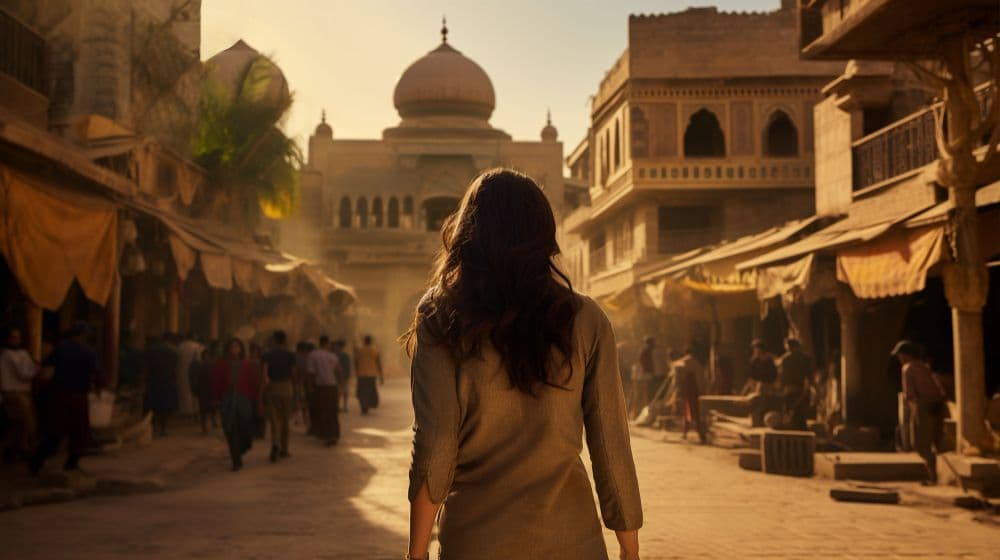
The red sandstone arches of Fatehpur Sikri stand quiet, while the plains around Agra bake under the hot sun. The only sound breaking the silence? Some chai seller yelling in the empty courtyards.
So where exactly is Fatehpur Sikri compared to Agra? It's about 35-40 km away, perched on a rocky ridge in western Uttar Pradesh.
So you Google "where is Agra in India" and boom - it's up north hugging the Yamuna River, basically squeezed between Delhi and Gwalior.
Here's the thing: most tourists just see Agra as that quick Taj Mahal pitstop on the Golden Triangle route. Which yeah, sure, but that's barely scratching the surface. And Fatehpur Sikri? Killer spot, but since it's a slight detour from the main drag, you'll find way fewer crowds there - makes for a perfect half-day adventure when you wanna escape the tourist herds.
Entering the ghost city
The approach is not grand at first.
You step off the car or bus into a parking zone of hawkers, guides and slow moving rickshaws, dust lifted by each tyre.
Signs that the site is still very alive:
- School groups forming lines under thin shade
- Local families in bright clothes carrying steel water bottles
- Archaeological staff walking in with files and measuring tapes
- Sufi pilgrims drifting towards the white dargah, separate from camera tours
Only when you pass the ticket barrier and climb towards the red sandstone platforms does the noise begin to fall away.
Palaces and courtyards that still hold their breath
Diwan i Aam and Diwan i Khas
The first large courtyards are where Akbar once listened to petitions and displayed power.
Even empty, you can feel how voices would travel here, from the cool shadows under the colonnades out into the square.
In the Diwan i Khas, with its singular central pillar mixing Hindu, Jain and Islamic design, guides still tell stories of the emperor’s debates and experiments with religion.
You watch dust motes spin around the carved stone, the air thick but still.
Panch Mahal and Jodha Bai’s palace
You climb Panch Mahal's staggered levels, and suddenly the Agra heat doesn't feel so bad those open sides let a breeze slip through. Up here, the abandoned city below doesn't seem like ruins anymore. More like somebody set up a giant chessboard and just... walked away.
Jodha Bai’s palace feels more inward.
Blue tile work, carved brackets, and a sense that this part of the complex held more private conversations than grand announcements.

The white heart of Fatehpur Sikri
Past the palace zone, the stone shifts tone.
You walk into the mosque courtyard and the marble of Salim Chishti’s dargah sits like a small piece of cloud on the red floor.
Here the ghost story stops completely.
Devotees tie threads on marble screens, whisper prayers, and press their heads to cool stone.
Standing beneath Buland Darwaza, you get it this wasn't some afterthought for tourists hitting up Agra. This place was built to rule from.
The steps climb steep, your shoes scuffing against old stone. With every few steps, more of that thirsty land reveals itself beyond the walls like the earth itself is unfolding for you.
How to walk the city without rushing
Fatehpur Sikri rewards slowness.
Heat and hard stone punish those who try to sprint from one “sight” to another.
Simple ways to move through it:
- Arrive early morning or late afternoon to avoid the harshest sun
- Carry water, a hat and light clothing that covers skin
- Take a local guide if you want stories, then spend time alone after to simply stand and look
- Sit in the shade of a colonnade and watch how light moves across the courtyards
The city is built for long sitting and short walking, not constant motion.
Fitting Fatehpur Sikri into an Agra plan
When people list agra tourist places, they start with the Taj Mahal, then Agra Fort, maybe Mehtab Bagh at sunset.
Fatehpur Sikri often comes later, but it deserves its own half day, not just a rushed stop on the way in or out.
A workable order for one tight day could be:
- Sunrise at the Taj Mahal
- Midday rest and lunch in town
- Afternoon drive to Fatehpur Sikri, returning after golden light has slid across the red walls
If you have more time, split it into two days and let mysuru style palace pace go, because this is still Uttar Pradesh, and agra location on the map means hot plains that ask you to slow down.
Staying close enough for the quiet hours
The city within the walls empties out when the last buses pull away and the guards close side gates.
You cannot sleep inside, but staying in or near Agra gives you a better chance of catching the softest, least crowded hours at both Taj and Fatehpur Sikri.
Pick a base among Agra hotels or homestays that keeps your drive to Fatehpur Sikri manageable and still leaves you close to the other major places to visit in Agra, and once you have decided how you want to split your mornings and evenings between white marble and red sandstone, fix that stay early through Neomaxer so the ghost city walk near Agra belongs to your feet and your pace, not to last minute room searches on a hot roadside in Agra.









