
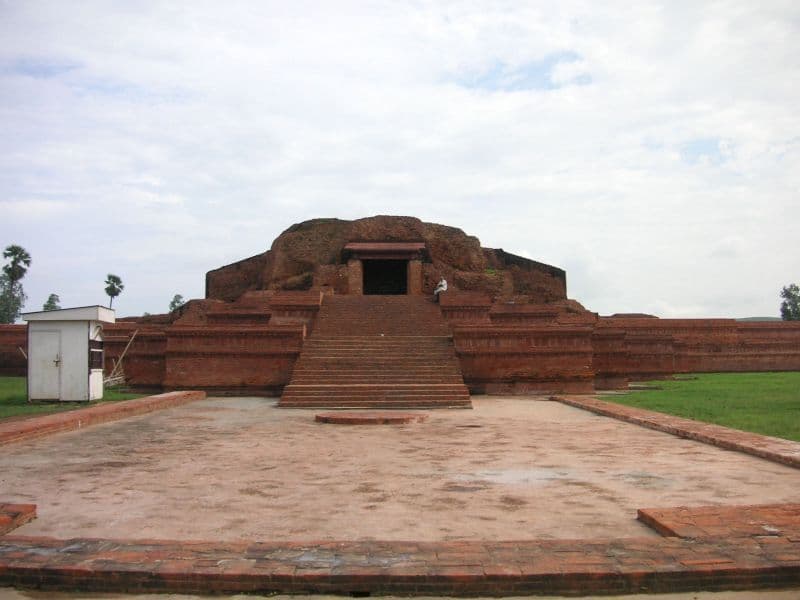
Stone paths crack underfoot where Takshashila once echoed with argument, recitation, and long silences meant for thinking. The air feels dry and exposed, and the ground holds traces of footsteps worn in by people who arrived seeking knowledge rather than shelter. Takshashila does not announce itself loudly, but it insists on attention.
Learning without walls
There were no bells to signal the start of lessons. Students gathered under trees, in courtyards, or near simple dwellings, listening closely and responding when required. Takshashila University functioned without fixed classrooms, relying instead on presence and discipline.
Teaching happened through dialogue. A student stayed until the teacher believed the learning was complete, not until the term ended.
Who came to study
People travelled from distant regions, crossing mountains and rivers to reach this place. Some came from within what is now described as Takshashila in India, others arrived from kingdoms far beyond its borders.
They came to study medicine, law, philosophy, mathematics, grammar, warfare, and statecraft. No single subject dominated, and curiosity itself was the qualification.
Teachers as anchors
At Takshashila, teachers lived simply and taught intensely. Their authority came from knowledge and character, not from titles.
Students often lived close to their teachers, sharing daily routines that blurred the line between learning and life. Instruction continued through observation as much as speech.
A different idea of university
Takshashila university history challenges modern ideas of institutions. There was no single campus, no central administration, no uniform curriculum.
Instead, the Takshashila institution existed as a network of teachers and students bound by shared purpose. Learning is adapted to the individual, not the other way around.
Knowledge as discipline
Learning here demanded endurance. Memorization was rigorous, debates were relentless, and questioning was encouraged but never careless.
Students were expected to listen deeply before speaking. Silence was considered a tool, not an absence.
Daily life of a student
A typical day began early. Students fetched water, prepared simple meals, and completed tasks assigned by their teachers.
Only after daily responsibilities were taken up. This balance shaped humility alongside intellect.
The role of debate
The debate was not a performance. It was a method.
Students argued logic, ethics, and interpretation under close supervision. Losing an argument was not a failure, but proof that learning was still unfolding.
Subjects that shaped societies
Medicine taught here influenced healing practices for generations. Grammar refined languages that travelled far beyond the region.
Statecraft lessons shaped rulers who later governed vast territories. Takshashila did not train specialists only; it shaped thinkers capable of adapting.
Women and learning
Records suggest that women participated in intellectual life, though in fewer numbers. Their presence reminds us that learning was not entirely restricted.
Knowledge here was valued enough to bend social boundaries, even if it did not fully break them.
No degrees, only mastery
There were no certificates handed out at the end of the study. A student left when ready, sometimes after years.
Mastery was recognized by peers and teachers, not stamped onto parchment.
Walking the ruins today
As you move through the remains, foundations appear modest. Walls are low, spaces open.
Nothing suggests grandeur. The importance lies in what happened here, not what stood here.
Sound of thinking
The site feels quiet, but the quiet feels active. Wind moves through stone and brush, carrying echoes of conversation long finished.
You imagine questions asked here that never had final answers.
Memory over monument
Takshashila was never meant to impress with size. Its strength was intellectual density. Ideas crossed paths here, collided, changed direction, and travelled onward.
Learning as a way of living
Education was not separated from ethics. A student was judged by conduct as much as understanding.
Knowledge carried responsibility, and misuse was considered a serious failure.
Influence beyond borders
Graduates carried teachings far from this region. They taught others, advised rulers, wrote texts, and shaped traditions.
Takshashila became less a place and more a reference point.
Absence that speaks
What is missing here is as important as what remains. No libraries stand intact, no lecture halls dominate the landscape.
The absence reinforces how fragile knowledge is without continued practice.
Standing with questions
Visitors often leave with more questions than answers. What did it feel like to sit here as a student? What doubts were wrestled with daily?
Takshashila does not resolve these questions. It leaves them open, like lessons that never truly end, reminding you that Takshashila was built not to finish learning, but to keep it in motion.









