
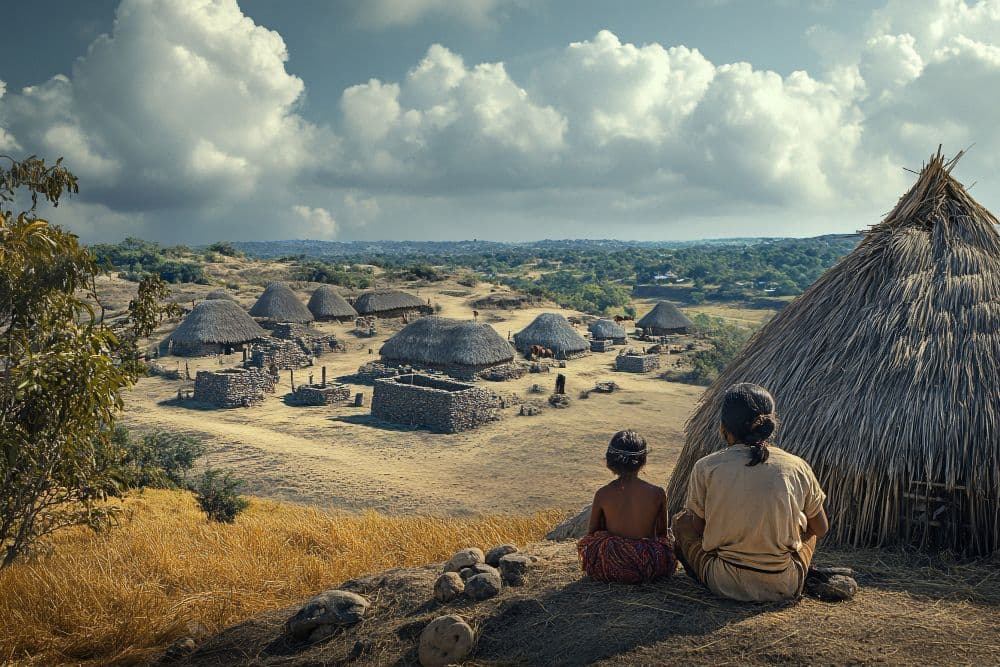
Mon and Longwa sit on a ridge where borders feel imaginary, and traditions feel heavier than time. Villagers describe their land through signs. A rooster crowing earlier than usual. Smoke rising in a straight line. Footprints on wet soil that tell who passed by and why. These details matter here because life still follows old rhythms rather than schedules.
A Village Split by a Border
Longwa village rests partly in India and partly in Myanmar, yet no one here pauses at the invisible line. People cross it the way farmers cross small irrigation channels. The chief’s house sits on the border, one half in each country. Longwa village's history is not written in pages, but in the stories elders share during long evenings, pointing to hills that once defined clan boundaries.
Travelers often ask about the Mon to Longwa distance, and the answer changes depending on weather, road repairs, and how often drivers stop to greet people along the way. Mon to Longwa distance by road is roughly 42 kilometres, but the real journey is measured in the changing forest smell and the sudden curves where the valley opens wide.
Paths That Are Still Walked, Not Just Shown
People here talk about traditions the same way Valparai workers talk about forest tigers. Not as performances, but as lived rules. The sound of a log drum still carries across the hills. House carvings reveal lineage. Tattoos tell stories older than most recorded maps. Children learn these cues long before they learn alphabets, because in Mon and Longwa, culture is not taught; it is absorbed.
Konyak elders still gather on shaded porches, cleaning dao blades with slow precision. Decorative necklaces with brass heads appear during festivals, not for photo sessions. Visitors see these moments only if they stay patient, quiet, and respectful. Nothing feels staged because everyone is living their own history rather than displaying it.

Routes That Wind Through Hills and Cloud Belts
People heading to these villages often look up how to reach Longwa village, and the advice usually begins with choosing the right season. Landslides shift routes. Mist reduces visibility. Drivers rely on instinct as much as maps. Kohima to Longwa village distance looks manageable on paper, but the journey involves mountain curves that slow down even the most confident travelers.
Trees grow close to the road. Bamboo leans in from both sides. Village paths split and rejoin until someone familiar with the region points out the right turn. This is the kind of travel where valleys appear suddenly, where you stop the vehicle just to listen to the wind brushing through leaves.
Life Inside the Village
Longwa homestay options are simple, warm, and built for conversation. Evenings stretch longer here. People sit around small fires sharing tea. Stories weave through the air. You hear about past battles, sacred forests, and legends carried from one generation to the next. The carvings on doorposts start making sense. The tattoos on faces and arms stop seeming like symbols and begin to feel like maps.
Longwa village history comes alive during these quiet hours. You see how traditions survived without needing museums. You witness how modern life blends into old customs without replacing them. Every house feels like a chapter, and every family carries a memory that shapes the village.
Hills Where Culture Stays Rooted
The forests around Mon and Longwa shape the community as much as the people shape the forests. Hunters know which paths to avoid. Farmers know when the clouds will shift. Festivals align with seasons that have guided life here for generations. The land feels shared, not protected from its own people, and that relationship becomes clearer the longer you stay.
Eventually, the road out of Longwa feels different from the road in. The hills look familiar, the silence becomes welcoming, and the border sign becomes nothing more than a marker between two slopes. Somewhere between the winding tracks and the echo of log drums, Mon and Longwa settle into your memory, the kind that nudges you to return and maybe even book a stay through Neomaxer as naturally as you choose a homestay in the hills, letting the village guide your pace without saying a single word.









