
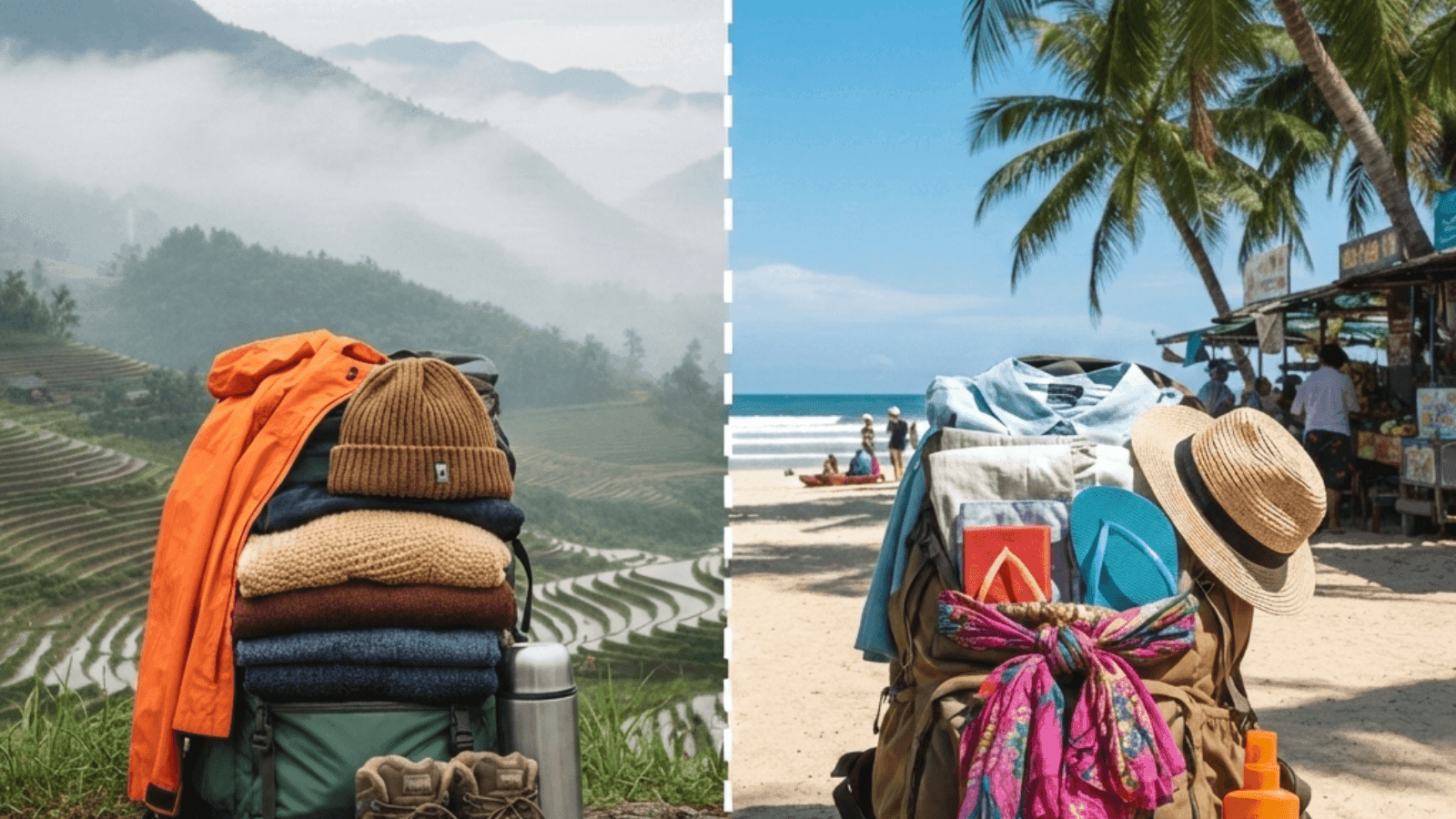
Vietnam’s North and South Need Different Packing Lists
Vietnam doesn’t reward “one-bag-fits-all” packing, and the difference shows up within the first 24 hours.
How Packing for North and South Vietnam Differs
Vietnam stretches over 1,600 kilometers from north to south, and that distance changes everything you wear. The north experiences clear seasonal shifts, including cool winters, while the south stays hot and humid almost year-round. Add altitude, monsoon cycles, and coastal weather into the mix, and packing becomes less about outfits and more about conditions.
Travelers often assume Vietnam is uniformly tropical. That assumption leads to jackets bought in Hanoi, soaked shoes replaced in Hoi An, and clothes that never leave the backpack in Ho Chi Minh City. Knowing how the regions differ saves space, money, and daily discomfort.
Packing for North Vietnam
North Vietnam behaves more like a subtropical region than a beach destination. Weather changes across months and locations, especially when altitude is involved.
Cooler Months Mean Actual Layers
From November to March, cities like Hanoi, Ninh Binh, and Ha Giang experience cool, damp weather. Temperatures can drop into the low teens, and the humidity makes it feel colder than expected.
A light insulated jacket or fleece works better than heavy winter wear. Long-sleeve tops help with layering and are more useful than short sleeves during this period. Jeans or thicker cotton trousers are more comfortable than lightweight travel pants in the evenings.
Rain Is Frequent and Lingering
Rain in the north doesn’t always fall hard, but it sticks around. Drizzles can last for hours, and streets stay wet longer due to lower temperatures.
A proper rain jacket matters more than an umbrella, especially when navigating traffic or walking long distances. Shoes that can handle wet pavements or dry overnight make a noticeable difference. Packing extra socks helps when laundry takes longer to dry.
Footwear Needs to Handle Terrain
Urban sidewalks can be uneven and slippery during rain. In places like Sapa or Ha Giang, paths turn muddy quickly. Supportive walking shoes with good grip are more practical than sandals for most days. Lightweight hiking shoes or sturdy trainers work well across cities and countryside.
Altitude Changes What You Need
Mountain regions in the north feel colder year-round. Even during warmer months, mornings and evenings can be cool. A compact layer that packs small becomes useful here. Scarves or thin shawls also help regulate temperature without adding bulk.

Packing for South Vietnam
South Vietnam runs on heat and humidity, and packing should reflect that reality.
Breathability Matters More Than Style
Ho Chi Minh City, the Mekong Delta, and southern islands stay warm throughout the year. Humidity is constant, and sweat management becomes part of daily planning.
Lightweight, breathable fabrics like cotton and linen feel far more comfortable than synthetics. Loose-fitting clothes allow airflow and reduce irritation during long walks or market visits.
Shorts, skirts, and sleeveless tops work most days, but carrying one or two modest options helps for temples and indoor spaces.
Rain Comes Fast, Then Leaves
Southern rain is intense but brief, especially during the rainy season from May to October. A poncho or thin rain layer works better than heavy waterproof jackets. Drying speed matters more than complete water resistance. Footwear that can get wet and dry quickly is useful for sudden downpours.
Sun Protection Is a Daily Requirement
Sun exposure in the south feels stronger and lasts longer through the day. A hat or cap reduces fatigue during sightseeing. Sunglasses help with glare and eye strain. Sunscreen becomes a daily essential, not something used occasionally.
Long sleeves made from breathable fabric can actually feel cooler while protecting from direct sun, especially during scooter rides.
Laundry Dries Quickly, But Smells Linger
Clothes dry fast in the southern heat, but humidity can leave them smelling musty if packed too soon. Quick-dry fabrics help, and airing clothes properly before packing prevents odor buildup inside bags.
Practical Items That Make a Difference Everywhere
- Mosquito repellent is useful across Vietnam, particularly in the south and rural areas.
- A lightweight daypack with ventilation handles humidity better during long days out. Reusable water bottles help maintain hydration and reduce constant plastic use.
- Temples across Vietnam require covered shoulders and knees. Carrying a thin overshirt or scarf avoids changing plans or rushing back to accommodation.
- Scooter travel influences clothing choices more than expected. Long sleeves protect from sun, dust, and wind, even in hot weather.
- Packing for Vietnam works best when guided by geography rather than assumptions, especially when one country quietly behaves like several different climates stitched together. If your Vietnam trip spans more than one region, where you stay matters just as much as what you pack. Neomaxer helps you find stays that fit your route, pace, and climate, so each stop feels comfortable.









