
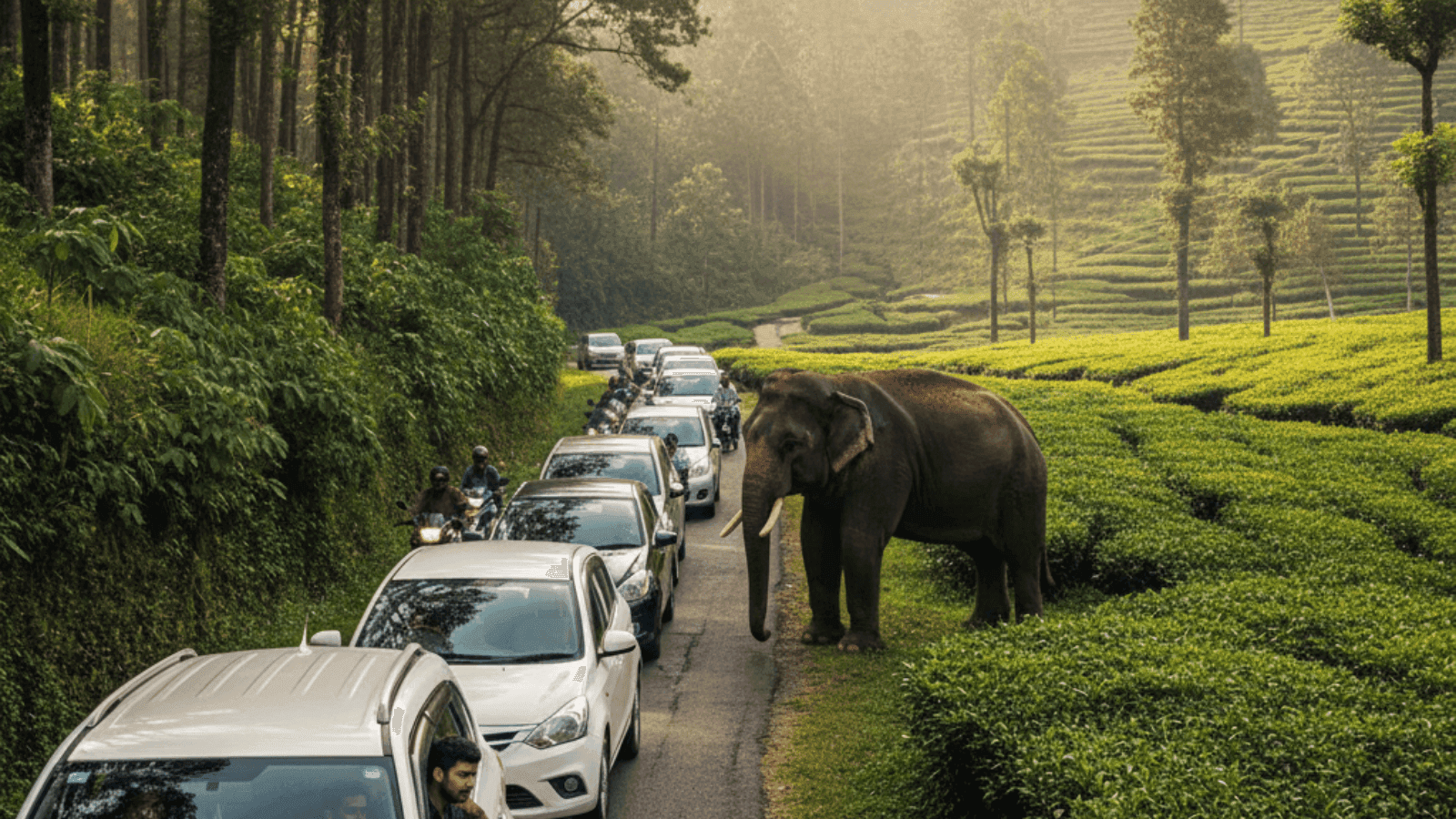
Valparai Where Elephants Cross Roads And Traffic Waits
An elephant standing in the middle of the road is not an interruption in Valparai. It is a pause everyone understands.
A Hill Town That Runs On Forest Time
Valparai sits high in the Anamalai hills, Tamil Nadu, where tea estates thin out and rainforest begins without warning. Roads here do not announce ownership. They pass through land that has never belonged solely to people.
Delays caused by wildlife are not discussed later. They are absorbed into the day. On many mornings, estate workers slow down without switching off their engines. Cars line up behind them. Nobody honks. Nobody inches forward. Somewhere ahead, an elephant is crossing, unhurried and fully aware of its size.
Roads That Cut Through Living Habitat
The roads around Valparai pass through the Anamalai Tiger Reserve and adjoining forest divisions. This is not a scenic buffer softened for visitors. It is active habitat used daily by elephants, gaur, primates, birds, and predators that remain unseen.
Elephants follow routes that existed long before tea estates or factory roads. These paths connect feeding grounds and water sources and are remembered across generations. A tarred road does not erase them. After monsoon, movement increases. Herds are often seen near culverts, factory roads, and tea garden edges, especially during low-traffic hours.
How Traffic Behaves When Elephants Appear
There is no formal rulebook, yet behavior remains consistent. Drivers wait. Engines go silent. Headlights are switched off if asked. Windows stay rolled up. Conversation fades without instruction.
Forest staff may arrive to manage movement. Sometimes they do not. Waiting happens either way.
Honking is rare because it is understood as a mistake. Loud noise can agitate elephants, especially lone bulls or mothers with calves. Old stories of damaged vehicles still circulate quietly among drivers and estate workers.

Forest Check Posts And Why They Matter
Entry and exit points around Valparai and routes toward Athirappilly and Malakkappara are regulated by forest check posts. Vehicles are logged, timings are enforced, and night travel is restricted.
Check posts record vehicle details, passenger count, entry time, expected exit time, and plastic items carried. Transit slips ensure vehicles do not remain inside forest stretches after dusk, when animal movement increases sharply.
These controls are not symbolic. They prevent stranded vehicles and reduce human–wildlife conflict.
Signs Locals Watch Instead Of Animals
- People in Valparai read the forest before they see it.
- Broken solar fencing near estate boundaries
- Fresh dung or pug marks near culverts and bends
- Footprints crossing wet mud early in the morning
- Forest guards positioned farther down the road than usual
- Estate workers avoiding specific paths after sunset
- Plans change quietly based on these signs. No announcements are needed.
Wildlife That Shares The Landscape
Elephants dominate attention, but they are not alone. Gaur graze along estate edges, unmoved by passing vehicles. Lion-tailed macaques appear briefly on roadside trees, watching traffic with practiced indifference. Malabar giant squirrels flash through the canopy and disappear just as quickly.
Leopards remain mostly invisible, though their presence is confirmed through tracks and forest department monitoring. Hornbills cross roads low and heavy, wings loud against the stillness.
What To Do When You Encounter Wildlife
- Stay inside your vehicle at all times
- Switch off the engine and remain silent
- Maintain a safe distance and allow animals to move on their own
- Follow instructions from forest staff without argument
- Reverse slowly if an animal shows signs of agitation
What Not To Do On Forest Roads
- Do not honk, rev, or play loud music
- Do not step out for photographs or closer views
- Do not feed monkeys or any wildlife
- Do not attempt to drive past or around animals
- Do not travel at night through forest stretches
There have been occasions where vehicles waited for hours because an elephant refused to move. On the Athirappilly side, travellers were once stranded overnight after a herd blocked the road. No one was harmed because they waited.
This Is Not Wildlife Tourism
Valparai does not promise sightings. It offers coexistence. Roads stay narrow. Bends remain blind. Network drops without warning. The forest does not adjust itself for convenience. A herd crossing delays lunch. A blocked road changes a shift schedule. A fallen tree reroutes traffic through an estate.
No one honks. The road opens when the forest decides it is done. If you plan to stay in and around Valparai, Neomaxer curates stays that respect the rhythm of the land rather than interrupt it. Their properties are chosen for quiet, comfort, and proximity to nature, so the forest remains part of the experience, not just the view.









