
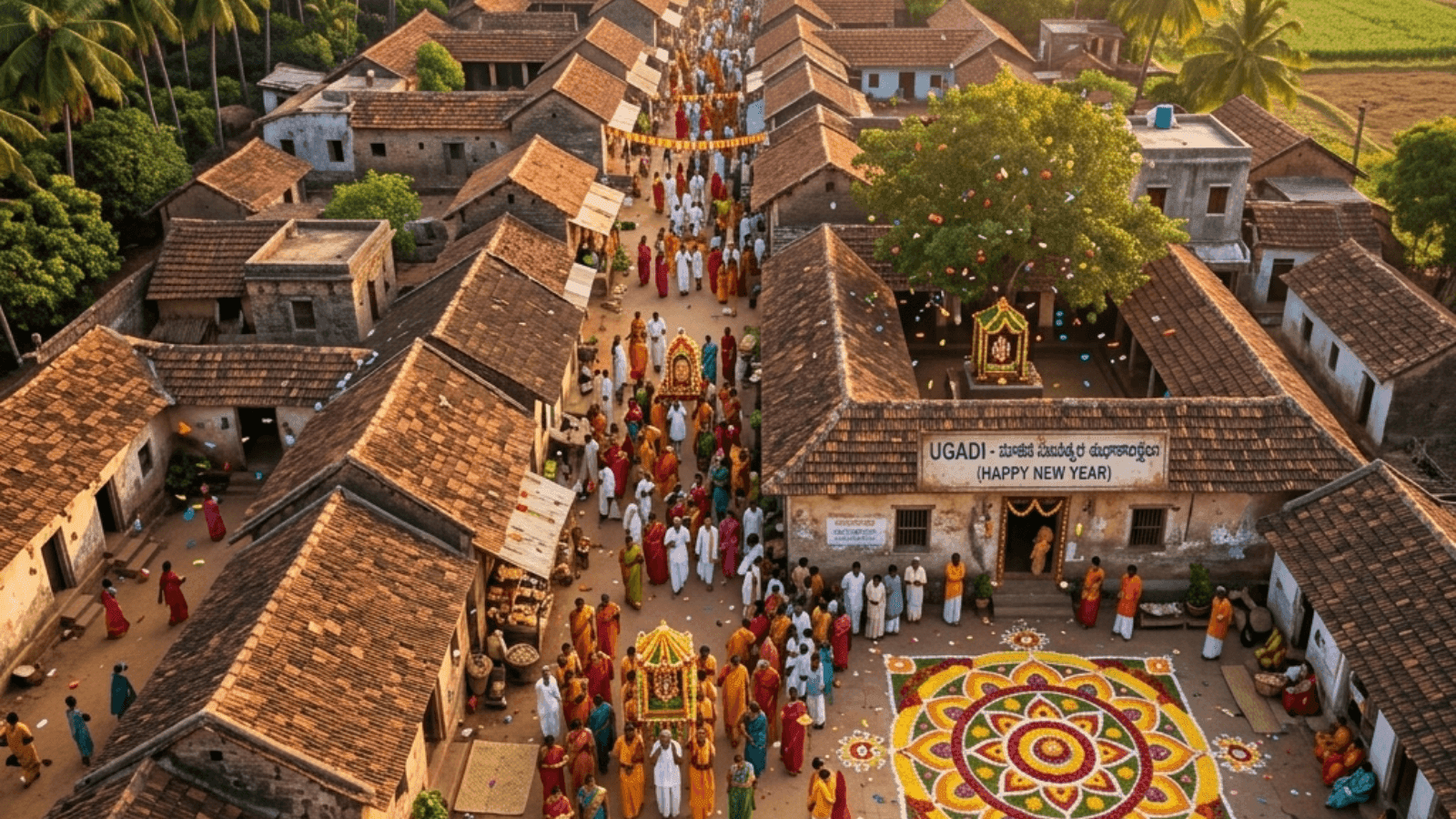
Ugadi, The Festival That Begins a New Year With Six Flavours of Life
What Ugadi Feels Like in South India
Ugadi arrives quietly but the atmosphere changes fast. Homes smell of fresh mango leaves, neem flowers, and the faint sweetness of jaggery melting in kitchens. Streets begin to look cleaner, markets fill up early, and families start the day before sunrise.
In parts of Andhra Pradesh, Telangana, and Karnataka, the morning begins with oil baths, new clothes, and the preparation of a small bowl that represents the entire philosophy of the festival. Ugadi doesn’t try to promise a perfect year. It reminds people that life always comes with a mix of tastes.
The Meaning Behind the Six Flavours
At the center of Ugadi is Ugadi Pachadi, a simple mixture made with six ingredients. Each one represents a different feeling people will experience in the coming year.
- Neem flowers for bitterness and life’s challenges
- Jaggery for sweetness and happiness
- Tamarind for tangy surprises
- Raw mango for excitement and change
- Chilli for anger or intensity
- Salt for balance and everyday moments
Markets Before Ugadi
A day or two before Ugadi, local markets become busy in a way that feels very seasonal. Vendors stack raw mangoes in small green piles. Neem flowers are sold in little bundles. Bright yellow marigolds and fresh mango leaves hang outside stalls.
People shop early because many homes prepare special meals for relatives visiting later in the day. Tailors finish last-minute blouse stitching. Sweet shops start preparing traditional sweets long before sunrise.
The preparation feels calm rather than rushed. It’s more about getting the house ready than organizing big public celebrations.

Traditional Foods Prepared on Ugadi
- Ugadi Pachadi
- Pulihora (tamarind rice)
- Bobbatlu or Holige (sweet stuffed flatbread)
- Mango dal
- Coconut chutneys
- Payasam or kheer
How Many Days to Plan
Ugadi itself is a one-day festival, but travelers usually spend two to three days around it to really notice the small details.
The day before Ugadi shows the preparation phase. Markets are active, homes are cleaned, and ingredients for pachadi start appearing in kitchens. The day after Ugadi tends to be quieter. Many families visit relatives, temples, or simply rest after the celebrations.
Things Travelers Often Miss
Visitors often assume Ugadi is mostly about temple visits, but much of the festival actually happens inside homes.
Many travelers also miss the morning Panchanga Sravanam, where priests or elders read predictions for the new year based on the Hindu calendar. In temples and community halls, people sit quietly while astrologers explain what the coming year may bring.
Small neighborhood temples sometimes hold these readings in a more relaxed setting, and locals often stay afterward to talk about the predictions.
Local Behaviour and Expectations
Ugadi is a family-centered festival. Visitors will notice that public celebrations are limited compared to festivals like Diwali or Ganesh Chaturthi.
If invited into a home, it’s polite to accept at least a small spoon of Ugadi Pachadi. Refusing it can feel unusual to hosts because tasting it is part of the festival’s meaning.
Many people also visit temples in the evening wearing traditional clothes. Even travelers often end up buying simple cotton kurtas or sarees to blend in with the crowd.
Tips for Travelers
- Start the day early because many rituals happen before 9 a.m.
- Markets the evening before Ugadi are the liveliest places to walk around
- Carry water because the heat builds quickly after noon
- Temple queues grow longer in the evening
- Local sweet shops sell festive items only for a short period
Dos and Don’ts
- Do try Ugadi Pachadi even if the taste feels unusual
- Do remove footwear before entering homes or temples
- Don’t photograph rituals inside homes without asking
- Don’t expect large street festivals or parades
- Do greet people with “Ugadi Subhakankshalu” in Telugu regions
Planning Insights
Choosing a smaller town can make the experience feel more personal. In big cities, celebrations are spread out and often happen privately.
Places like Rajahmundry, Tirupati, or small Karnataka towns often show the festival in a quieter way. Morning temple bells, rangoli designs outside houses, and families carrying plates of offerings create a different atmosphere than the busy city streets.
Even a simple walk through a residential neighborhood on Ugadi morning reveals the festival better than any public event.
If you’d like to be around festivals like Ugadi and everyday local traditions, Neomaxer lists stays in places where you can experience them up close.









