
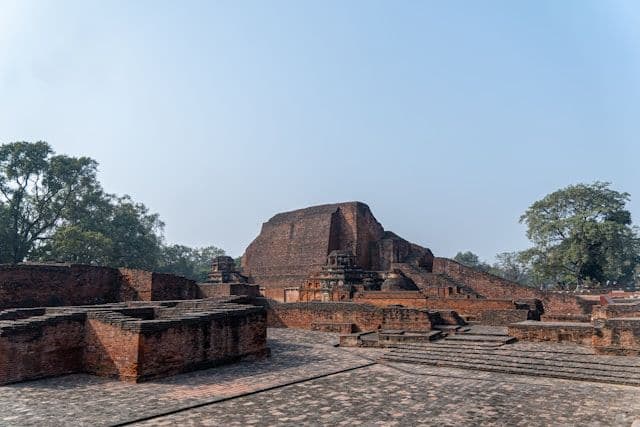
Dust rises under your sneakers as you wander into these ancient hallways. They are just old stones now, but you can almost hear the buzz this place must have had back in the day. Think heated philosophical debates, bare feet shuffling toward prayer halls, low voices arguing over logic and meaning.
Nalanda hits different. It is not some Instagram trap where you snap a photo and move on. The bricks radiate leftover warmth from centuries of sun, and the silence is thick enough to slow your steps without you even noticing.
The Ruins
Bigger than you would think. Way bigger. Crumbling classrooms and temples sit in neat rows, almost like the monks just stepped out for lunch. It feels strangely functional, like you could still attend Astronomy 101 if you showed up on time and brought a notebook.
The bricks tell stories if you look closely. Drainage systems are smarter than some modern cities. Little monk cubbies where people probably memorized texts under flickering lamps. Nothing here feels accidental.
You start noticing how wide the walkways are, how the courtyards open up just enough to let light in. The place was built to be lived in, not just admired.
Why It Matters
This was not just a monastery. It was basically Harvard crossed with TED Talks. Astronomy, medicine, philosophy, grammar, logic, all happening here while much of the world was still figuring itself out. Students walked here from China, Korea, and Central Asia. That meant months of travel, blisters, sickness, and risk, all for knowledge. Standing in the ruins, late-night debates echo in your head. You can almost feel the tension of a student getting grilled by a teacher over some subtle point of Buddhist logic at two in the morning.
Practical Stuff
Tickets are easy enough. Buy them online unless you enjoy standing in long lines under the sun. Peak season turns the ticket counter into a slow-moving test of patience. Bring water, sunscreen, and a hat unless you enjoy feeling like your scalp is being roasted. Shade exists, but it shows up randomly.
October to March is the sweet spot. Summer turns the stones into griddles, and monsoon season means squelching through mud like a confused pilgrim.
Wandering
At first, everything blends. Another brick wall. Another courtyard. Another staircase. Then something clicks. You notice the differences. One space feels quiet and inward, like a library. Another feels open and social, like a debating hall.
You find yourself slowing down, staring at brick patterns like they are ancient memes trying to tell you something. Time stops behaving normally here. The central temple ruins loom over everything. Climb the viewing platforms nearby, and you finally get that moment where it hits you how massive this place really was. From above, the layout makes sense. Nothing is random.
Museum Pitstop
Right outside the ruins sits a small museum that does more work than you expect. Sculptures, inscriptions, and everyday objects make the ruins feel less like a ghost town and more like a campus after finals week.
Seeing a carved face with a faint smile hits harder than any textbook paragraph. It reminds you that real people lived here, joked here, struggled here.
Rajgir Detour
Almost everyone pairs Nalanda with Rajgir, which is about a twenty-minute drive away. The vibe shift is real. Nalanda is the quiet scholar cousin. Rajgir is an extrovert with hills, ropeways, and natural hot springs.
Pilgrims soak in the springs while chatting as if it were a community bath. Hike up nearby hills, and you get sweeping views that reset your brain after all that brick and history.
Local Life
Villages around Nalanda move at their own pace. Kids kick up dust while playing. Chai vendors sit patiently, never rushing you to finish. Even the stray dogs look oddly calm. It does not feel staged for tourists. Life just continues alongside the ruins, like it always has.
Food here is simple and honest. Rice, dal, vegetables, maybe a fried snack. Nothing fancy, but after hours of walking, you eat like a starving student from a thousand years ago.
Guides vs Solo
You can easily walk around Nalanda on your own. Signs explain enough without overwhelming you with dates and names. It gives you space to think. That said, hiring a guide adds gossip. Stories about rival scholars, heated arguments, daily routines, and who supposedly lost debates badly. Suddenly, the ruins feel louder in your head.
The Weight of Destruction
Then there is the part that sits heavily. Knowing that invaders burned libraries here, destroying thousands of manuscripts. Knowledge that took generations to build, gone in flames.
You step over foundations where books once stood, stacked floor to ceiling. It hurts quietly, like losing years of notes right before finals, but multiplied by centuries.
Photos Can Wait
The arches and corridors look incredible on camera. Long shadows, perfect symmetry, dramatic light. But most people eventually put their phones away.
The place demands attention in a way screens cannot capture. Standing still feels more important than documenting.
Behavior Check
No signs tell you to be quiet, yet voices drop automatically. Even loud groups soften their tone. It feels instinctive, like everyone understands this place deserves respect. You hear footsteps more than voices. Wind more than conversation.
Timing Your Visit
Early mornings are magic. Fewer people, softer light, birds hopping along brick edges. The ruins feel like they belong to you for a moment.
Afternoons bring more visitors, more chatter, but the space never feels truly crowded. There is too much room for that.
Time Works Differently Here
Some people rush through in two hours. Others spend half a day circling the same areas. Both are fine. Nalanda does not judge how you move through it. You might get stuck staring at a single wall for twenty minutes, wondering who last touched that brick with purpose.
What Stays With You
Later, it is not the big facts you remember. It is the small things. Afternoon light slipping through a broken doorway. The quiet weight of lost knowledge.
Nalanda does not stop teaching just because its classrooms are gone. It keeps working on you long after you leave, whether you expect it or not.









