
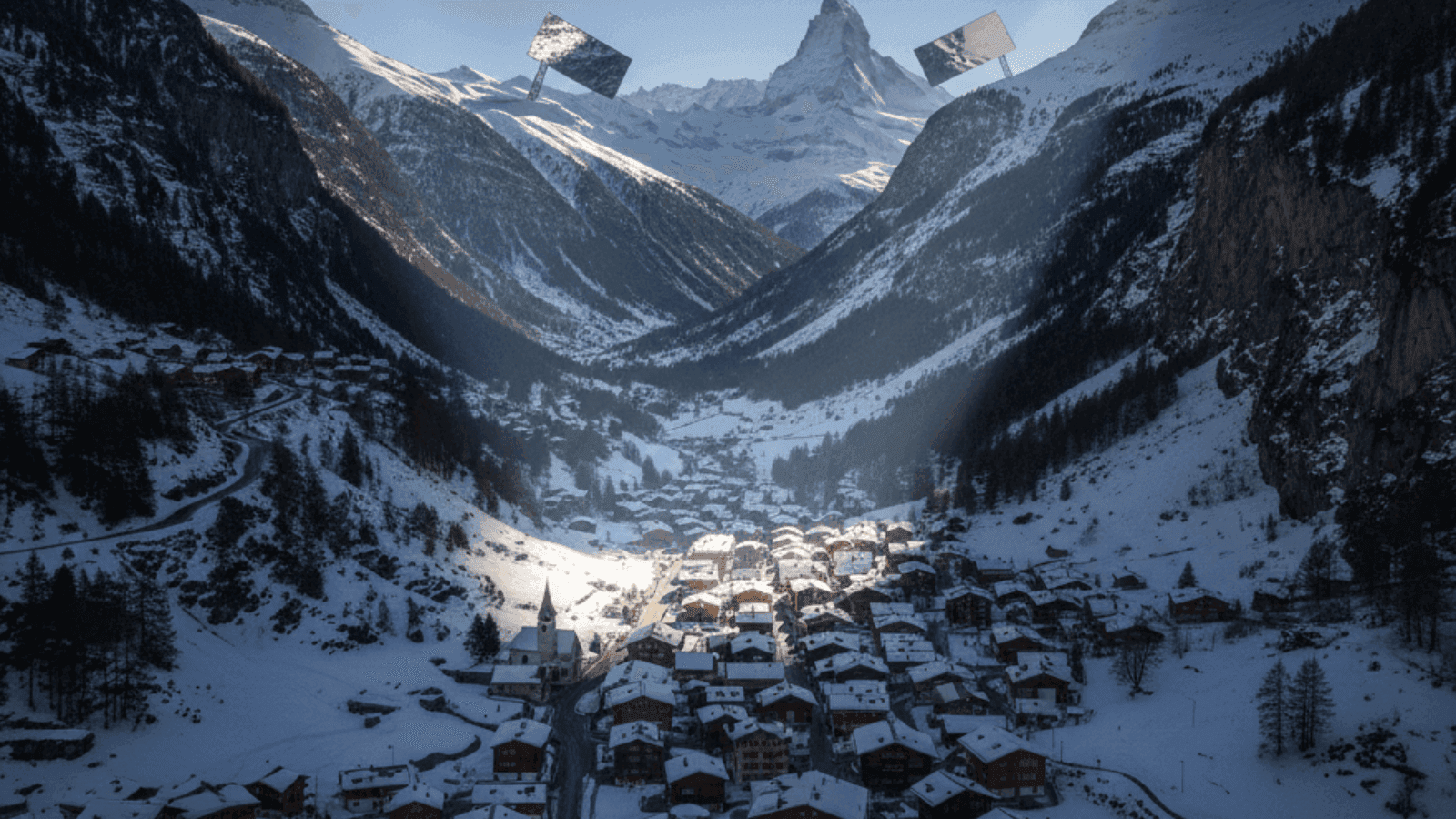
Town That Uses Giant Mirrors to Bring Winter Sunlight In
In winter, the sun simply does not reach the town square.
In the Swiss village of Randa, tucked inside the narrow Matter Valley near Zermatt, mountains rise so steeply that for nearly three months each year the sun disappears behind the ridge. From November to February, homes, gardens and rooftops sit in shadow. The air turns sharper, colder, quieter.
Randa’s Mirrors Light 140 Homes
The mirror installation sits about 400 metres above the village, positioned precisely to capture winter sun that would otherwise slide behind the mountains. It is not huge by global engineering standards, but here it feels monumental.
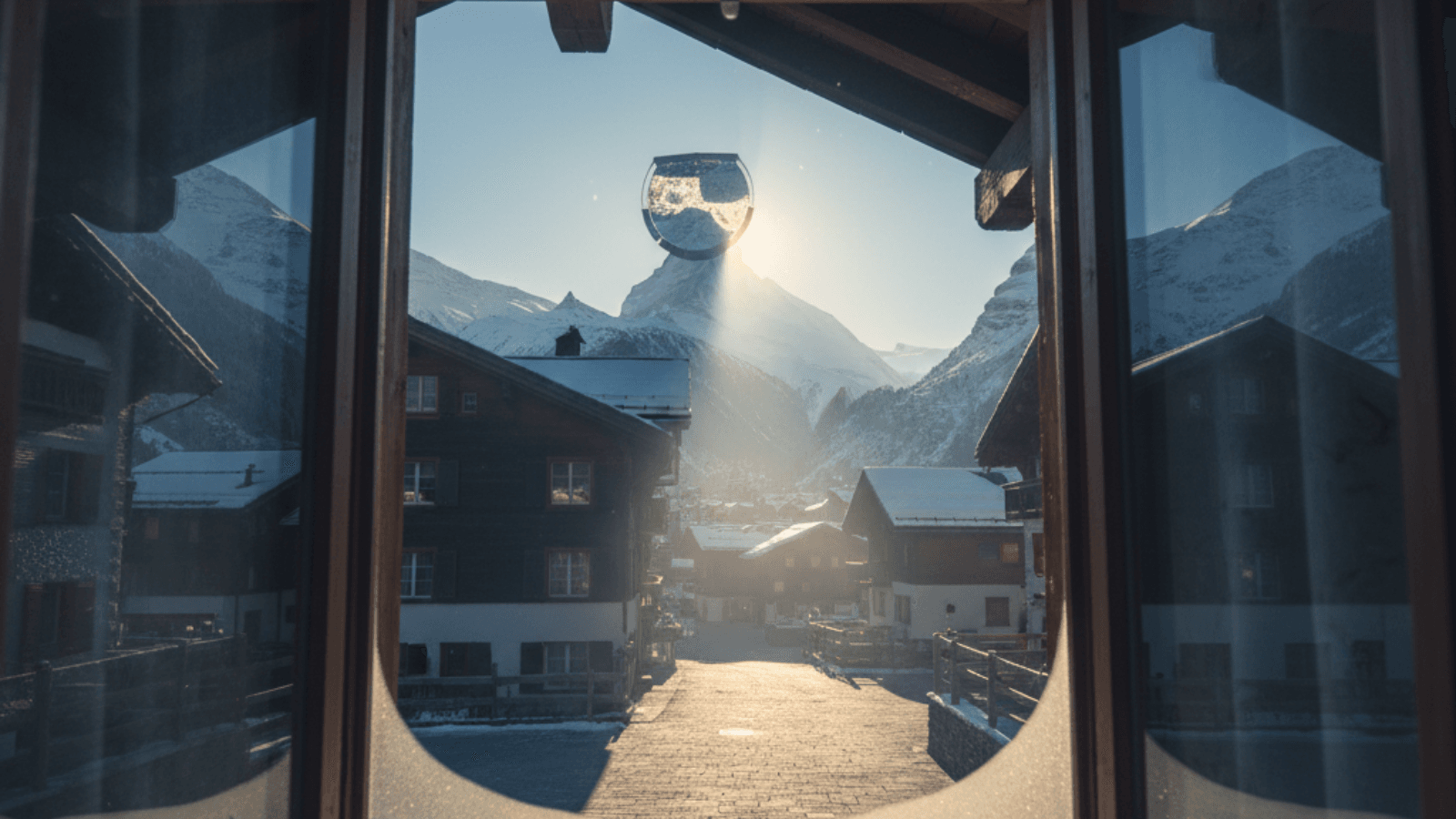
On clear days, the beam arrives mid-morning and lingers for a few hours. Locals gather in the square when it happens. Children drift toward the lit patch instinctively. Café tables move a little closer to the glow.
It does not turn winter into summer. It simply breaks the monotony of shadow. That is enough.
Viewing the Helio System Close
A short but steady uphill walk leads to the mirror field. The path begins near the edge of town and winds upward through forest and open pasture. In winter, sections can be icy, so proper footwear matters.
Up close, the mirrors are more technical than romantic. Metal frames, tracking motors, a reflective surface angled with precision. You can hear the faint mechanical hum as the system adjusts. Looking down from that height, the village appears compact and pale against the valley walls, with a single bright rectangle marking the sunlit square.
Standing beside the installation gives you a clearer sense of the geography. Randa is not hidden accidentally. It is physically enclosed.
How to Reach Randa from Sion
- From Sion Airport: Bus 491 runs directly toward the valley, taking roughly one hour. A single ticket costs around 12 CHF.
- From Geneva: Trains run frequently to Sion. From there, regional connections head up the Matter Valley toward Zermatt, with Randa on the line. Total travel time is about three hours.
- From Zermatt: A short train ride south connects the two villages. In summer, road access via nearby mountain passes is possible, though winter travel is more limited.
- From Sierre: The local PostBus runs hourly services deeper into the valley, stopping at Randa along the way.
Best Months for Mirror Sunbeam Shows
- December through early February offers the most dramatic contrast between shadow and reflected light.
- Clear, cold days provide the sharpest beam and the most visible effect in the square.
- Late January often balances snow cover with accessible walking trails.
- By late February, the natural sun begins to crest the ridge again, reducing the need for reflection.
Hiking Trails Around the Mirror Field
Randa is already known among hikers as the gateway to sections of the Europaweg, one of the Alps’ classic high-altitude trails linking the Matter Valley to the Bernese Oberland. Even outside peak hiking season, lower routes remain accessible.
A circular walk combining the mirror installation and nearby forest paths takes about two hours at a relaxed pace. Snowshoeing is common in deeper winter. In warmer months, the same slopes open into wildflower meadows with wide views toward the Weisshorn and Dom peaks.
The terrain is steep but well marked. It feels more alpine than touristic.
Local Raclette Spots Post Tour
- Small family-run restaurants near the station serve raclette melted traditionally over an open flame, scraped onto boiled potatoes and pickles.
- Many kitchens use Valais cheese produced within the canton, giving it a nutty, slightly fruity edge.
- Lunch hours can be short in winter, so arriving before 2 pm avoids closed doors.
- Seating near windows is prized when the reflected sunlight reaches the square.
Food tastes different when you have been standing in snow and shade all morning.
Randa’s mirror is not a spectacle in the way northern lights or fireworks are. It is quieter. A practical solution to a geographical problem that becomes, unexpectedly, a gathering point. If you want to stay somewhere that feels shaped by rare geography and clever human ideas, Neomaxer helps you find homes in places with stories built into their surroundings.









