
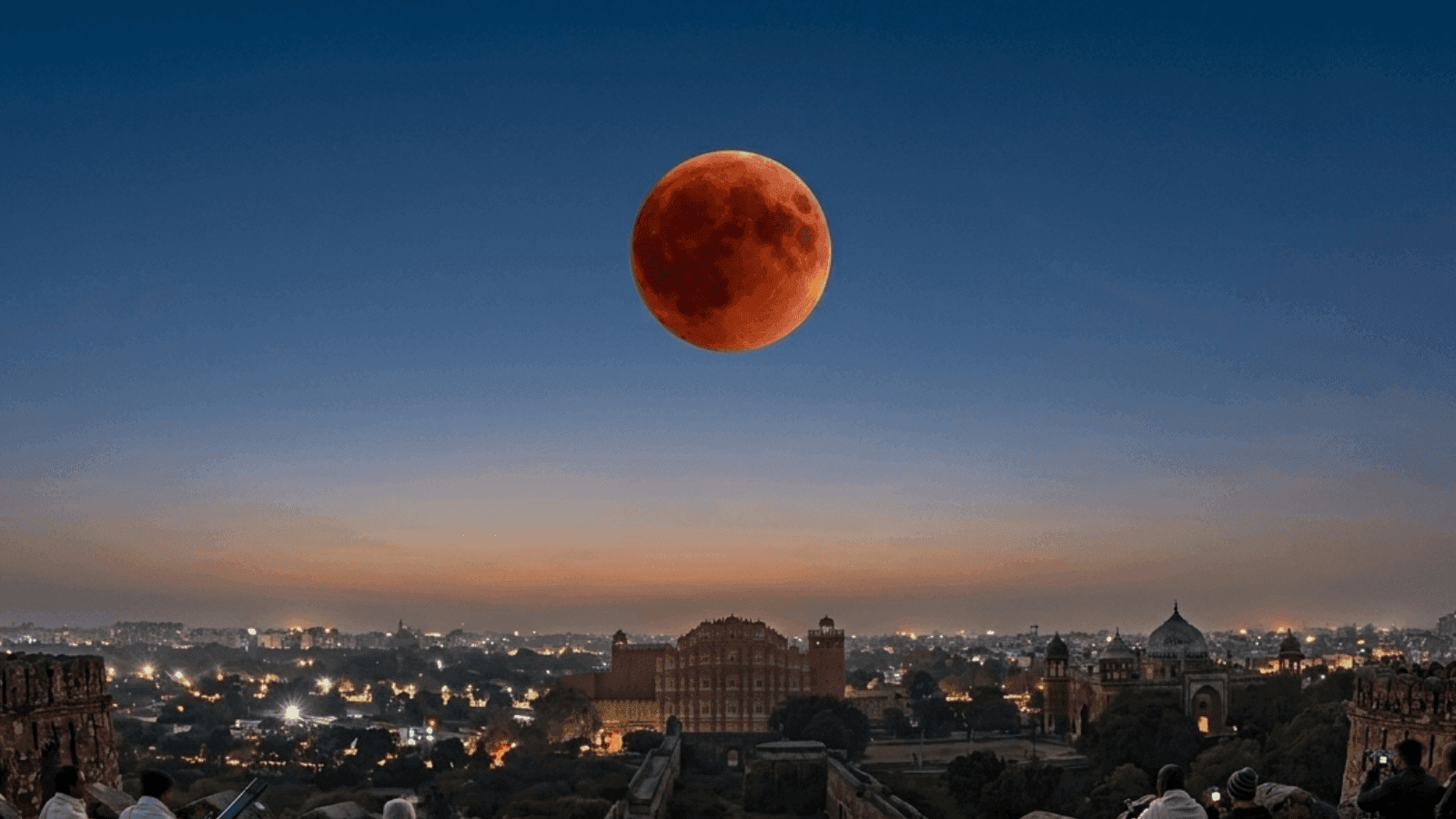
March 2026’s Total Lunar Eclipse Is Also a Cultural Moment Around Holi in India
Holi already paints the streets in every shade possible. In 2026, the sky joins in. A total lunar eclipse will rise over India on March 3, right between ritual fires and festival laughter..
Eclipse Peaks March 3 at 7:25 PM IST
The total lunar eclipse on March 3, 2026 will be visible across most of India in the evening hours. The peak, when the moon is fully immersed in Earth’s shadow, is expected around 7:25 PM IST. By then, the moon will have risen in much of the country, making it easier to watch without staying up past midnight.
A total lunar eclipse happens when Earth comes directly between the sun and the moon. Sunlight bends through Earth’s atmosphere and casts a reddish tint on the moon’s surface, creating what people call a blood moon. In clear March skies, especially away from city glare, the effect can feel cinematic.
Holika Dahan Fires Light Pre-Sutak
Holi begins with Holika Dahan, the ritual bonfire symbolizing the triumph of devotion and good over evil. In 2026, many communities will light these fires before the sutak period associated with the eclipse begins, as sutak is traditionally observed several hours before the eclipse and is considered inauspicious for rituals.
Because the eclipse falls on the evening of Holi festivities, temple schedules and neighborhood gatherings may adjust their timings slightly. Travellers should expect announcements about earlier pujas and coordinated fire-lighting so celebrations can flow without clashing with eclipse observances.
Top Viewing Spots
- Jaipur hilltops for blood moon rise
- Rishikesh ghats with telescopes
- Goa beaches on ocean horizon
- Ladakh desert at 3500m clear skies
Jaipur’s old city terraces and nearby hilltop forts offer a wide eastern horizon, which is ideal for watching the moon rise already deep in shadow. The pink sandstone skyline adds a dramatic foreground.
In Rishikesh, the ghats along the Ganga often turn into informal astronomy hubs during major celestial events. Local groups sometimes set up telescopes, and the reflection of a red moon on the river has its own quiet pull.
Goa’s beaches give you an unobstructed line where sea meets sky. The moon lifting above the Arabian Sea during an eclipse creates a long red shimmer across the water, especially on quieter southern stretches. Ladakh stands apart. At around 3500 meters above sea level, dry air and minimal light pollution make the night sky startlingly sharp. March nights are cold there, but the clarity is unmatched.

Reach Hotspots from Delhi
- Jaipur flight 50 min
- Rishikesh bus 6 hrs
- Goa train 30 hrs
- Leh flight 1.5 hrs
Jaipur is the quickest escape. A short flight from Delhi gets you there in under an hour, and you can be on a fort wall by evening.
Rishikesh works well for a spontaneous road trip. Overnight buses and early morning departures mean you can reach by afternoon and still find a good riverside spot.
Goa takes longer by train, but some travellers are already pairing the eclipse with a longer beach break. The journey itself becomes part of the plan.
Sutak Skips Night Prayers
During sutak, many families avoid cooking, temple visits, or new rituals. Temples may close briefly during the peak of the eclipse and reopen afterward for purification rites.
For travellers, this means certain evening aartis or temple ceremonies could be rescheduled. It is worth checking locally rather than assuming the usual Holi-night rhythm will play out unchanged.
Pack Wool for March Chill
March evenings in north and central India can still turn sharp after sunset. Jaipur and Rishikesh both cool down quickly once the sun drops, and standing still while watching the sky makes the cold more noticeable.
In Ladakh, sub-zero temperatures are possible at night. Even in Goa, a sea breeze can feel brisk after a day in the sun. A light jacket in coastal areas and proper woollens up north will make the difference between enjoying the view and cutting it short.
Rent Telescopes at Ghats
You do not need heavy equipment to enjoy a lunar eclipse. The naked eye captures the color shift clearly. But a small telescope or even good binoculars can reveal surface details as the shadow moves.
In cities like Rishikesh and Jaipur, local astronomy clubs sometimes coordinate public viewings during major eclipses. Keep an eye on community boards and social media pages a few days before March 3.
Renting or joining a public setup can turn a solitary watch into a shared experience with strangers who all look up at the same time.
If you want to plan your Holi escape around the March 2026 lunar eclipse, Neomaxer helps you find stays that place you right where the sky looks its best.









