
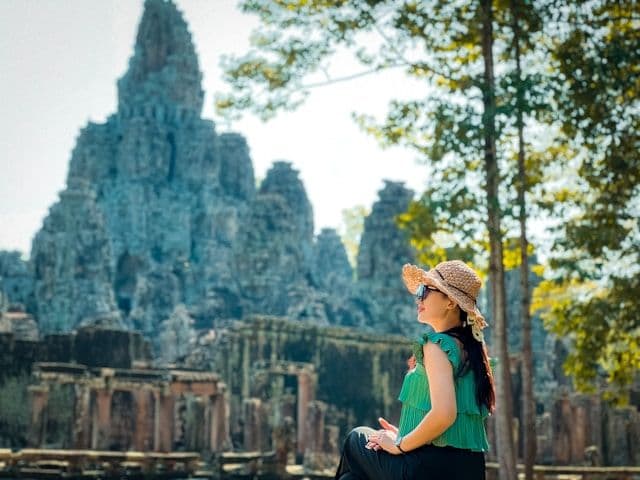
Angkor Wat at sunrise is easiest to enjoy when you stop chasing the “main pond photo” and start reading the small signs that crowds ignore. A tuk-tuk turning into the wrong gate, a guide rushing a group to the same spot, a line of tripods facing one direction like a parade. This is not just sightseeing. This is shared ground, and the quiet belongs to the early planner.
Angkor Wat basics you should know first
Angkor Wat in which country is Cambodia, near Siem Reap, and it is the most famous Angkor Wat temple in the whole complex. Angkor Wat history matters because it explains the layout and why sunrise feels so dramatic on those towers.
Quick history in plain words
When was Angkor Wat built? Mostly in the early 12th century under King Suryavarman II, first as a Hindu temple and later used for Buddhism. The scale is the shock, but the details are the real reward, especially when you have space to look.
The real reason sunrise gets crowded
Most Angkor Wat tours follow the same habit: enter early, rush to the front reflection pond, claim a spot, then move as a pack. It becomes less about sunrise and more about defending your view.
Crowd magnets to avoid
- The central reflection pond viewpoint
- The main causeway in the last 15 minutes before sunrise
- The loud “everyone stop here” guide moment
Best strategy: change your viewpoint, not your wake-up time
You still need to wake up early, but you do not need to stand in the most famous spot. Walk a little farther, and the noise drops fast.
Better sunrise spots at Angkor Wat itself
- North reflection pond edge: similar mirror effect, fewer bodies, more breathing room
- Far side of the causeway: you get towers and sky without elbows in your frame
- Outer gallery corners: calmer, and you can catch soft light on carvings after sunrise
If you want golden temple-like calm, this is where you find it. Not by arriving “earlier than everyone,” but by stepping away from the center line.
Use the right entrance and timing cues
Angkor has multiple access points and routes. Your driver and guide choice can decide your crowd level before you even step out.
Signs that you chose well
- You are not stuck behind 30 headlamps at the gate
- You can hear birds and footsteps instead of tour leaders
- You find space to set a camera down without fighting
Practical timing that works
- Leave your hotel 4:45 to 5:10 am depending on season
- Aim to be inside the complex by 5:30 am
- Watch the sky, not the clock. The best color often comes 10 minutes before the sun appears

Consider a “non Angkor Wat” sunrise, then visit Angkor Wat after
This is the cheat code that many people skip. The temples are close, and sunrise is beautiful in more than one place.
Strong alternatives for sunrise
- Srah Srang: water, wide horizon, calm seating space
- Pre Rup: higher structure, less water reflection, big open sky
- Ta Keo: strong silhouette potential, often quieter early
Do sunrise at one of these, then arrive at Angkor Wat when the first wave is already moving out.
Build a crowd-light morning route (simple and realistic)
A route that works is one that avoids the “everyone goes clockwise” habit.
Sample plan for a calmer morning
- Sunrise at Srah Srang or Pre Rup
- 7:00 am breakfast break and coffee
- 8:00 to 10:30 am Angkor Wat galleries and bas relief walls
- Short rest in shade, then decide if you want the upper levels
Your eyes will be fresher for carvings, and your photos will look less like a human wall.
Tickets, rules, and comfort tips
Angkor passes are checked, and rules are enforced more than people expect.
Things to remember
- Dress modestly. Shoulders and knees covered, especially if entering upper areas
- Some areas have visitor limits and one-way flow at peak times
- Do not climb closed sections. The stones are old and slippery in humidity
What to carry for sunrise
- A small flashlight or phone light
- Water and a snack
- Bug spray, especially in wet months
- A light scarf or layer. Mornings can feel cool, then heat hits fast
Picking Angkor Wat tours that do not trap you in crowds
Ask one direct question before booking: “Do you go to the main reflection pond viewpoint, or a quieter spot?” Good operators will answer clearly.
Green flags in a tour
- Smaller group size
- Flexible route based on crowd levels
- Time built in for slow viewing, not only photo stops
Angkor Wat is still stunning even if you never stand at the famous pond, and the quiet version of Angkor Wat at sunrise is usually one choice away from the crowd if you plan your route, stay close to the park for an easier pre-dawn start, and book your stay via Neomaxer so your Angkor Wat morning begins calm and on time.









