
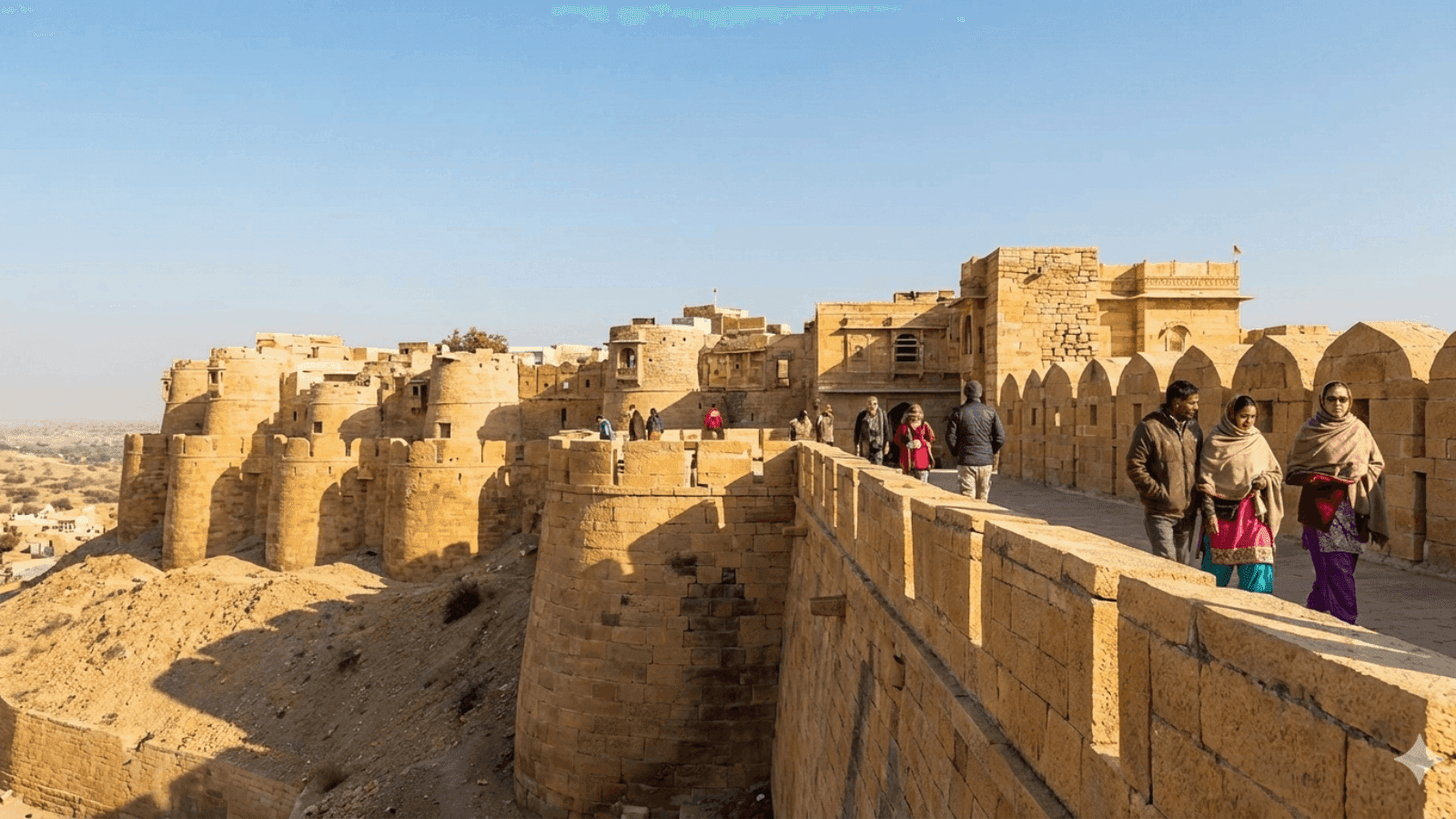
Rajasthan in January: Weather, Places, Festivals & Tips
People talk about Rajasthan’s forts and colours, but January changes the pace first. Streets stay calmer, mornings stretch out, and evenings ask for layers instead of exits. You notice more simply because nothing is rushing you along.
What the climate is actually like in January
Days are mild and workable. Most regions across Rajasthan sit between 20°C and 26°C during the day, which means walking through forts, markets, and old towns does not feel like a test of endurance.
Nights are a different story. After sunset, temperatures commonly drop to 7°C–10°C, and in desert regions like Jaisalmer, Bikaner, or parts of northern Rajasthan, it can slip close to 0°C on colder nights. The air is dry, not biting, but it settles into stone walls and open courtyards quickly.
Rain is almost absent. January falls deep inside Rajasthan’s dry season, so plans rarely change because of weather. Skies stay clear, mornings can be foggy in cities like Jaipur and Bharatpur, and sunlight feels sharp rather than harsh.
What mornings feel like in January
Mornings begin slowly. In January, Rajasthan does not rush sunrise. Shops open late, tea stalls stay crowded longer, and local errands stretch into mid-morning. You notice people standing in the sun instead of moving through it. Vegetable vendors wait for the cold to lift before laying everything out.
In old city areas, especially in Jaipur, Jodhpur, and Udaipur, winter fog softens edges. Fort walls appear gradually, not all at once. Streets stay quieter, which makes early walks through bazaars more revealing than busy. January mornings belong to residents. Travellers who wake early often see a side of the city that disappears by noon.

What nights are like after sunset
Once the sun drops, the temperature falls quickly. Markets thin out earlier than usual. Locals wrap shawls tighter, shopkeepers light small fires outside shutters, and rooftop restaurants empty faster unless they have heaters. Streets feel calmer, sometimes unexpectedly quiet for cities known for energy.
In desert towns, nights are colder and clearer. Sound travels farther. Music from weddings, temple bells, or distant traffic feels closer than it is. In smaller towns, evenings centre around indoor spaces, shared meals, and warmth rather than wandering.
January nights reward places that are well built. Poor insulation becomes obvious immediately.
What to visit that works best in January
January is not about seeing more places. It is about seeing them comfortably.
Forts and palaces
- Mehrangarh Fort, Jodhpur
- Amber Fort and Jaigarh Fort, Jaipur
- Chittorgarh Fort
- Junagarh Fort, Bikaner
Cool temperatures allow longer exploration without fatigue, especially in open courtyards and ramparts.
Desert cities
- Jaisalmer for fort walks and evening rooftops
- Bikaner for heritage architecture and food
- Osian for quieter desert surroundings
Desert towns feel walkable rather than overwhelming.
Wildlife destinations
- Ranthambore National Park for tiger safaris
- Keoladeo National Park for migratory birds
- Tal Chhapar Sanctuary for grassland species
Animals stay active longer in winter mornings.
Smaller towns
- Narlai
- Deogarh
- Dungarpur
- Abhaneri
These places handle winter without crowds and show daily life more clearly.
Festivals that happen in January
January brings festivals that locals observe first and visitors second. Makar Sankranti arrives every year on 14 January. In Rajasthan, it fills rooftops with kites, kitchens with sesame sweets, and neighbourhoods with shared meals. Kite flying is not organised entertainment; it is something everyone participates in, especially in Jaipur and surrounding towns.
Jaipur Literature Festival usually takes place mid to late January. For five days, the city changes rhythm. Cafes stay busy, bookshops overflow, and conversations spill into streets. Even people not attending feel the shift in traffic, timing, and energy.
In some years, regional fairs like the Bikaner Camel Festival also fall in January, adding local colour without overwhelming smaller towns.
What food feels like in winter
January food is heavier and more warming. Dal baati churma tastes richer in cold weather. Street vendors sell roasted peanuts, sweet potatoes, gajak, and til-based sweets meant for winter consumption. Hot milk, tea, and kadak coffee replace cold drinks almost entirely.
Meals happen earlier. Kitchens close sooner at night, and breakfast becomes more important than late dinners. You start noticing how seasonal Rajasthan’s food culture really is.
What to pack for Rajasthan in January
Packing correctly changes the experience.
- Light sweaters or fleece layers for daytime
- Warm jackets or coats for evenings and early mornings
- Scarves or shawls to handle temperature swings
- Closed shoes for cold nights and early walks
- Sunglasses and sunscreen for strong winter sun
- Moisturiser or lip balm for dry air
If you want to experience Rajasthan in January the way it actually feels, where mornings are slow and nights are cosy, Neomaxer helps you stay in places that fit the season.









