
The Real Pongal Happens After Lunch - Kaanum Pongal in TN
Pongal mornings are for rules, rituals, and elders watching closely. Afternoons belong to loose hair, second helpings, and plans that appear mid-conversation. That is when people step out, food packed, opinions ready, and the real day quietly begins.
When the House Empties Out
By early afternoon, homes across Tamil Nadu grow quieter. The morning rituals are done, elders have eaten first, children have negotiated extra servings of sakkarai pongal, and the heavy work of hospitality pauses. Plates are rinsed. Women change into lighter sarees. Men step outside to see who else is leaving.
This is the moment locals wait for. Kaanum Pongal begins only after lunch, when the festival loosens its grip on the house and moves outdoors.
Why “Kaanum” Matters
The word kaanum means “to see,” but not in the tourist sense. It is about seeing people who are usually busy, distant, or postponed. Relatives who live three streets away but feel farther. Friends who only meet during weddings and funerals. Elders who rarely leave home but will come out today because the day demands it.
Kaanum Pongal is social permission. No invitation is needed, no schedule is fixed.
The Geography of Afternoon Freedom
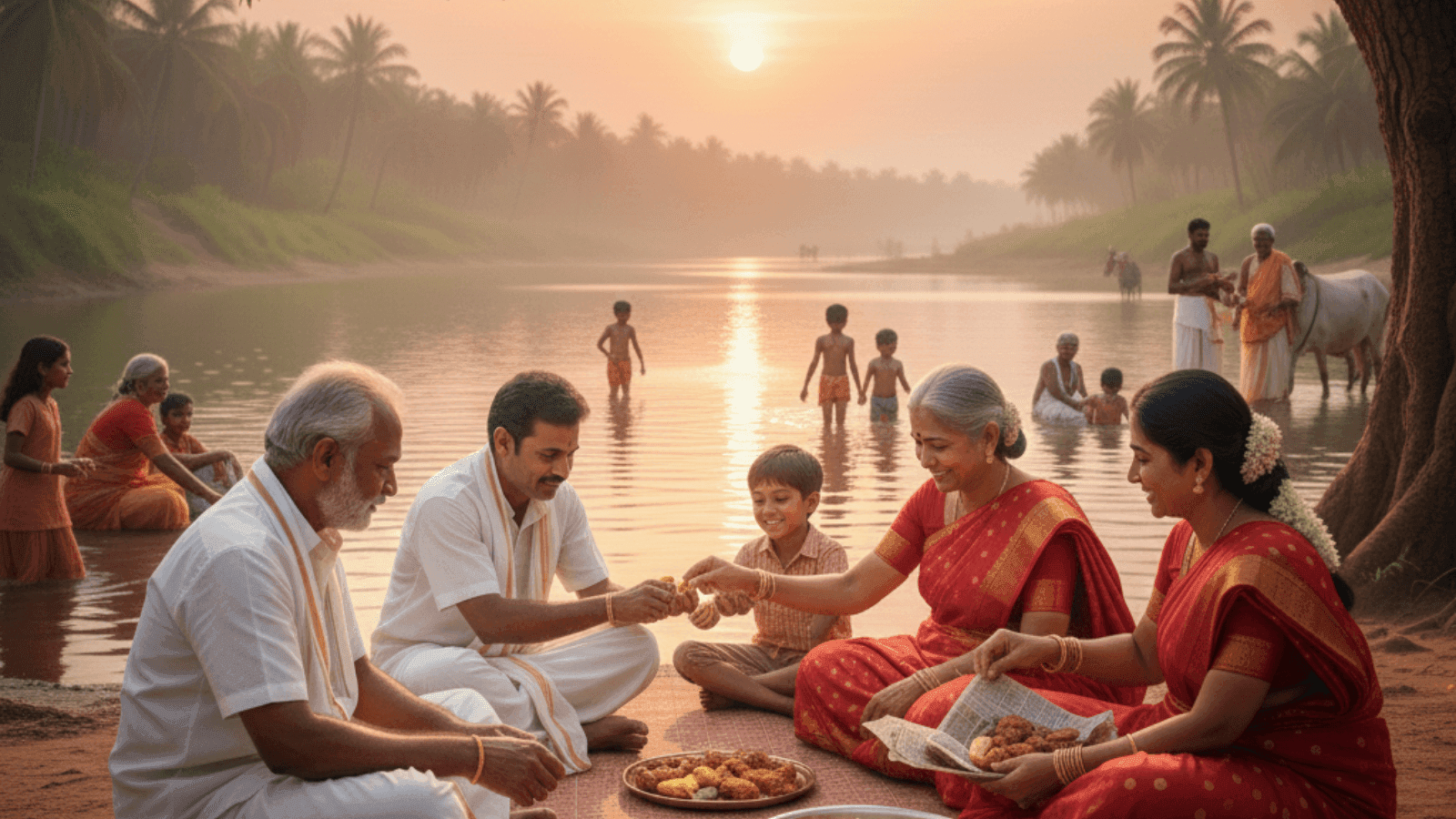
Riversides fill first. In Tirunelveli, families gather near the Thamirabarani, spreading mats under tamarind and neem trees. In Tenkasi and Courtallam, crowds move instinctively toward the falls, not for swimming but for proximity.
The sound of water is enough. In delta towns, it is canal banks and harvested fields, still smelling of straw and damp earth. People choose places they already know how to sit in.

Picnic Food That Never Appears on Day One
The food changes on Kaanum Pongal. Formal vegetarian spreads give way to dishes meant to be eaten outdoors, with hands and opinions.
Chicken pepper fry, mutton kuzhambu, meen varuval wrapped in newspaper. Lemon rice packed tightly so it travels well. Sugarcane broken into uneven pieces and passed around without ceremony. Leftover pongal reheated on portable stoves, tasting better for having rested. No one asks if the food is traditional. It is traditional because it appears every year.
Kolams That Refuse to Stay at the Doorstep
Kolams appear on roads leading to picnic spots, drawn quickly with rice flour by women who know they will wash away by evening.
They are less precise than the Bhogi or Thai Pongal kolams. Curves go off balance. Lines break. Children step through them without apology. These kolams exist for a few hours and that is enough. In villages, kolams sometimes mark where groups have settled, a quiet claim on shade and space.
Sisters, Brothers, and Quiet Prayers
In many families, women still observe the custom of praying for their brothers’ well-being on Kaanum Pongal. Food is placed on banana leaves and offered to birds, a gesture that blends care, belief, and habit without explanation.
The act is rarely dramatic. It happens between packing bags and calling people to eat. But it carries the weight of continuity, especially in families where brothers live far away or return only occasionally. The prayer is less about protection from danger and more about staying connected in a life that keeps scattering people.
Kaanum Pongal and the Crowd
Tourists notice the crowd. Locals notice patterns. Which spot is too loud this year? Where traffic police are letting things slide? Which paths to avoid after sunset? In places like Courtallam, locals arrive early, sit away from the main falls, and leave before evening.
The celebration is not about spectacle. It is about occupying familiar land at the same time.
It is Also Thiruvalluvar Day
Kaanum Pongal coincides with Thiruvalluvar Day, but his presence is subtle. A couplet quoted by an elder during conversation. A schoolchild reciting two lines because the teacher insisted. A debate about which kural applies to family duty or gratitude. There are no speeches here, no banners flapping in the wind.
The Slow Unwinding
As light softens, people begin to pack without announcing it. Leftover food is redistributed. Mats are shaken. Someone promises to visit soon, knowing it may take months. Elders are helped to their feet. Children resist leaving until hunger wins. The day does not end together. It thins out gradually.
By dusk, the riverbank looks ordinary again, except for a faint smell of smoke, crushed grass, and sugarcane fibres left behind.
If you want to experience Pongal the way locals do, after lunch and away from the rush, where time slows and conversations stretch, where you stay matters. Neomaxer puts you close to real towns and everyday life, so festivals are felt naturally









