
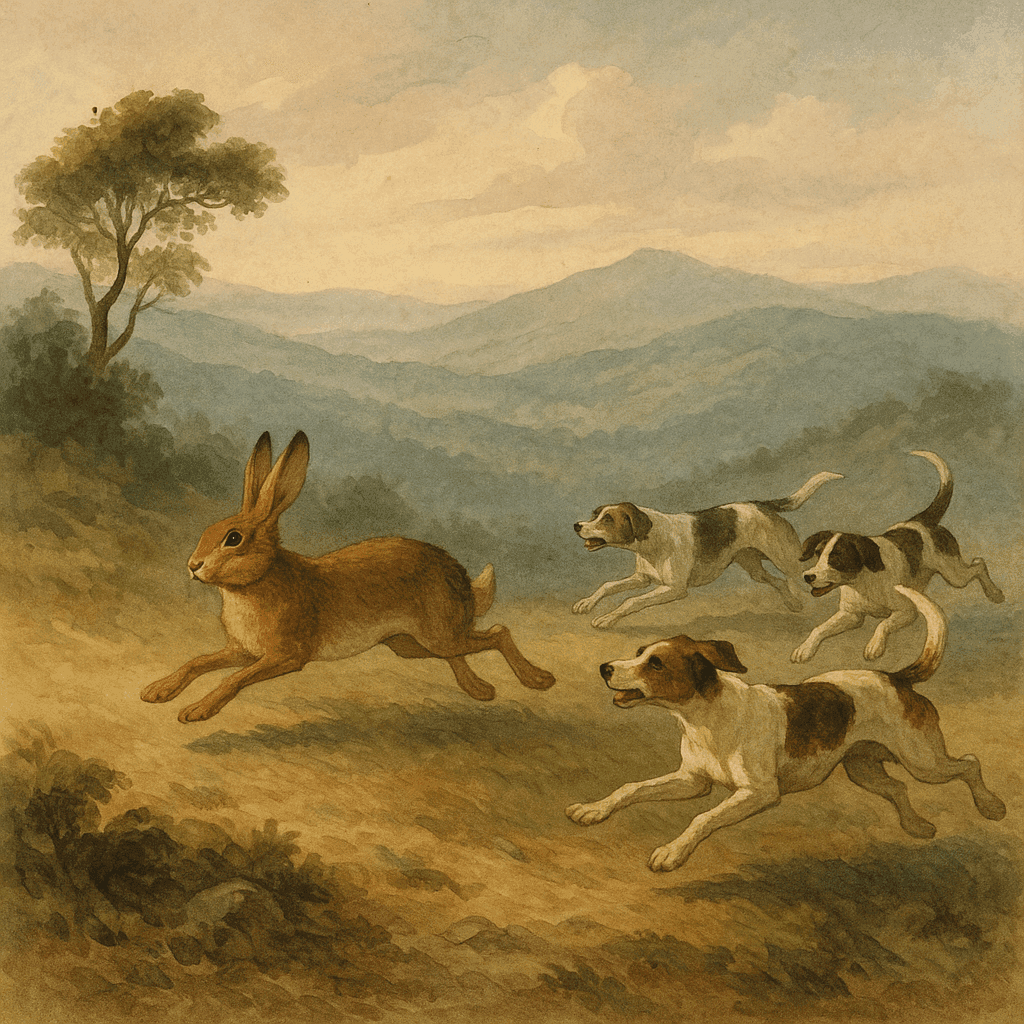
A village born of awe rather than conquest or trade lies tucked away in the heart of the Western Ghats, where clouds brush against the hills and coffee blossoms murmur through the valleys. Madikeri, the capital of Coorg (Kodagu), has a history that starts with a single incident in the 17th century. The event even took the royal family by surprise. There was a time when it seemed that the natural order was reversed. A frightened animal, a hare, chased a group of royal hunting hounds. And in that strange, unfathomable reversal, a kingdom found a home.
The frightened animal in this story becomes a symbol of power, and the hill it defended becomes the epicenter of an empire.
The Haleri Dynasty: Forging a Kingdom in the Hills
Kodagu was occupied in the start of the 17th century by the Haleri dynasty, who are believed to be derived from the Keladi Nayakas. Mudduraja was one of the most important dynasties' leaders, establishing Coorg's early political identity and consolidating control in the wild area.
Other South Indian monarchs preferred river basins and trade routes, while Mudduraja chose the highlands. It was during his leadership that Kodagu started to grow into a powerful, independent principality. However, politics was not the only reason he chose to locate his capital in what is now Madikeri. It was inspired by instinct and an omen wrapped in fur.
The Hare’s Rebellion: A Moment That Changed Everything
Mudduraja and his team once ascended a forested hill to hunt a game during a royal hunt in the Coorg highlands. Alongside him were the king's skilled hunting hounds, which were bred for speed, fierceness, and devotion. It was all going well until they spotted a lone hare scampering through the brush.
The canines followed.
Then something extraordinary happened. The hare whirled around and charged the pack instead of fleeing. The dogs ran off in a daze of shock and dust. The onlookers froze. This was not your normal animal bravery; rather, it was seen as a sign from God and a message from the nation itself.
As a devotee of his time's mysticism, Mudduraja interpreted this reversal of predator and prey as a manifestation of shakti, or divine energy. Any soil that produced a hare with such a soul, he said, had to be endowed with protection and power. The hill was no longer just a plot of ground. That was destiny.
Madikeri is Born: A Fortified Capital in the Clouds
As instructed by Mudduraja, a fort was soon to be constructed on the hill where the hare had established its home. The fort, which served as the political and cultural hub of Kodagu, was first built of wood and mud and had a palace, a temple dedicated to Lord Shiva, or Omkareshwara, and administrative buildings.
The village that was established was called Muddu Raja Keri, which translates to "Mudduraja's town." Over time it evolved into what is now known as Madikeri. More than a shift in location, it was a spiritual alignment. The layout of the town, its fortifications, and its sacred sites were all designed to work with the land's unseen energies.
The Symbolism of the Hare: More Than Just an Animal
In many cultures, hares represent rebirth, fertility, and slyness. But in Coorg mythology, the Madikeri hare came to represent something more profound: reversal and resistance. For a monarchy built on stubborn independence, there could not have been a more fitting foundation emblem. The hare's defiance of stronger adversaries came to represent Coorg's destiny as a tiny but fierce territory that would repel Mysorean invasions, British annexation, and cultural appropriation.
This one incident also became embedded in the region's oral traditions. As a component of Coorg's spiritual legacy, the tale is consistently passed down through the generations. Aside from its historical importance, the hill where the tragedy took place is still revered due to its aura—one that is quiet, intense, and oddly vigilant.

The Fort Today: Layers of History in Stone and Silence
Since it was first constructed, Madikeri Fort has undergone multiple redesigns and renovations. It was renamed Jaffarabad after the Tipu Sultan, in his battles in the late 18th century, destroyed the old mud structure and rebuilt it with granite ramparts. With a clock tower, colonial-style buildings, and a church, the British later turned the fort into an administrative center.
However, despite all these coverings, the fort's vitality remains. Its elevated position, wide vistas, and calm vigilance still echo the day of Mudduraja's death. The Omkareshwara Temple, a spiritual landmark in the town, bridges the sacred with the strategic. The fort was built shortly after it.
Why This Story Still Matters
Cities today are formed by industrial agendas, roadmaps, and GDP predictions. Nonetheless, symbolism, intuition, and reverence for signs were the foundations of Madikeri. More than just a regional custom, the hare and the dogs fable serves as a cultural compass. It reminds us that the land itself has a voice. In unexpected places, you can discover that courage. It's not always the case that size equals strength.
This story also illustrates a time when kings took concern for their nation rather than focusing solely on capturing it. They built with faith as well as stone, watched its creatures, and heeded its omens.
A Hare’s Legacy in the Highlands
Madikeri, a flourishing hill station and well-liked tourist destination, has managed to preserve the spirit of its history. The tale that lies behind its winding lanes, old buildings, and modern cafes will never be forgotten. A tale of a hare who established a nation by standing on its land.
It reminds you that sometimes history doesn't arrive with armies but rather arrives quietly on four sturdy legs and challenges your assumptions about strength.









