
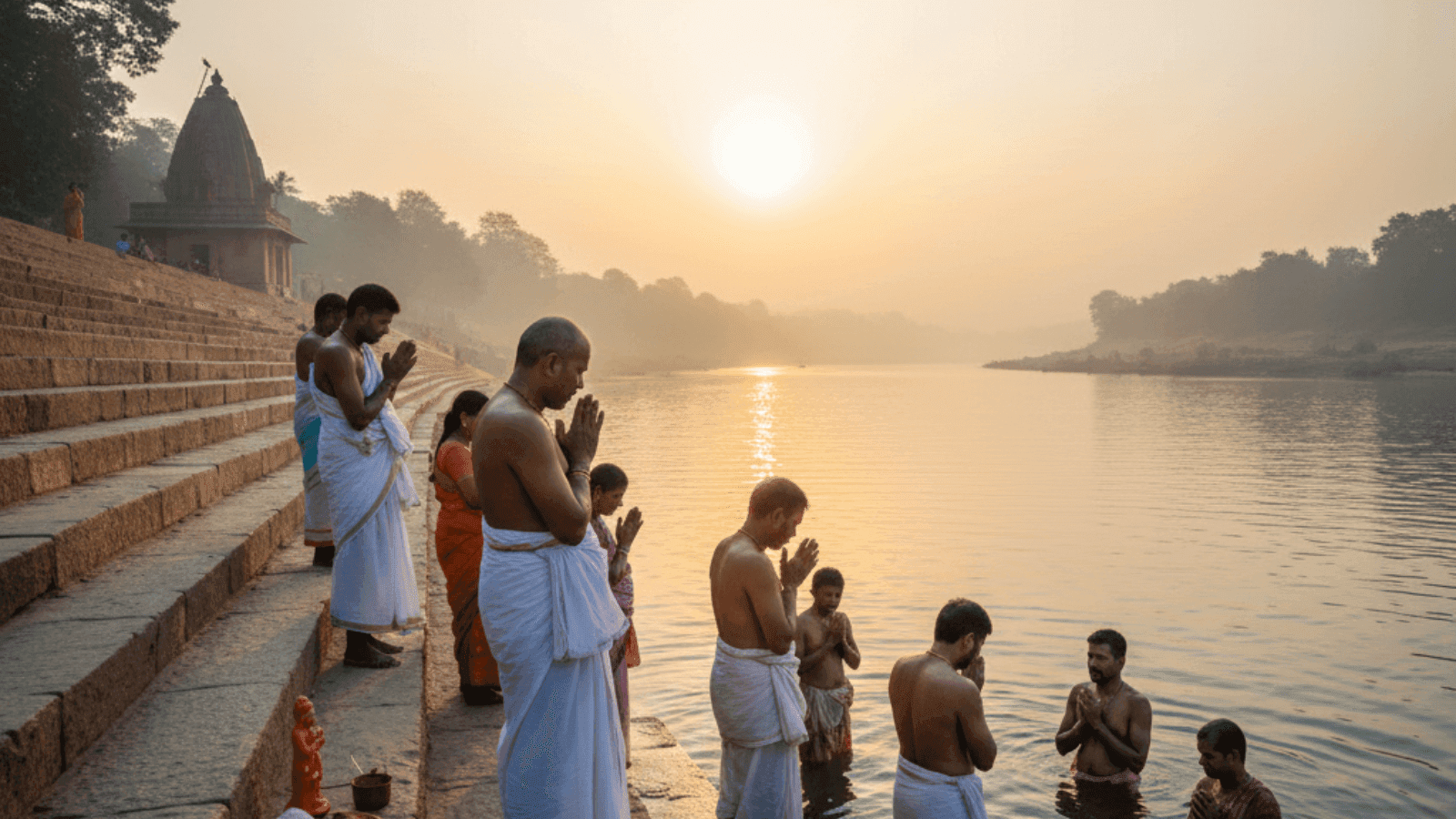
Sankranti in Odisha Begins at the Riverbank
Sankranti in Odisha begins at the edge of water, not inside a temple.
People step down stone ghats before sunrise, sleeves rolled up, towels slung over shoulders. Rivers, village ponds, canals, and the sea itself start seeing movement while most homes are still dark. The first act of the day is a bath taken quickly, often silently, as if the cold deserves attention more than conversation.
When the Sun Changes Direction, the Day Is Treated Differently
The date matters less than the shift. Sankranti marks the moment the sun moves into Makara, beginning its northward journey. In Odisha, this change is not discussed in astrological terms on the ground. It is felt through timing. People wake earlier than usual. Tasks are reordered. The morning is kept open.
This period is known as Uttarayana, a stretch of months considered favourable for beginnings. That belief quietly influences choices. Families wait for this day to perform certain rituals. Temple priests adjust schedules. Some households postpone important ceremonies until this shift is complete.
The sun is acknowledged through action rather than explanation. Bathing before dawn, offering fresh produce, avoiding cooked food early in the day. These habits exist without needing justification. The sun’s movement sets a tone, not an agenda.
In temples, offerings reflect this simplicity. There is no sense of excess. The focus stays on alignment rather than celebration. Sankranti is not loud in Odisha. It is precise.
Water Comes First, Even Before Prayer

Across the state, people head to the nearest water source, regardless of its size or fame. In coastal districts, the sea at Puri fills with pilgrims who step in carefully, watching waves between chants. Inland, village tanks and irrigation ponds serve the same purpose. The water does not need a name to be sacred.
The bath is brief. There is no lingering. Children are guided by the wrist. Elders move slowly but insist on completing it themselves. Clothes are changed on the spot. Wet hair is tied back. Only after this does the day begin.
What is striking is the orderliness. People wait their turn. No one rushes. The riverbank becomes a shared space without instructions or volunteers.
The Offering That Is Never Cooked
- Kitchen fires stay unlit through the early hours
- Makar Chaula is assembled, not prepared
- Newly harvested rice is washed and soaked, never boiled
- Jaggery, coconut, banana, milk, and seasonal fruit are mixed by hand
- Nothing is measured with spoons; older hands decide the balance
- A portion is placed before household deities first
- Another portion is carried to temples in small bowls or leaf wraps
- In many homes, some is set aside quietly for ancestors
Temples Receive What Homes Prepare
After the river and the offering, people move toward temples. Local shrines see steady footfall rather than crowds. At Jagannath temples across Odisha, devotees line up with small bowls of Makar Chaula wrapped in leaves or carried in steel containers.
Priests accept offerings quietly. There are no long sermons. Rituals follow the sun’s position rather than the clock. Those who arrive early leave early, having completed what they came for.
Outside major towns, people also visit village deities and boundary shrines. These visits are often barefoot. The route from water to deity is walked deliberately, without detours.
Charity Happens Without Announcement
Sankranti is also a day of giving, though it is rarely described that way. Cooked rice and lentils are prepared later in the day and shared with neighbours or offered to those in need. In some regions, food is donated in memory of ancestors.
There are no formal collection points. The exchange happens through familiarity. Someone sends a plate across the lane. Another returns it filled. The gesture matters more than quantity.
Sweetness Is Seasonal, Not Decorative
Sesame and jaggery appear in many homes, shaped into simple sweets. They are eaten, shared, or carried during visits. There is no emphasis on presentation. The taste is dense, warming, practical for winter mornings.
Kites Stay on the Margins
Unlike states where the sky defines Sankranti, kite flying remains secondary in Odisha. In some areas, children fly kites later in the afternoon, but it is not central to the festival’s identity. The focus remains grounded. Feet on stone. Hands in water. Bowls held carefully.
The Festival Moves Through Habit
What makes Sankranti in Odisha distinct is how little needs explaining. People follow a sequence learned by watching others. Wake early. Go to water. Change clothes. Prepare the offering. Visit the temple. Share food.
Children learn the festival by walking behind adults to the river, shivering, laughing, being told where not to slip. Years later, they repeat the same route without instruction. The riverbank fills before sunrise and empties quietly, leaving behind damp steps and folded towels drying on railings. If you want to experience festivals like Sankranti the way locals actually live them, where mornings start at riverbanks and days unfold slowly, Neomaxer curates stays rooted in place.









