
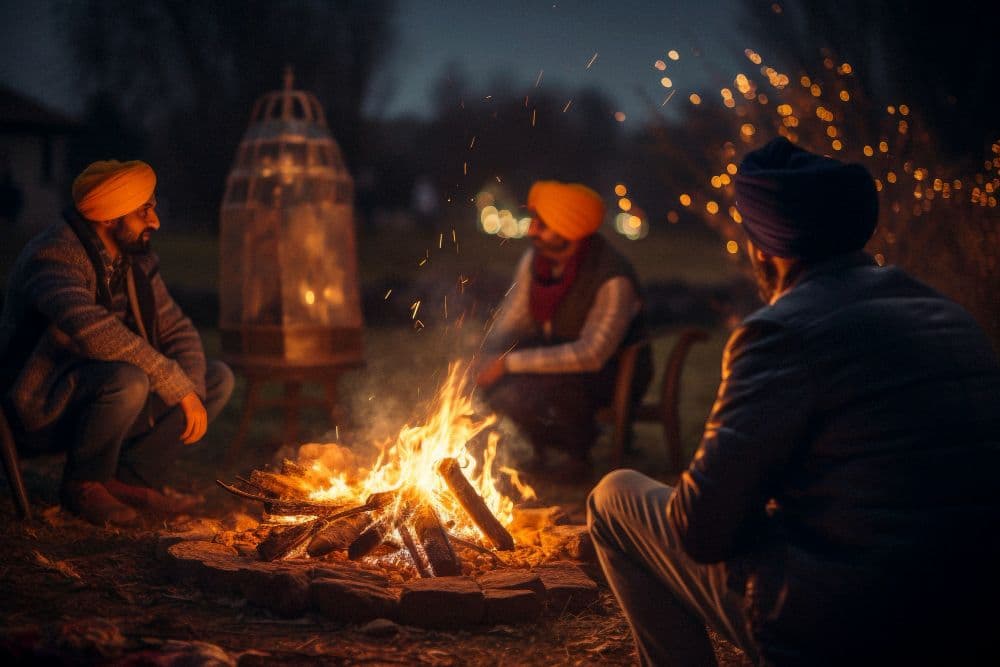
Lohri begins with a fire that feels older than the story around it. People call it a celebration, but elders call it a witness. They say the flame listens before it warms. They say the sparks rise like messages sent to the winter sky. Someone greeting a first Lohri stands near the heat a little longer, unsure whether they are being blessed or inspected. People share greetings like happy Lohri, but their eyes stay fixed on the fire because it carries memory, not noise.
The Fire That Knows What Came Before
Villages in Punjab and Haryana treat the Lohri day bonfire like a living presence. If the wood cracks sharply, they say the harvest will arrive strongly. If it burns slowly, they say winter still has work to do. People do not dance first. They watch first. That moment before movement begins is where the truth hides.
A farmer might toss a handful of sesame into the fire. A mother might whisper a hope for the child who celebrates their first Lohri. Children circle the flame but do not get too close. Elders warn them that fire remembers everything, even the last season’s mistakes.
When the night wind shifts, someone always says the flame is pointing toward the coming harvest. They say it behaves differently in years when the fields struggle. This is not superstition to them. This is a reading of signs.
Bonfires That Carry Stories, Not Entertainment
In older settlements, people sit near the fire and speak in low tones. They tell stories of winters that overstayed. They recall years when the bonfire needed to be fed twice because the cold challenged its strength. Lohri decor in these homes is minimal. A few sugarcane stalks. A circle of cow dung cakes. A boundary of stones. Enough to tell the flame it has a place, not a stage.
Women in traditional attire stand by the warmth. Their Lohri dress for women is rarely chosen for photos. It is chosen for movement around the fire. Soft colours, breathable fabric, a dupatta long enough to cover the head when a prayer slips out without warning.
Men approach the fire with a respectful pace. No one rushes. No one treats the flame like a backdrop. It is more like an elder seated at the centre of the courtyard. People walk around it the way they walk around someone they owe gratitude to.

The Link Between Lohri and the Sun
Conversations eventually drift toward Makar Sankranti. Families speak of how both festivals honour the sun in different ways. Lohri asks the fire to burn away the last of the winter’s weight so the fields can breathe. Makar Sankranti asks the sun to move, to tilt, to return.
In homes planning for Sankranti 2026 or checking dates for Makar Sankranti 2026, elders remind the younger ones that the two festivals do not just sit next to each other on the calendar. They are connected by intention. Fire first, sunlight next. Clearing first, blessing next.
A child listening to these explanations sometimes asks where Lohri is in 2026 on the calendar. Elders respond gently, pointing to the fire rather than the date. They say the calendar only tells you when to gather. The flame tells you why.
The Night That Belongs to the Flame
As the bonfire grows, songs begin. Not loudly. Not instantly. Someone starts with a line, someone else joins, and the rhythm settles into the courtyard slowly. The flame brightens faces without turning them into performers.
You see couples step back for a moment to feel the heat fully. You see, grandparents hold a child's palm close to the warmth so they understand the significance of their first Lohri. You see neighbours arrive without announcement because the fire pulls people the way memory does.
Around midnight, when the logs burn lower, people sit closer. They read the embers like they read the weather. They notice how sparks rise and fall. They watch the smoke lean toward the harvest fields. They let the flame finish speaking before they leave. And when the last family steps back into their home, the fire continues to glow in the courtyard, carrying the quiet authority that has defined Lohri for generations.









