
The Day Andhra Pradesh Lights Fires Outside Every Home
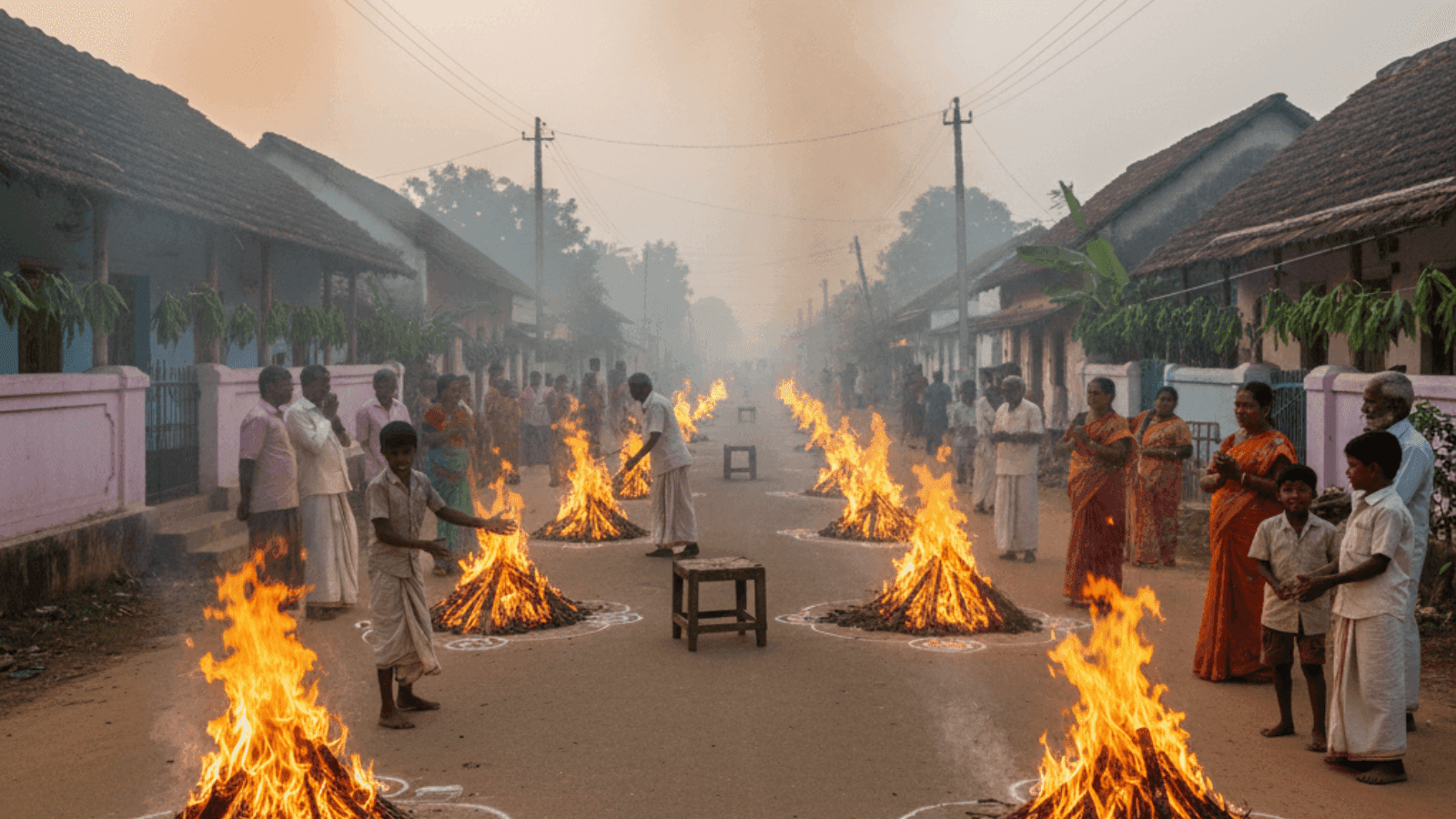
Smoke rises before sunrise in towns and villages across Andhra Pradesh. Courtyards glow orange, lanes smell of burning wood, and people stand quietly around small fires, watching old things disappear into flame. January mornings in Andhra Pradesh smell different.
Bhogi Marks the Opening of Sankranti
Bhogi is celebrated on the first day of the four-day Sankranti festival. It usually falls on January 13 or 14, depending on the solar calendar. The day signals the sun’s northward journey and the gradual end of winter.
In agrarian regions of Andhra Pradesh, Bhogi is closely tied to the farming cycle. Harvest has just finished, granaries are full, and households pause to mark a clear shift from one agricultural year to the next.
Why Fires Are Lit Outside Homes
The Bhogi fire, known as Bhogi Mantalu, is built using old household items. Broken wooden furniture, worn-out mats, unused baskets, and agricultural waste are gathered days in advance.
Burning these items is symbolic. It represents letting go of the previous year’s clutter and making space for renewal. Families believe that starting the season with cleared surroundings brings clarity, prosperity, and calm into the home.
In many villages, fires are lit at dawn. Elders light the first flame while children circle the fire, warming their hands in the winter chill.
Community Fires Set the Morning
Bhogi is rarely a private affair. Neighbours often combine materials and light a common fire at street corners or village centres. People greet one another, exchange festival wishes, and stand together as the fire burns down.
In towns and cities, especially in areas like Visakhapatnam and Vijayawada, municipal bodies regulate the size and location of Bhogi Mantalu. Community fires are preferred to avoid congestion and safety issues. The shared act turns an ordinary street into a temporary gathering space. Conversations drift from crops to family news, from weather patterns to wedding plans.
Rituals Begin at Daybreak

Oil baths are common on Bhogi morning. Sesame oil is massaged into the scalp and body before bathing, a practice believed to protect health during seasonal change.
New clothes are worn, often simple cottons suited to daytime warmth. The shift in temperature is felt immediately, with cooler mornings giving way to brighter afternoons.
Special Attention to Children
Bhogi holds a unique ritual for young children called Bhogi Pallu. In this ceremony, elders shower infants and toddlers with a mixture of jujube fruits, sugarcane pieces, flowers, coins, and rice. The act is meant to bless children with growth, resilience, and abundance. Laughter fills courtyards as children try to catch the falling offerings, often startled and delighted at the same time.
In some families, this ritual is accompanied by small prayers and quiet chants passed down across generations.
Seasonal Foods Take Over Kitchens
Cooking begins early on Bhogi day. Sesame seeds, rice, jaggery, and lentils dominate the menu. Popular dishes include til laddoos, pongali, garelu, and sweet rice preparations.
Sugarcane appears everywhere. Long green stalks are stacked near entrances, cut and shared throughout the day. For farming families, sugarcane represents sweetness earned through months of labour. Food is prepared in large quantities and shared with neighbours, relatives, and visitors without formal invitations.
Regional Variations Across Andhra Pradesh
Coastal Andhra, Rayalaseema, and North Andhra observe Bhogi with subtle differences. In some coastal villages, fires are smaller and rituals more restrained due to space constraints. In Rayalaseema, Bhogi Mantalu are often larger, with entire hamlets participating together. Folk songs and informal drumming may accompany the gathering.
Urban areas adapt the celebration to apartment living, using designated open spaces while preserving the essence of the ritual.
Bhogi and the Agrarian Calendar
Bhogi’s significance is inseparable from agriculture. It acknowledges the end of one harvest cycle and the readiness for the next phase of cultivation. Farmers treat the day as a moment of rest. Tools are cleaned, cattle are fed well, and fields are left untouched. The following days of Sankranti focus on gratitude, cattle worship, and community celebrations. This pause reinforces the rhythm of rural life, where festivals follow the land rather than the clock.
Environmental Awareness in Modern Celebrations
In recent years, there has been a growing shift toward eco-friendly Bhogi celebrations. Many households avoid burning plastic, rubber, or synthetic materials.
Local authorities and resident groups encourage using only biodegradable waste. Some communities replace fires with symbolic lamps or composting rituals. These changes aim to preserve the tradition while aligning it with contemporary environmental responsibility.
A Quiet Festival with Lasting Presence
Bhogi unfolds without loud processions or grand displays. Its power lies in repetition, memory, and shared understanding. The fire burns down. Ash settles. The day moves forward, carrying the warmth of renewal into the rest of Sankranti. If you want to experience festivals like Bhogi in their natural rhythm, Neomaxer offers thoughtfully located stays that keep you connected to local culture.









