
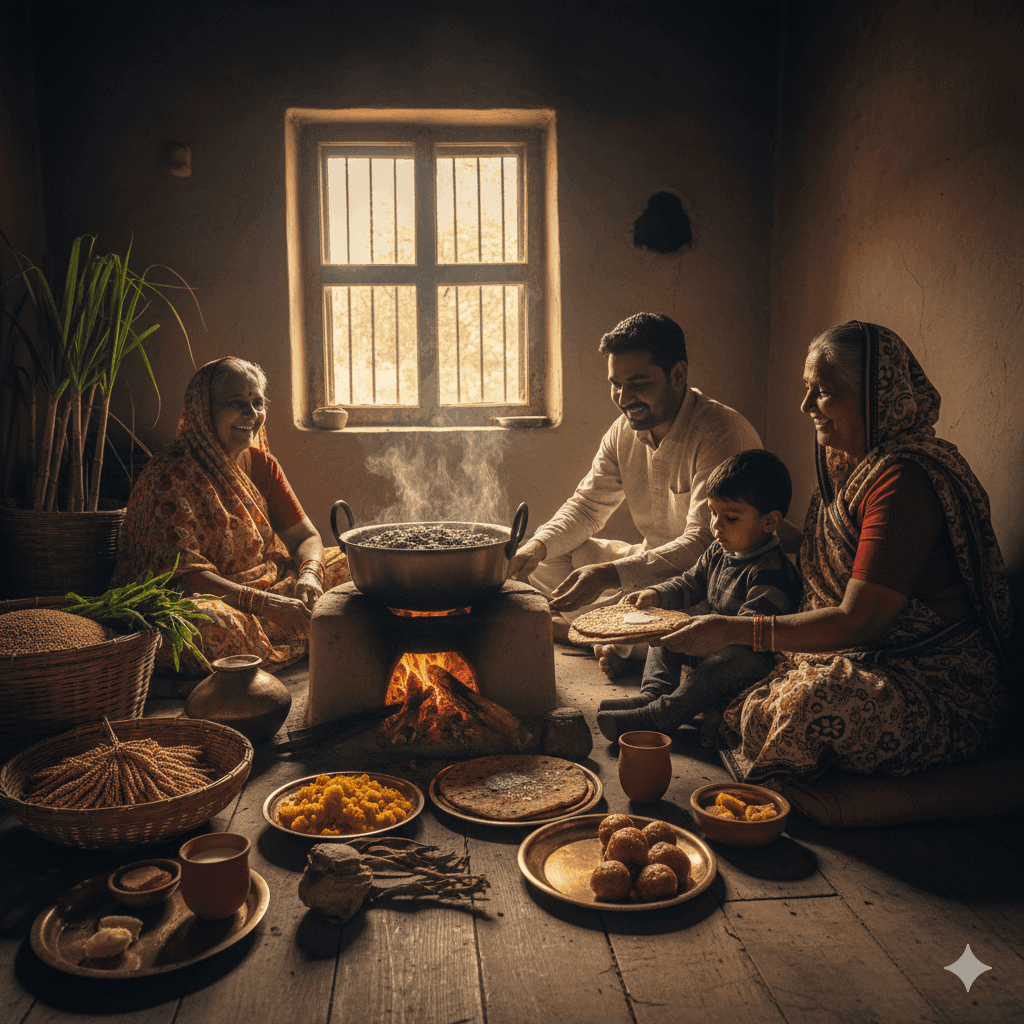
Smoke rising from a small chulha before sunrise is the first sign that winter delicacies are being prepared in a traditional Haryanvi kitchen. The sound of slow bubbling in an iron kadhai follows next. Then the smell arrives, thick and earthy, drifting across courtyards and cow sheds. Nothing is announced. Families recognize the scent as easily as farmers read the morning sky. It means a long, patient recipe is unfolding, one that belongs to the rhythm of winter more than any written cookbook.
Reading the Morning Kitchen
People here do not list the 5 famous foods of Haryana when winter begins. They point instead to clues. Freshly churned white butter stacked on banana leaves. A pot of ghee is cooling near the window. Bajra dough resting beside the chulha with a damp cloth on top. These small hints reveal the start of Haryana's traditional food better than any formal recipe. Haryanvi cuisine relies on signs that show readiness rather than timers. If the ghee has a nutty smell, the flame is right. If the bajra roti puffs cleanly, the dough has been kneaded long enough. If the milk thickens without curdling, the winter delicacies of the Haryanvi kitchen have begun their slow journey.
Slow Heat and Patient Hands
The best dishes reveal themselves through their pace. Kadi simmering till it turns the color of afternoon sunlight. Sweet gond pak is swelling quietly in a heavy pan. Mixed saag cooked until the greens turn glossy, each leaf surrendering slowly to the fire. These dishes cannot be rushed. If a roti burns at the edges, the flame is too impatient. If the ghee separates too early, the stirring lacks rhythm. Recipes are learned through watching. A grandmother flicks water onto a tawa to test the heat. A mother rolling bajra rotis thicker for elders and thinner for children. A daughter learning to judge the flame by looking at the shadows on the wall, not the fire itself.

Winter Flavors That Move Through the Home
When people talk about winter delicacies of the Haryanvi kitchen, vegetarian dishes, they speak with a quiet pride. Sarson ka saag thickens until the spoon stands upright. Bajra khichdi enriched with ghee, so fragrant it settles on your clothes. Kheer made with newly harvested rice that cooks more slowly and tastes deeper. These dishes travel from one room to another, collected in steel bowls, shared without ceremony. Children wait near the door for their share of freshly crushed gur. Old men warm their hands near the chulha while the rotis puff. Women taste the saag by instinct, adjusting salt without checking exact measures. This is how Haryanvi cuisine shapes winter days, through simple acts repeated with care.
Food as a Seasonal Map
Every dish hints at the weather outside. Thicker rotis mean sharper winds. More ghee means colder nights. Gond laddoos appear when the temperature drops below what the elders call “bone cold.” Food becomes a way of reading the season without checking any forecast. Visitors often ask for winter delicacies of Haryanvi kitchen recipes, hoping for exact numbers, fixed methods, and precise timing. The cooks smile gently. They know the real measurements live in the hand, the ear, the warmth of the flame, and the smell of the air. These recipes change each year because the winter changes too.
The Evening Quiet
As night settles, the kitchen grows warmer. A fresh batch of saag cools near the window. Rotis wrapped in cloth stay soft for hours. A pot of sweet lapsi waits to be served. The sounds shift to silence, broken only by the crackle of the last firewood. In these quiet hours, winter delicacies linger in the air, leaving traces that belong to the season more than the meal.









