
Tal Chhapar Sanctuary Offers a Rare Chance to See Raptors Up Close in Rajasthan
A hawk glides so low you can hear the wind through its wings. That is a regular morning at Tal Chhapar Sanctuary. Here, the sky feels busy in the most beautiful way.
Where Tal Chhapar Sanctuary sits and why birds gather here
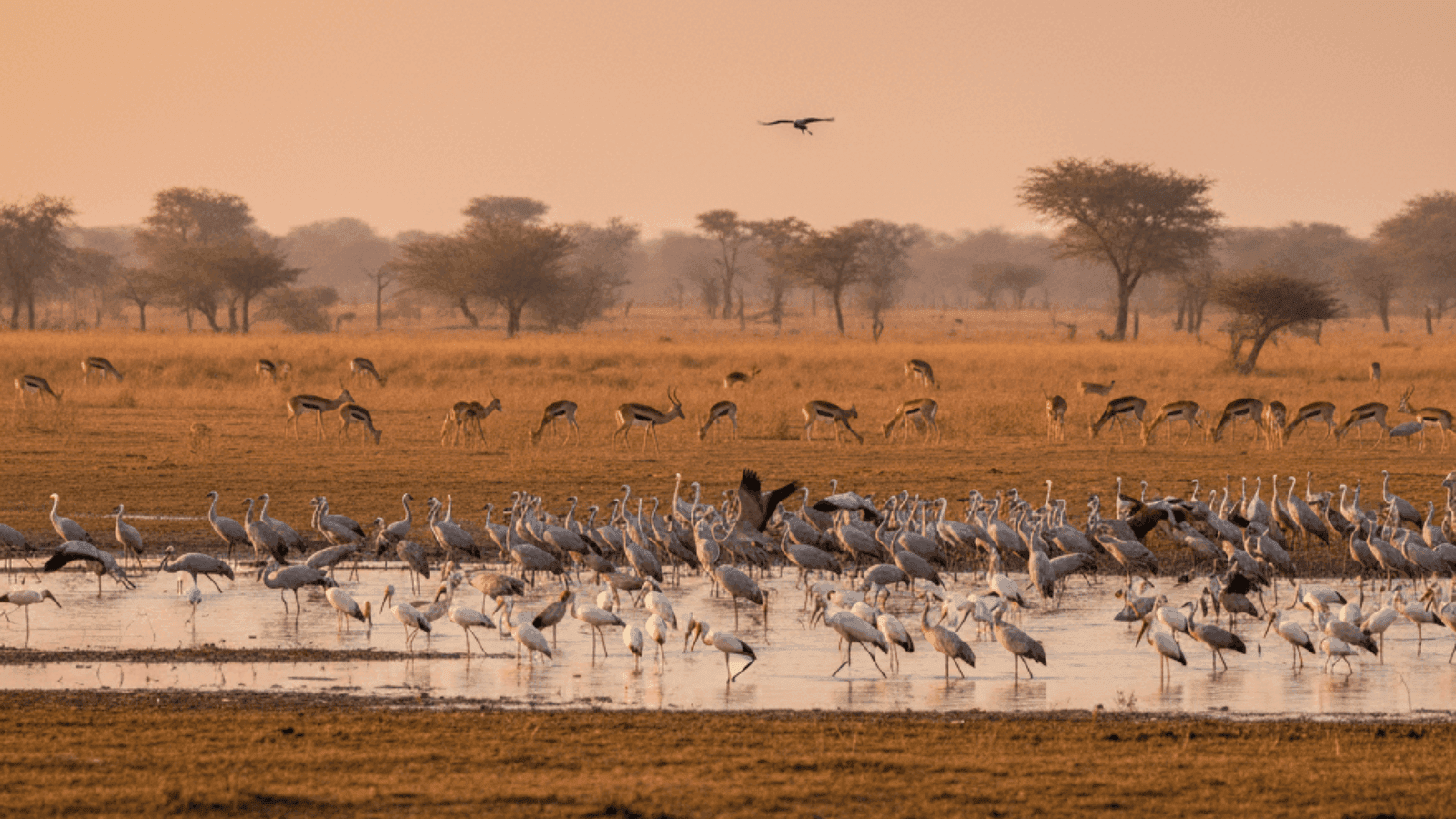
Tal Chhapar Sanctuary lies in the dry plains of Churu district, surrounded by open grassland that stretches without interruption. This flat terrain gives birds of prey exactly what they need. There are no dense trees to block their view, and prey is visible from far above.
The sanctuary was once used as a private hunting ground by the royal family of Bikaner. Protection over the decades allowed the grassland to recover, and migratory birds began returning season after season. It is now recognised as one of India’s most reliable grassland bird habitats.
What makes this grassland ideal for raptors
The land here remains open, dry, and flat for kilometres. Short grasses dominate the terrain, broken occasionally by low shrubs and scattered trees. This allows raptors to fly low while scanning the ground for movement.
Rodents, insects, and reptiles thrive in this environment. These animals form the base of the food chain, attracting migratory predators during winter. Birds arrive after travelling thousands of kilometres, using Tal Chhapar as a seasonal hunting ground.
What you can see here
- Montagu’s Harrier, one of the most common winter visitors, often flying low across the grass
- Pallid Harrier, slightly rarer and known for its smooth, effortless flight
- Marsh Harrier, larger and heavier, usually seen gliding slowly while hunting
- Imperial Eagle, powerful and striking, often resting on isolated trees
- Tawny Eagle, frequently spotted during winter months
- Laggar Falcon, fast and agile, known for sudden hunting dives
- Common Kestrel, famous for hovering in place before dropping on prey
- Blackbuck herds moving across the grassland, especially during early hours
- Desert fox, occasionally visible near quieter edges of the sanctuary
- Nilgai, Indian hare, and several species of smaller grassland birds

Best months and timing to visit
- October and November mark the arrival of migratory birds
- December to February offers the highest number of raptor sightings
- March still provides good sightings before birds begin leaving
- Early mornings see the most active hunting behaviour
- Late afternoons offer clear views as birds return to resting areas
- Winter weather remains pleasant, making safaris comfortable
Safari experience inside the sanctuary
Jeep safaris are the primary way to explore Tal Chhapar. Vehicles move along fixed dirt tracks that pass through known bird activity zones. The open terrain allows uninterrupted views throughout the drive. Morning safaris begin soon after sunrise. This is when birds leave their roost and begin hunting. Evening safaris offer another opportunity to watch them as they settle back.
Guides help identify species and understand their behaviour. Even without extensive birding experience, sightings are frequent and easy to observe.
The sanctuary is not crowded like larger national parks. This creates a quieter experience, allowing travellers to focus on watching wildlife without distractions.
How to reach Tal Chhapar Sanctuary
The sanctuary is accessible by road, rail, and air. The nearest major airport is in Jaipur, about 220 kilometres away. Bikaner also offers closer access with fewer flight options. Tal Chhapar has a small railway station nearby, while Sujangarh and Ratangarh provide better connectivity to major cities.
Road travel remains the most convenient option. The drive passes through desert plains, small villages, and open farmland typical of this region.
Rules and some tips to keep in mind
- Entry is permitted only between sunrise and sunset
- Visitors must remain inside vehicles during safaris
- Loud sounds and music are not allowed
- Feeding wildlife is strictly prohibited
- Follow designated routes at all times
- Carry water and sun protection
- Winter mornings can be cold, so warm clothing is useful
- Binoculars help spot distant birds more clearly.
If Tal Chhapar’s winter skies are calling, Neomaxer curates stays that place you close to the sanctuary and its rhythm.









