
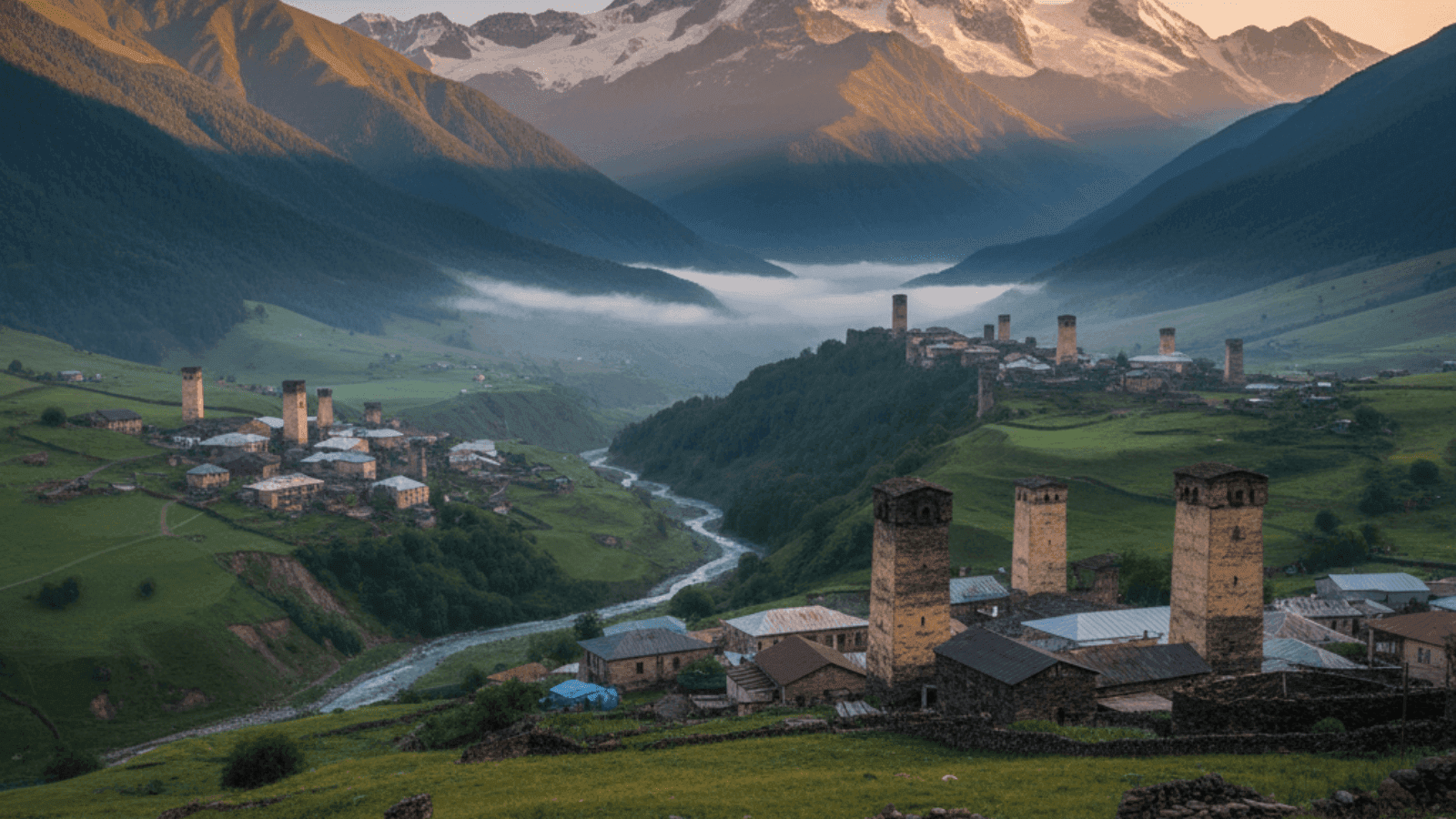
The Towers of Svaneti That Once Protected Families for Months
Why the Svan Towers Were Built
Across the high valleys of Svaneti, nearly every extended family once built its own defensive tower. These narrow stone structures were not monuments or watchtowers built by rulers. They were private fortresses tied directly to household survival.
Life in the Caucasus mountains was shaped by feuds, invasions, and winter isolation. Families needed a place where they could retreat with food, livestock, and weapons when danger appeared.
Reaching Svaneti from Tbilisi Airport
- Most journeys begin in Tbilisi, followed by a long but scenic route into the mountains.
- Night train from Tbilisi to Zugdidi about 11 hours fare around GEL 30
- Marshrutka minibus from Zugdidi to Mestia roughly 3 hours
- Direct summer flights from Tbilisi to Mestia Airport about 45 minutes
- Shared jeep from Kutaisi to Mestia around 4 hours morning departures common
- 4x4 rental from Zugdidi about 5 hours fuel stops limited in upper valleys
Mestia and Ushguli Tower Clusters
Travelers first encounter these towers around the town of Mestia, where dozens of them stand beside wooden homes and narrow lanes.
Some lean slightly with age. Others have been restored and reopened. Walking through the village feels less like visiting ruins and more like stepping into a medieval neighborhood that never entirely disappeared. Further up the valley sits Ushguli, one of Europe’s highest permanently inhabited communities at about 2200 meters above sea level.
Tower Tours and Entry Details
Several towers in Mestia have been carefully restored and opened to visitors. The interiors are narrow, and ladders between floors are steep and worn smooth by centuries of use.
Rainy days make the wood slippery, which is why some towers close temporarily during storms. Local guides often combine tower visits with short hikes above the village. Many routes lead to wide viewpoints overlooking the valley and glacier peaks.
Half-day guided walks toward Shkhara viewpoints typically cost around GEL 100 and include local historical explanations.
Drone flying requires permits from forest authorities and must be requested about 48 hours in advance. Some valleys are restricted because of protected wildlife areas.

How Families Used the Towers
Each tower typically had four to six floors connected by removable ladders. The lowest level often held livestock during winter or attacks.
Above that came food storage and living quarters. The upper floors worked as fighting platforms, with narrow openings designed for archers.
From the outside, the towers look narrow and austere. Inside, the spaces are surprisingly practical. Thick stone keeps temperatures stable during both harsh winters and summer heat.
Svan Towers Location Guide
- Mestia base village with the largest restored tower cluster
- Ushguli walking paths free access across medieval settlement
- Sunrise viewpoints facing Mount Shkhara glacier wall
- Mestia Svan Museum tower interiors open 10am to 6pm entry about GEL 15
- Ushguli altitude around 2200 meters strong sun even in cold months
- Some private towers allow interior visits if owners are present
Ushguli Winter Closures
Heavy snowfall cuts off road access between November and May. Avalanches regularly block sections of the mountain road between Mestia and Ushguli.
In winter, only a few local vehicles equipped with chains attempt the drive. Visitors arriving during that season usually stay in Mestia and explore nearby towers instead. Inside Ushguli, paths between houses remain walkable, but tower interiors are often closed due to ice on the ladders.
If a mountain stay surrounded by history and dramatic peaks sounds like your kind of trip, find the stays curated by Neomaxer.









