
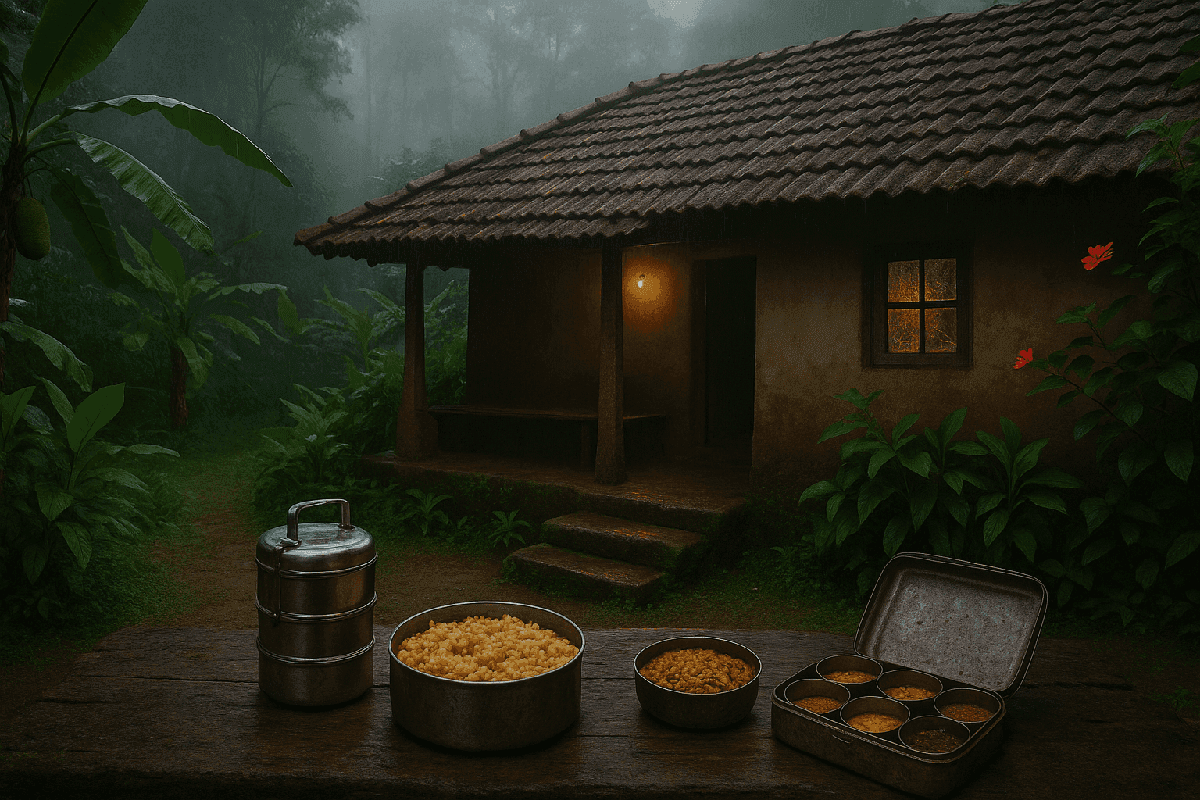
A calendar existed that showed July. Nevertheless, the heavens disagreed. Located in the Western Ghats at an elevation of more than 3,000 feet above sea level, the Kodagu region had already been overrun by the monsoon. A deeper shade of green was visible in the trees. The dirt roads softened. The walking pathways were approached by wild ginger. There was also the damp sharpness of eucalyptus crushed between fingers that permeated the air.
After traveling from Bangalore for six hours, I arrived late on a Friday afternoon. There was no digital footprint, no complex reservation. A friend's post-it note with just three words and a hurriedly typed address: inquire for her.
At the time, I had no idea that this woman, whose name was missing from all internet sources, would change the way I thought about eating. and of quiet.
The House that Didn’t Want to Be Noticed
The homestay didn't formally announce anything. There was neither a paved pathway leading in nor a sign outside. Curry leaf and wild hibiscus shrubs grew thickly like fences and a gate of uneven iron stood open. Under the shadow of tall jackfruit trees, a tiled house was situated inside.
Nor was this a resort. The home has subtly received visitors..
When I arrived, the air was filled with the scent of freshly ground coriander and ghee-fried onions. My visit began with that scent, which was earthy, strong, and hearty. Like a story that had already started, it pulled me in.
She didn't seem surprised when she opened the door. A "Tea?" she asked. A smile was absent. No records. only her being there.
When Rain Writes the Routine
During the monsoon season, Coorg speaks a distinct language. Rainfall here occurs in different moods, not in sheets. It falls softly at times, talking to the pepper vines. At other moments, it slams down, drowning out even the loudest crickets.
The house adapted to these developments. Filter coffee in steel tumblers, a stronger brew than city cafés would dare to serve, kicked off mornings. Sitting on the verandah with a stone floor, we would watch the world disappear into a fog.
The kitchen took up the afternoons. Time's imprints were visible on the walls. Burned wood, coal remnants. The fireplace had no chimney and merely a window that was half-open to let smoke and sunshine in.
She never took measurements. "We don’t," she said. "Your sense of smell is what you use. You see. You get it."

Recipes that Were Never Written Down
Food was a collection of memories, not just a menu.
She once made akki ottis, which are rice flour flatbreads, with thili saaru, a hot soup. She also served koovale puttu, a steaming treat made from jackfruit pulp, coconut, and jaggery that was shaped into circles that evoked intimate gatherings. Every meal had a story to tell, one that was shared as a treasured secret rather than presented as reality.
In her anecdote, she described how her mother's hands would roast spices till the aroma changed into the air. It's important to introduce turmeric gradually, she stressed. Before they can be heard, she insisted, mustard seeds must pop.
She kept her records in the kitchen. There was nothing out of the ordinary about the components. However, the cooking was exceptionally well prepared.
The Notebook and the Forgotten Drawer
The second night, I was looking for a pen when I found a drawer under the ancient book rack. I discovered an old book, a box of cloves, and a twine-tied notebook within.
My writing resumed, but it wasn't a blog entry or a novel. Just bits and pieces. It's the kind of thing that comes only when you have enough silence to hear yourself again.
There was no WiFi. No signal came to my phone. My laptop had also been closed for two days. Only the sound of rain pattering on the tiled roof filled the room.
What Stayed Behind
The meals were unforgettable, yes — but other details lingered longer:
The way the front steps glistened with moss after dusk.
The spider web on the window that shimmered like silver thread at sunrise.
The red tin box near the spice shelf, filled with handwritten notes, turmeric-stained paper, and a packet of hing so old the label had faded.
And her — never rushing, never idle. Always aware of what needed to be done before it asked.
Why It Felt Like Home — Without Resembling One
I was not a native of Coorg. I didn't know Kodava. I was not exposed to monsoon rice or jackfruit customs as a child. Unconditional nourishment, however, had an indisputable feeling of familiarity. in being recognized without putting on a front.
This house, surrounded by smoke and soft at the edges, made me realize that not all homes are inherited. Others are found by accident. For a weekend, some are temporarily borrowed. Some people just let you be, without asking why you should.
The Morning the Silence Got Loud
It didn't rain on the day I was leaving. As if watching me go, the hills stayed still.
For me, she made a tiffin with tamarind rice scented with roasted lentils, a boiled egg, and a single cardamom pod tucked in the rice. The jackfruit curry is still waiting for you to return, she said, adding, "Travel safely."
That tiffin box was something I hung onto like a priceless heirloom.
How One Stay Became a Season
I'm still not back. But every time it rains in the city, I can't help but think about that porch with its peppery aroma, the way spices spoke, and the identityless woman.
The homestay didn't promise anything. It did, however, supply everything.
Aside from the spice's sound.









