
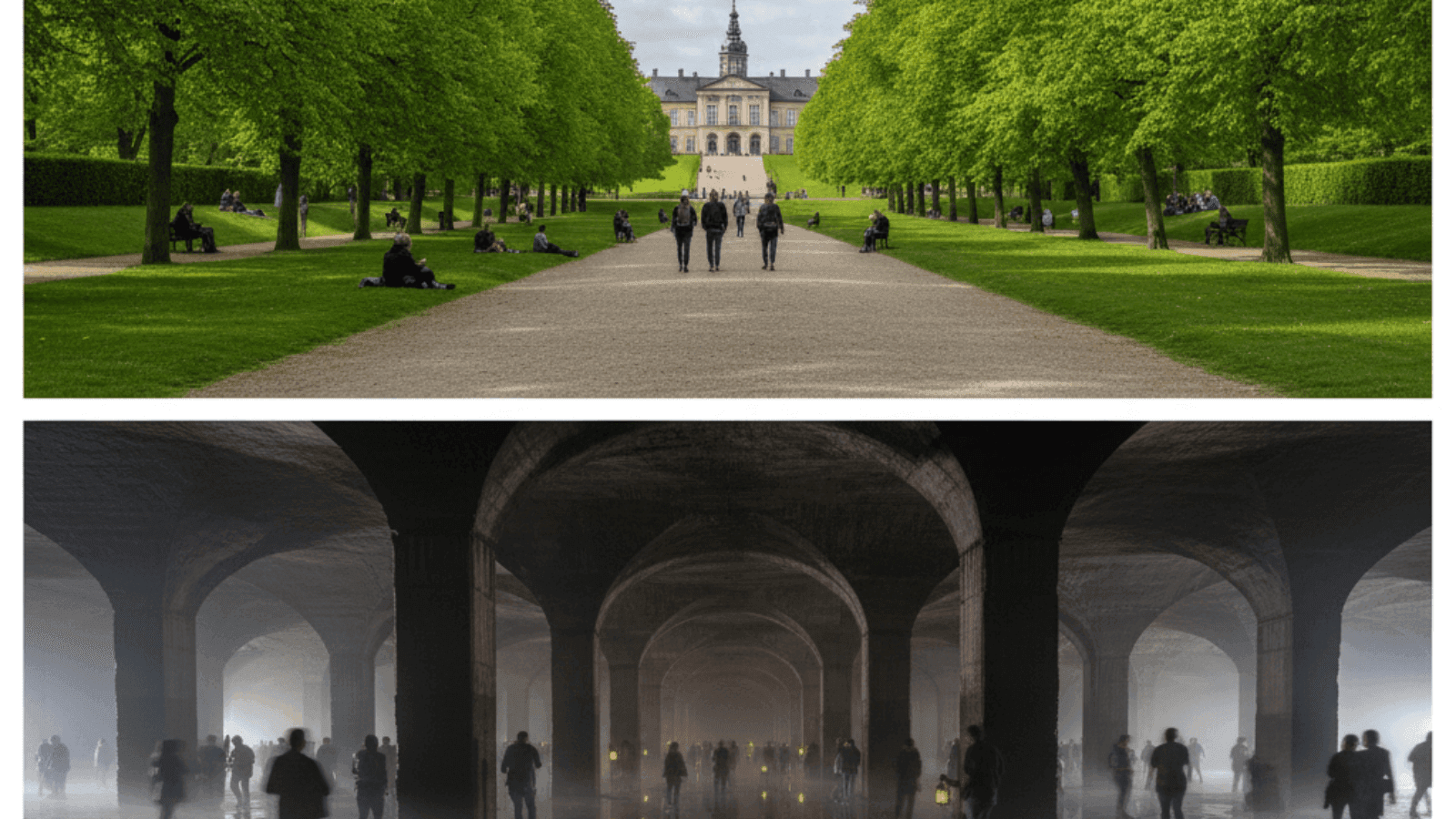
A One-Day Plan for Søndermarken Park and The Cisterns
Copenhagen has places that whisper and places that echo, and this day gives you both. Søndermarken feels like a long pause between thoughts, while The Cisterns change how you hear your own footsteps. It’s the kind of pairing that stays with you longer than photos ever do.
Why Søndermarken Works Well as a First Stop
The park sits in Frederiksberg, slightly away from the tourist-heavy parts of the city, and that distance matters. The paths are wide, the lawns roll gently instead of flattening out, and the trees create long sightlines that open and close as you walk. Nothing here demands attention, which makes it easy to settle into the day.
Morning hours are calm but not empty. Runners loop the outer paths, dog walkers gather near shaded stretches, and locals sit with coffee instead of cameras. The park was reshaped in the Romantic style in the late 1700s, and the slower pacing still shows. You are meant to move through it without a checklist.
What to Look For While Walking
Frederiksberg Palace appears briefly through gaps in the trees, never fully revealed. Old oaks and beeches dominate, planted far enough apart to let light filter down unevenly. Small ponds and dips in the terrain collect sound, so some sections feel oddly hushed even when people are nearby.
Benches are placed where you naturally want to stop, not where symmetry would suggest. Spending time here before going underground helps recalibrate your senses.
Best Seasons and Time of Day to Visit Søndermarken
- Late spring and summer bring long daylight hours and lush greenery, ideal for slow walks and picnics
- Early autumn offers softer light and fewer visitors, with fallen leaves changing the mood of the park
- Winter is quieter and starker, with bare trees and shorter walks before the cold sets in
- Morning to late morning is best for the park, before foot traffic increases and light flattens
Finding The Cisterns Without Missing It

Tickets are usually sold by time slot, and exhibitions rotate regularly. Each visit depends heavily on the artist currently working with the space, so expectations should stay flexible.
What The Cisterns Used to Be
The underground chambers were built in the 1850s to store drinking water for Copenhagen. Thick concrete walls, rows of columns, and vaulted ceilings were designed for weight and containment, not comfort. When the cisterns were decommissioned, the city chose to preserve them rather than seal them off.
Water still collects across the floor in shallow pools. Moisture hangs in the air. The space has never been cleaned up to feel museum-like.
Temperature, Clothing, and Physical Conditions Underground
- Temperature stays around 10°C (50°F) year-round, regardless of season above
- Humidity is high, and the air feels cool and heavy almost immediately
- Sturdy, closed shoes with grip are essential due to damp, uneven flooring A light jacket or layer is recommended even in summer
- Lighting is intentionally low, which can affect depth perception
How Art Changes in This Space
Artists invited to The Cisterns do not install traditional gallery pieces. Most exhibitions rely on sound, shadow, reflection, fog, or minimal structures that respond to water and darkness. The architecture is never hidden. It becomes part of the work.
Sound behaves differently underground. Footsteps echo longer than expected. Voices carry farther. Some installations amplify this effect, making silence feel like part of the experience.
Because of constant moisture, materials age during the exhibition itself. What you see late in a show may differ subtly from opening week.
Moving Through the Underground Chambers
There is no fixed path. Visitors move slowly, circling columns, stopping at the edge of pooled water, adjusting their pace as visibility shifts. You are rarely rushed, but you are also rarely comfortable enough to forget where you are.
Photography is allowed in most cases, but low light and reflections make it challenging. Phones struggle. Tripods are often restricted depending on the exhibition.
How to Plan the Day Without Rushing
Most travelers spend 1 to 2 hours walking Søndermarken at an unhurried pace. The Cisterns usually take 45 to 75 minutes, depending on the exhibition and how slowly you move.
Visiting the park first works best. Going underground mid-day softens the contrast, especially in summer when light is strongest. Leaving The Cisterns too late can make the temperature shift feel harsher.
Food and Break Options Nearby
There are no major cafés inside Søndermarken itself. Most food options sit closer to Frederiksberg Palace or surrounding streets. Many visitors eat before entering The Cisterns to avoid feeling rushed afterward.
Bringing coffee or a small snack into the park is common. Picnics are informal and unpoliced, adding to the relaxed feel.
If you want a stay that matches the calm of Søndermarken and the character of Copenhagen, Neomaxer curates spaces that feel thoughtfully chosen, not randomly booked.









