
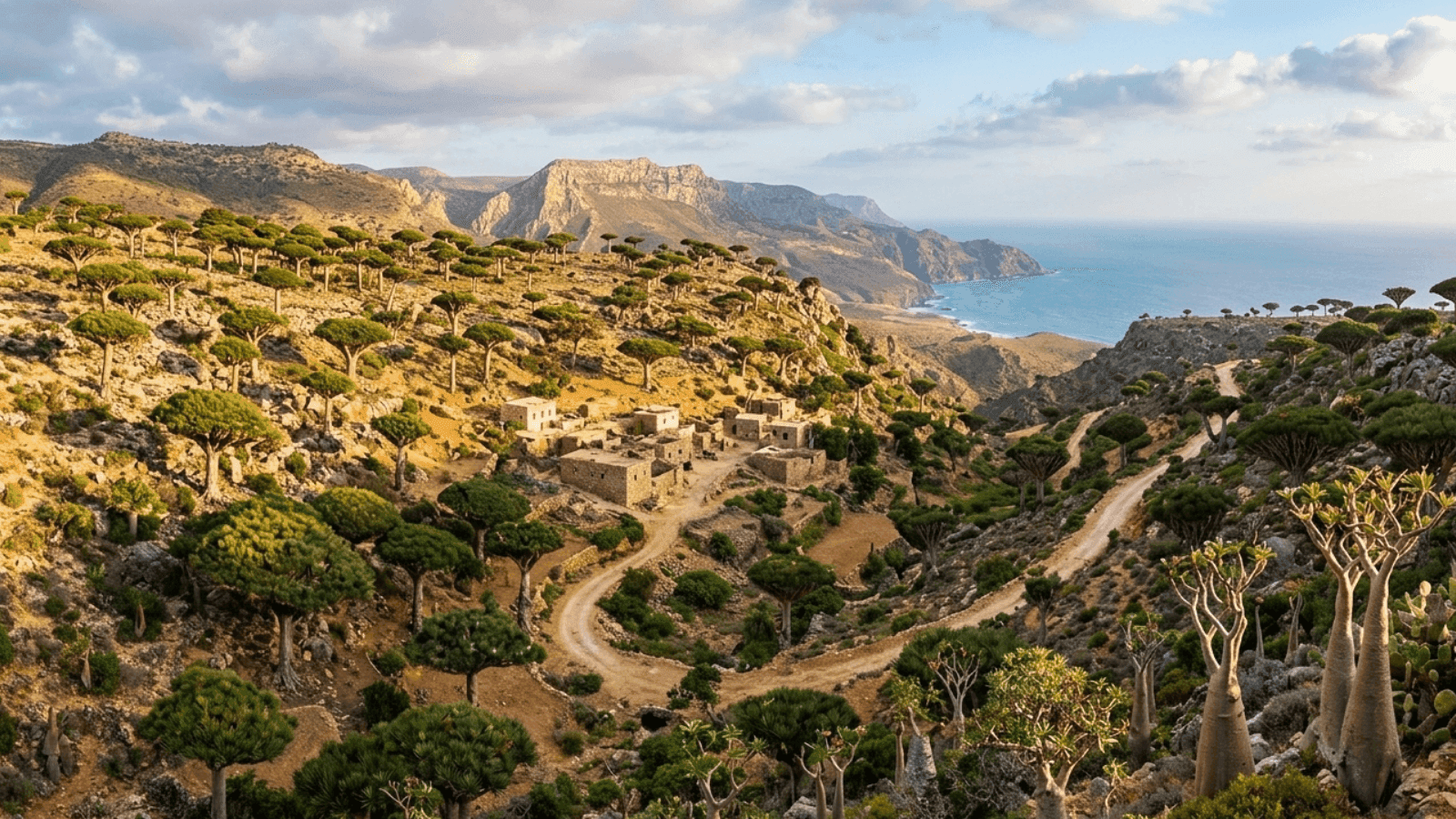
Socotra - The Place Where Forests Look Alien but Tell a Very Earthly Story
Nothing on Socotra looks like it belongs on Earth, and yet every inch of it does.
The island rises from the Arabian Sea like a sketchbook of strange ideas: trees shaped like umbrellas turned inside out, trunks swollen like water tanks, limestone cliffs cut by wind into quiet amphitheaters. But this is not fantasy terrain. It is the result of isolation, weather, and time working patiently for millions of years.
Dragon Blood Trees Crown Limestone Plateaus
High on the Diksam Plateau, the dragon blood trees stand in disciplined clusters, their canopies spreading wide and flat like giant green mushrooms. The species, Dracaena cinnabari, evolved this shape to catch mist and shade its own roots, an adaptation to thin soil and long dry seasons.
Their red resin, once traded across ancient routes through the Arabian Peninsula, gave the trees their dramatic name. Today, the real story is quieter. Climate shifts and grazing pressures are slowing regeneration, and young saplings are rare outside protected zones.
Detwah Lagoon Offers Cucumber Beach Walks
On the western edge of the island, Detwah Lagoon curves in a pale crescent of sand. The water is shallow and clear, revealing sea cucumbers, starfish, and small reef fish moving through grass beds.
Locals from nearby Qalansiyah often guide visitors across the tidal flats. At low tide, the lagoon feels almost private, a soft contrast to the harsher inland plateaus.
Bottle Trees Bloom Against Bare Rock
The desert rose of Socotra, Adenium obesum socotranum, looks like a clay sculpture set down among stones. Its trunk bulges at the base, storing water through dry spells, while pink blossoms appear suddenly against otherwise empty terrain.
Photographers usually head out at dawn when the light hits the limestone slopes behind the trees. By midday the heat flattens color and detail, and the island retreats into glare.

How to Reach Socotra from Cairo
- Travel to Socotra requires planning and flexibility. Flights are limited and often change with regional conditions.
- Yemenia operates limited direct routes to Hadibo when schedules allow, typically around two hours from mainland Yemen hubs
- Flydubai connections via the UAE combine international and charter segments, often totaling around four hours of flight time excluding layovers
- Some travelers route through Aden and continue onward with domestic coordination and overland logistics
- Seasonal sea routes operate irregularly and depend heavily on weather patterns
Perfect For Photographers and Hikers
- The island attracts travelers who prefer landscapes over luxury. Accommodation ranges from basic guesthouses in Hadibo to organized camps set up near major sites.
- Photographers chase early light on the Diksam Plateau and sunset over Qalansiyah
- Hikers plan day treks to Hoq Cave and multi day crossings of the Haghier Mountains
- Birders look for Socotra sunbirds, cisticolas, and Egyptian vultures in wadi systems
- Families often choose homestays near calmer beaches with shallow swimming areas
Best Months Avoid June Wind Storms
October through April generally offers calmer seas and more manageable temperatures. From late May into summer, strong monsoon winds sweep across the island, grounding boats and reshaping beaches.
Even in peak season, facilities remain basic. Electricity outside Hadibo can be limited, and mobile signal fades quickly once you leave town.
Permit Process Starts 30 Days Early
Socotra requires entry coordination through approved agencies. Permits are typically arranged several weeks in advance, with passport copies and travel details submitted for clearance.
Guides are mandatory for most excursions outside Hadibo. Rates fluctuate by season, with lower costs during quieter months when visitor numbers drop.
Cash is essential. There are no international ATMs, and card payments are rare. Drinking water, fuel, and supplies should be organized before heading into remote areas.
Plastic waste is an increasing concern. Travelers are expected to carry out what they bring in, especially in camping zones and protected plateaus.
If Socotra’s wild plateaus, lagoon walks, and dragon blood tree forests are calling your name, planning the stay matters as much as the journey. Browse unique stays and remote travel experiences through Neomaxer.









