
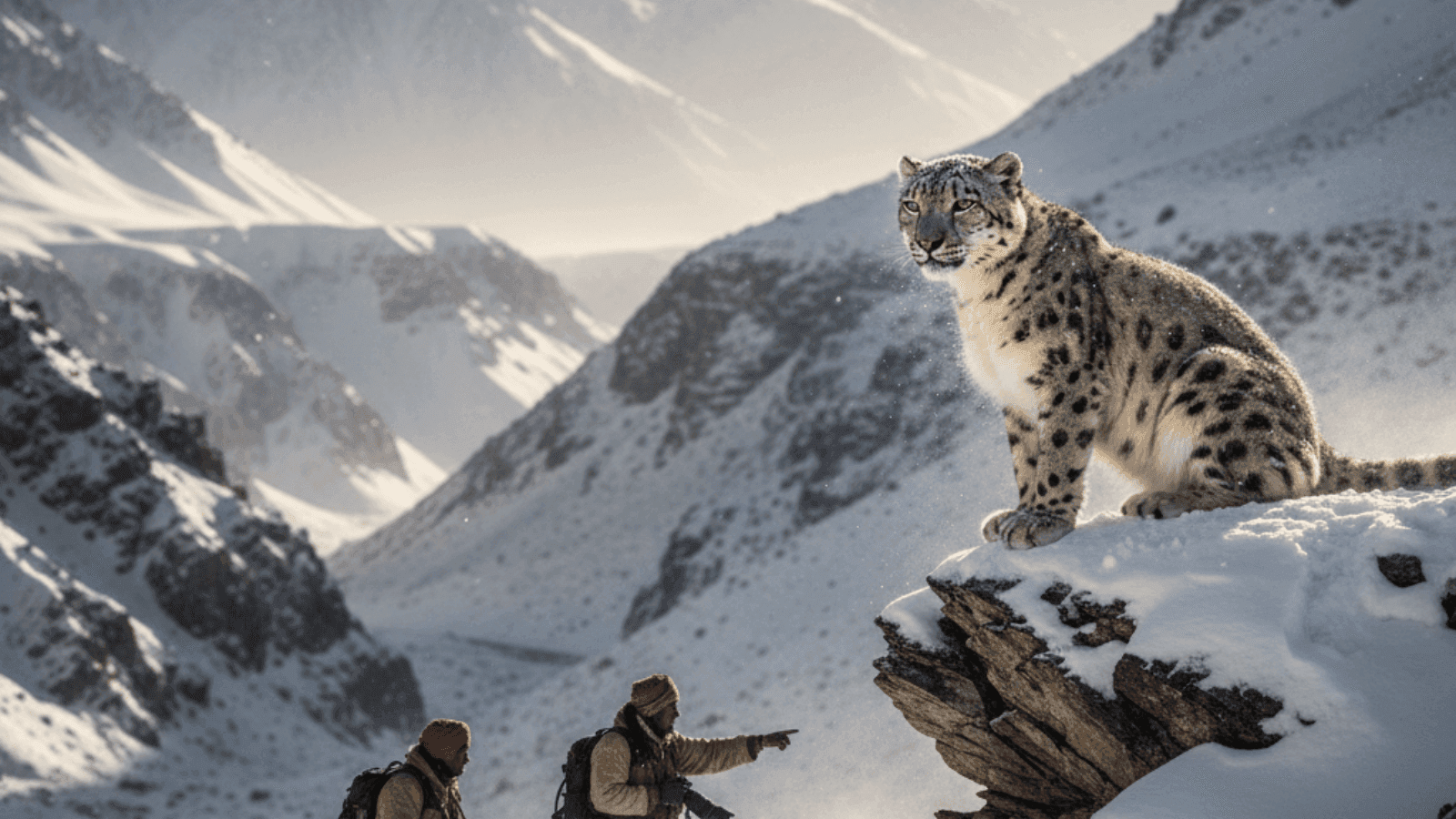
A Snow Leopard Expedition in Ladakh That Feels More Like Exploration Than Safari
You do not go to Ladakh to be entertained. You go because somewhere in those frozen folds of rock, a snow leopard is moving unseen. In Ladakh, the expedition begins long before any sighting, usually with thin air in your lungs and a guide already scanning ridgelines while you are still adjusting your gloves.
Spotting a Snow Leopard at Dawn
Morning is when it happens, if it happens at all. The light touches the upper cliffs first, turning them gold while the valley floor stays blue and bitterly cold.
Trackers lift binoculars without speaking much. They are not looking for a full animal. They look for a curve that should not be there. A tail along a rock edge. A shoulder shifting against snow. Most sightings are far, 300 meters or more.
The distance is part of the experience. You watch through glass, barely breathing, aware that the animal has likely known about you for longer than you have known about it.
Real Treks vs Jeep Safaris
Vehicles help you enter the valley. After that, your legs do the work.
A jeep can take you along frozen riverbeds and dirt tracks, but snow leopards rarely position themselves where engines can reach. The real days involve hiking slowly across scree and packed snow, stopping often, listening for blue sheep calls bouncing off cliffs.
Treks are quieter. Slower. You begin to notice wind direction, shadow lines, and how long it takes to climb even a small ridge at altitude. The expedition feels earned, not arranged.
Top Sighting Valleys
Most consistent movement has been reported inside Hemis National Park, particularly around Rumbak. The valley offers broken cliffs and steady prey, making it one of the strongest winter zones.
Parts of the Markha Valley have also seen activity, though sightings shift quickly. Further north, the open slopes of Nubra Valley can produce longer visual windows when a leopard chooses to cross exposed terrain.

How to Reach Leh Basecamp Fast
- Direct IndiGo flights from Delhi to Leh take about 90 minutes and usually land before midday, giving you a full afternoon to acclimatize
- The Manali to Leh highway works seasonally and requires a two day jeep journey due to altitude gain
- The Srinagar route runs via Kargil, crossing Zojila Pass, roughly 14 hours depending on conditions
- Shared taxis operate from Leh bus stand to expedition villages, typically around Rs 1500 per person
Packing for Sub-Zero Homestay Treks
- Thermal base layers, fleece mid layer, insulated outer shell rated to minus 20°C
- Waterproof boots with thick wool socks and gaiters
- 10x42 binoculars and camera lens 300 to 400mm for distant sightings
- Nuts, energy bars, hydration salts for altitude
- Headlamp and power bank since electricity cuts are common
- No drones, forest regulations strictly prohibit them
Reading Leopard Sign in the Field
The real work happens before any sighting.
Trackers study fresh pugmarks pressed into snow, checking depth to estimate weight and direction. Scrapes along slopes suggest territorial marking. Scattered fur or blood traces might indicate a recent hunt.
Alarm calls from bharal carry across the valley. A sharp whistle repeated in bursts can redirect an entire group within seconds. Often, the leopard appears exactly where the sound predicted.
Homestays Near Core Zones
Villages near core habitat operate small winter homestays built for cold months. Thick mud walls hold heat surprisingly well, and meals are simple but filling.
Staying here reduces travel time to observation ridges. It also means evenings spent around metal stoves with families who have lived alongside snow leopards for generations, discussing livestock, winter patterns, and how often the cat circles back to the same cliff.
If you want to stay close to Ladakh’s snow leopard valleys and wake up where trackers begin their day, the right base makes all the difference. Neomaxer helps you find handpicked stays near key expedition zones, so your journey begins exactly where the mountains do.









