
Why Ellora Is Perfect for Slow Travel in Maharashtra
Ellora is the kind of place where time quietly adjusts itself to your pace. Steps feel slower, pauses feel longer, and stone walls seem happy to wait. You arrive curious and end up moving gently, without trying to.
What Makes Ellora Ideal for Slow Travel
Ellora is not one story repeated in stone. It is three religions sharing the same cliff over centuries. Buddhist caves came first, followed by Hindu and then Jain excavations, each adapting to what already existed instead of erasing it. That layered evolution rewards travelers who linger, notice shifts in style, and connect patterns across time. Slow travel fits Ellora because the site itself was never built all at once.
The Three Cave Groups and How to Experience Them Unhurriedly
The 34 caves are divided into Buddhist (1–12), Hindu (13–29), and Jain (30–34), arranged south to north. Buddhist caves feel inward-looking and restrained, designed for meditation and communal living. Cave 10, the Vishvakarma Cave, still carries a cathedral-like calm, with sunlight filtering through a horseshoe-shaped opening.
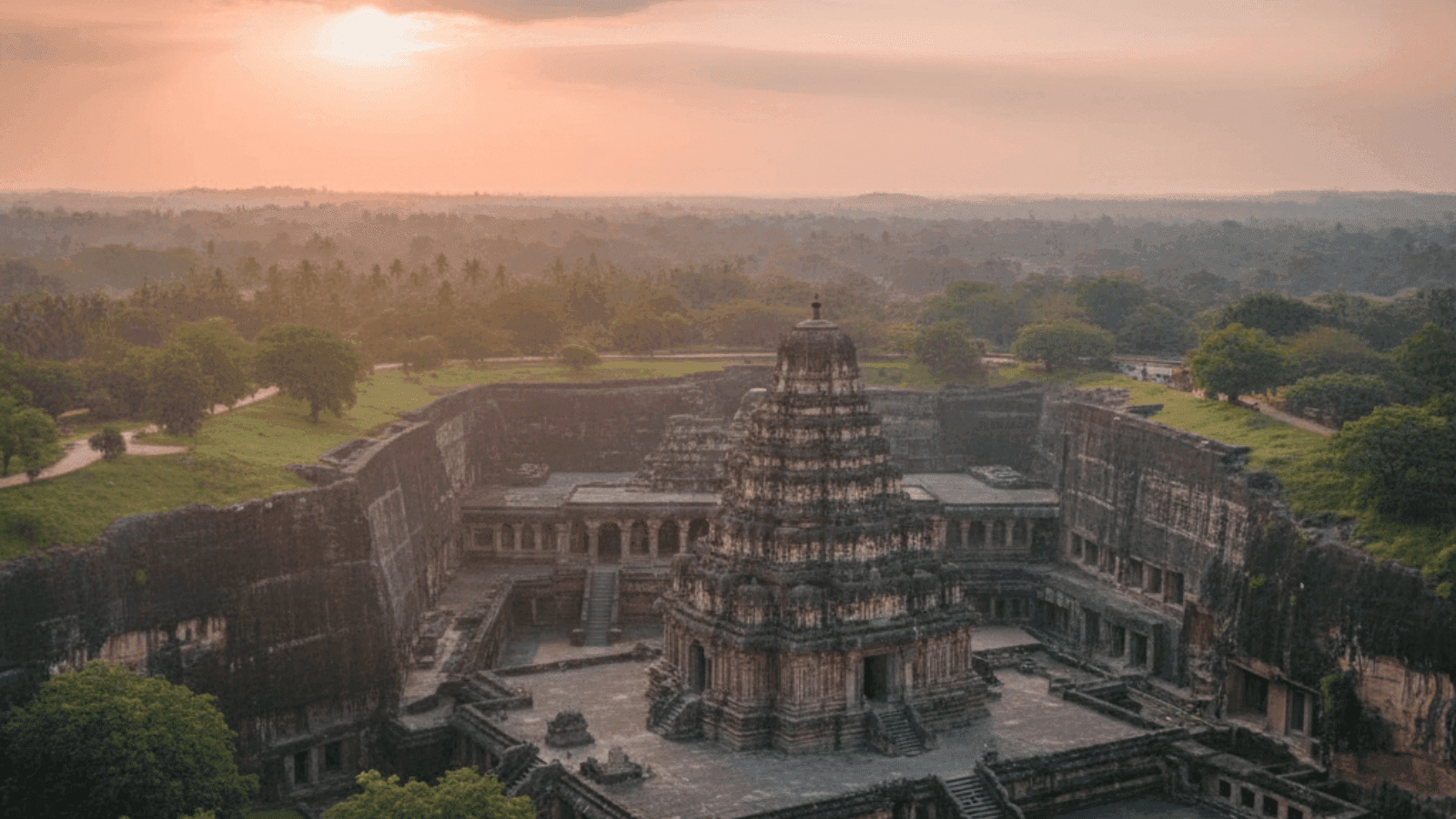
Hindu caves grow more elaborate and theatrical. Cave 16, the Kailasa Temple, is not entered so much as discovered. Carved top-down from a single rock, it rewards those who circle it slowly, noticing sculpted panels of the Ramayana and Mahabharata at ground level before stepping inside.
Jain caves return to quiet precision. Smaller, finely detailed, and less crowded, they are ideal late-afternoon visits when the site empties out and the light softens.
Historical and Cultural Significance Beyond the Obvious
Ellora is a UNESCO World Heritage Site not only for its scale but for what it represents. It shows religious coexistence in physical form, carved side by side without defensive walls or separation.
The caves also reflect shifts in patronage, from Buddhist monastic communities supported by trade routes to Hindu dynasties asserting power through monumental architecture, and later Jain merchants funding intricate but restrained sanctuaries. For travelers interested in history, Ellora is less about dates and more about transitions.

Best Time to Visit Ellora
October to March stays pleasant, with daytime temperatures usually between 18°C and 30°C, making long walks between caves comfortable. Early mornings during these months feel calm and airy, especially on weekdays, when the site opens into a quiet rhythm. From April to June, summer temperatures often rise to 35°C–42°C, which naturally slows movement and makes shorter, focused visits more rewarding.
How to Reach Ellora Without Stress
- Aurangabad is the nearest city, connected by flights, trains, and long-distance buses
- Ellora lies around 45 minutes by road from Aurangabad
- State transport buses, taxis, and private tours operate regularly
- Roads are well-marked, making self-driving feasible for unhurried schedules
What to Expect When You’re Actually There
Ellora is expansive, open-air, and exposed. You will walk, climb steps, and move between shade and sun repeatedly. Guides are available, but many travelers prefer audio guides or independent exploration, stopping where curiosity pulls them.
Vendors are restricted to the outer areas, so the cave zone remains relatively distraction-free. The scale of Kailasa Temple often overshadows smaller caves, but those quieter spaces often leave stronger impressions.
Practical Tips That Make a Difference
- Wear footwear you can remove easily, as some caves encourage barefoot entry
- Carry water but expect limited shade between cave groups
- Allocate time for sitting, not just walking; stone ledges and platforms were designed for it
- Avoid peak noon hours by breaking your visit into two shorter sessions
Why Ellora Feels Different from Other Heritage Sites
Ellora is not curated into a narrative path. There are no forced routes or timed entries. You choose where to pause, what to skip, and when to leave. That freedom creates a personal rhythm. Families move differently than solo travelers. History enthusiasts linger on inscriptions. Others sit quietly inside a cave, letting the temperature drop and the noise fade.
The Surrounding Landscape
The hills around Ellora are not decorative backdrops. They once housed water systems, pathways, and support settlements. Stepping away from the main complex reveals quieter viewpoints and walking trails that mirror the pace of the site itself. These edges matter because they remind you Ellora was part of daily life, not an isolated monument.
Ellora as a Living, Walkable Timeline
Ellora does not explain itself upfront. It asks you to notice differences in ceilings, pillars, iconography, and spatial design. The reward comes gradually, often after leaving one cave and entering another that feels unexpectedly lighter or darker, louder or calmer. The site teaches patience simply by existing the way it does. Some travelers spend hours at Kailasa Temple alone, watching shadows slide across stone panels as the sun moves west. If Ellora’s rhythm speaks to you, Neomaxer helps you stay close to places where time moves thoughtfully.









