
Where Thousands of Sea Turtles Come Ashore Together in Costa Rica
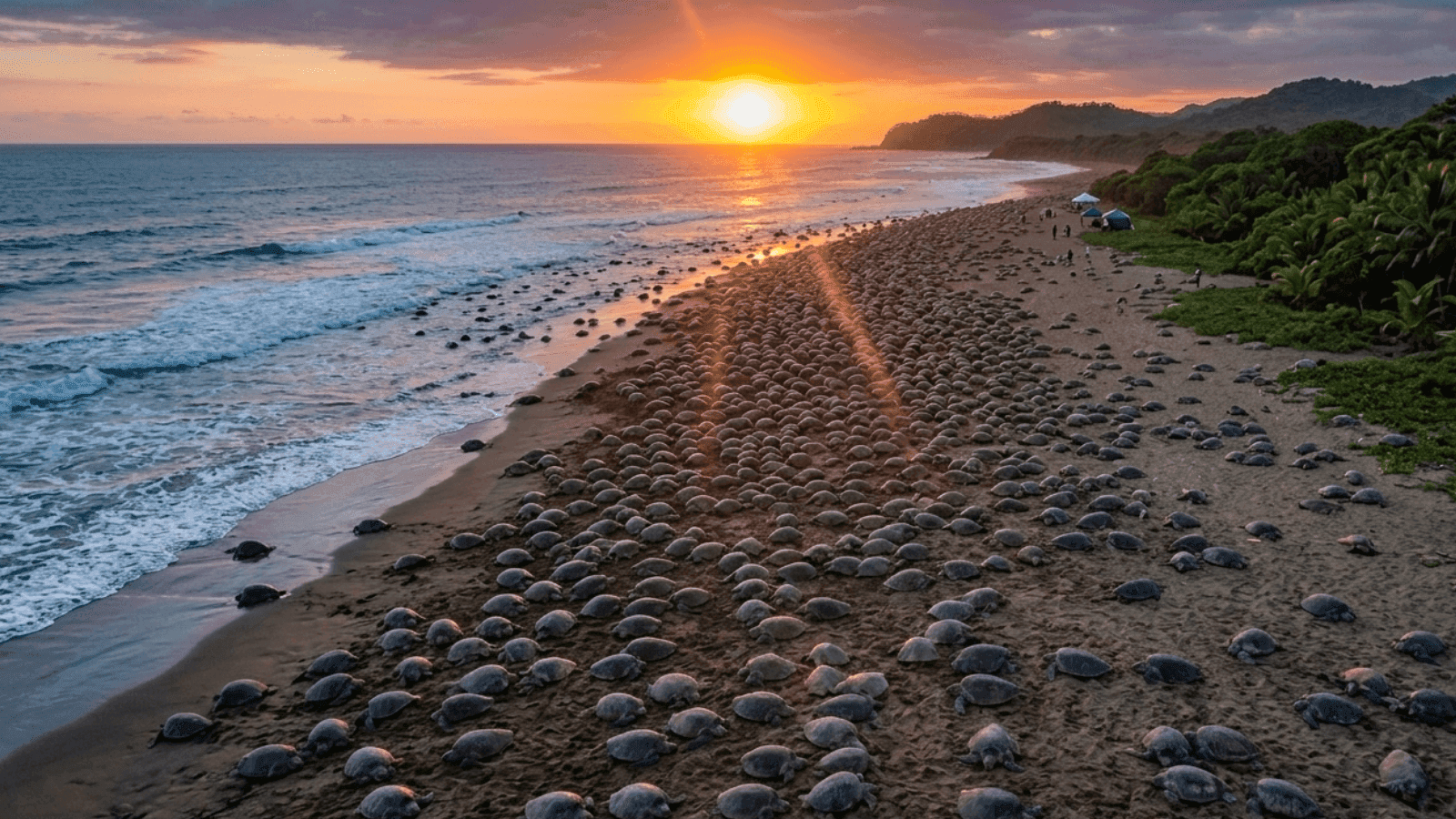
Some beaches are famous for sunsets. Ostional is famous for traffic, turtle traffic. When thousands of olive ridley sea turtles arrive together to nest, the shoreline turns into one of the most extraordinary wildlife gatherings on the planet.
Ostional Beach Hosts the Largest Arribadas
On the Nicoya Peninsula, Ostional Beach has become famous for the sheer scale of its turtle gatherings. This protected stretch of coastline sits inside the Ostional Wildlife Refuge and hosts some of the largest arribadas in the world.
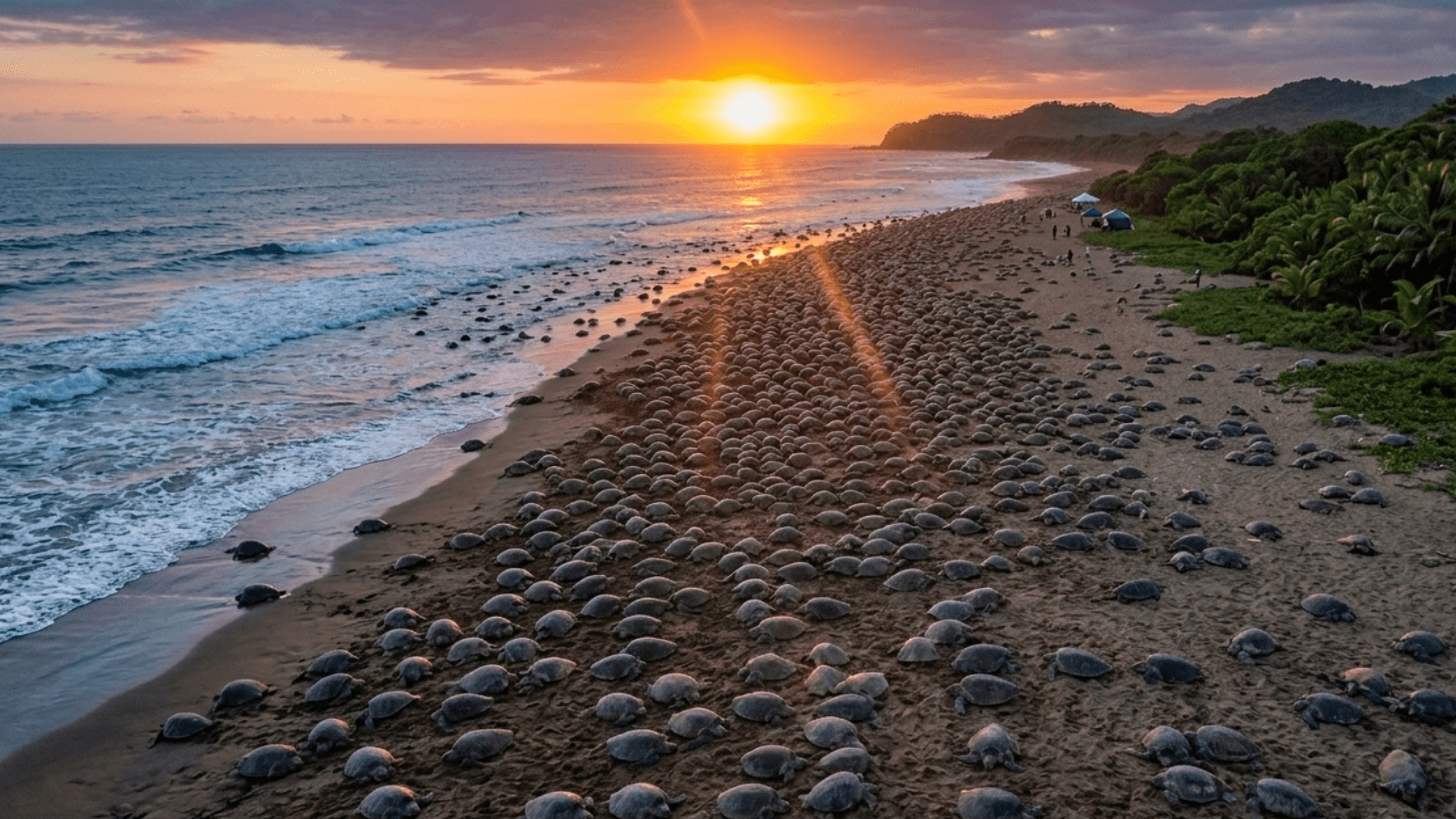
During peak events, tens of thousands of olive ridley turtles arrive over several nights. The turtles crawl above the tide line, dig nests with their back flippers, and lay around 80 to 120 eggs before carefully covering the nest with sand. After that, they slowly return to the sea.
Most arribadas here happen between July and December, though smaller arrivals can occur throughout the year. Timing is unpredictable, which is part of the excitement. Locals often notice the first wave of turtles appearing late in the evening, and the beach quickly fills through the night.
Because Ostional is a protected refuge, visitors must enter with certified guides after dark. These guides help travelers observe the nesting process without disturbing the turtles.
Nancite Beach Sees Seasonal Mass Nesting
Farther north, another remarkable nesting site lies deep inside Santa Rosa National Park. Nancite Beach is smaller and much more remote, but it still hosts significant arribadas.
Olive ridley turtles arrive here mainly between September and October. The beach sits inside a protected conservation area, surrounded by tropical dry forest and mangrove ecosystems. Reaching it usually requires a guided hike through the park.
The isolation has helped preserve the natural nesting behavior of the turtles. Fewer visitors reach this location compared with Ostional, so sightings feel quieter and more intimate. Researchers frequently monitor the turtles here, studying nesting patterns, hatchling survival rates, and migration routes across the Pacific.
Prime Arribada Viewing Spots
- Ostional Wildlife Refuge offers the most consistent arribada sightings and guided night tours
- Nancite Beach inside Santa Rosa National Park hosts seasonal nesting in a remote protected area
- Camaronal Wildlife Refuge sees smaller olive ridley nesting groups throughout the year
- Tortuguero National Park on the Caribbean side is famous for green turtle nesting between July and October
- Playa Grande near Tamarindo hosts leatherback turtles during nesting season
How to Reach Ostional from San José
Travelers starting in Costa Rica’s capital usually head toward the Nicoya Peninsula. The journey takes time, but the coastal scenery makes the trip worthwhile.
One of the most common routes goes through Tamarindo. From San José, visitors can take a shuttle or bus to Tamarindo and then continue by taxi for about two hours to reach Ostional. The taxi ride typically costs around 50 USD depending on the season.
Another option involves flying to the small airport near Nosara. Domestic flights from San José take less than an hour. From Nosara, local buses or taxis reach Ostional in roughly another hour.
Travelers landing at Liberia International Airport often choose to rent a vehicle. A four wheel drive is recommended because some roads near the refuge can be rough during rainy months. The drive takes around three hours from Liberia.
Shared shuttle vans also operate between major towns in Guanacaste. Many travelers book a drop off near Ostional or Nosara for about 40 USD per person.
What to Expect During an Arribada
Arribadas usually begin late in the evening or after midnight. The first turtles appear cautiously, emerging from the waves and pausing at the edge of the beach before moving inland.
Within an hour the numbers grow quickly. The beach can fill with turtles digging nests, laying eggs, or covering previous nests with sand. Occasionally turtles bump into one another as they search for space. Visitors typically observe from a respectful distance while guides explain the nesting process. Flash photography and bright lights are not allowed because they can disorient the turtles.
After laying eggs, the turtles slowly return to the water. The next wave often arrives shortly after, continuing the nesting cycle through the night.
Practical Tips for Turtle Watching
- Guided night tours are required in most nesting areas after sunset
- Wear dark clothing so the turtles are not disturbed by bright colors
- Bring insect repellent for the mangrove and coastal forest areas
- Closed shoes help when walking on uneven sand at night
- Avoid flashlights unless guides allow red filtered lights
- Check moon phases because arribadas often happen near the new moon.
Planning to see Costa Rica’s famous turtle arribada in person? Stay close to nature with handpicked retreats through Neomaxer that place you near the coast, wildlife reserves, and unforgettable ocean nights.









