
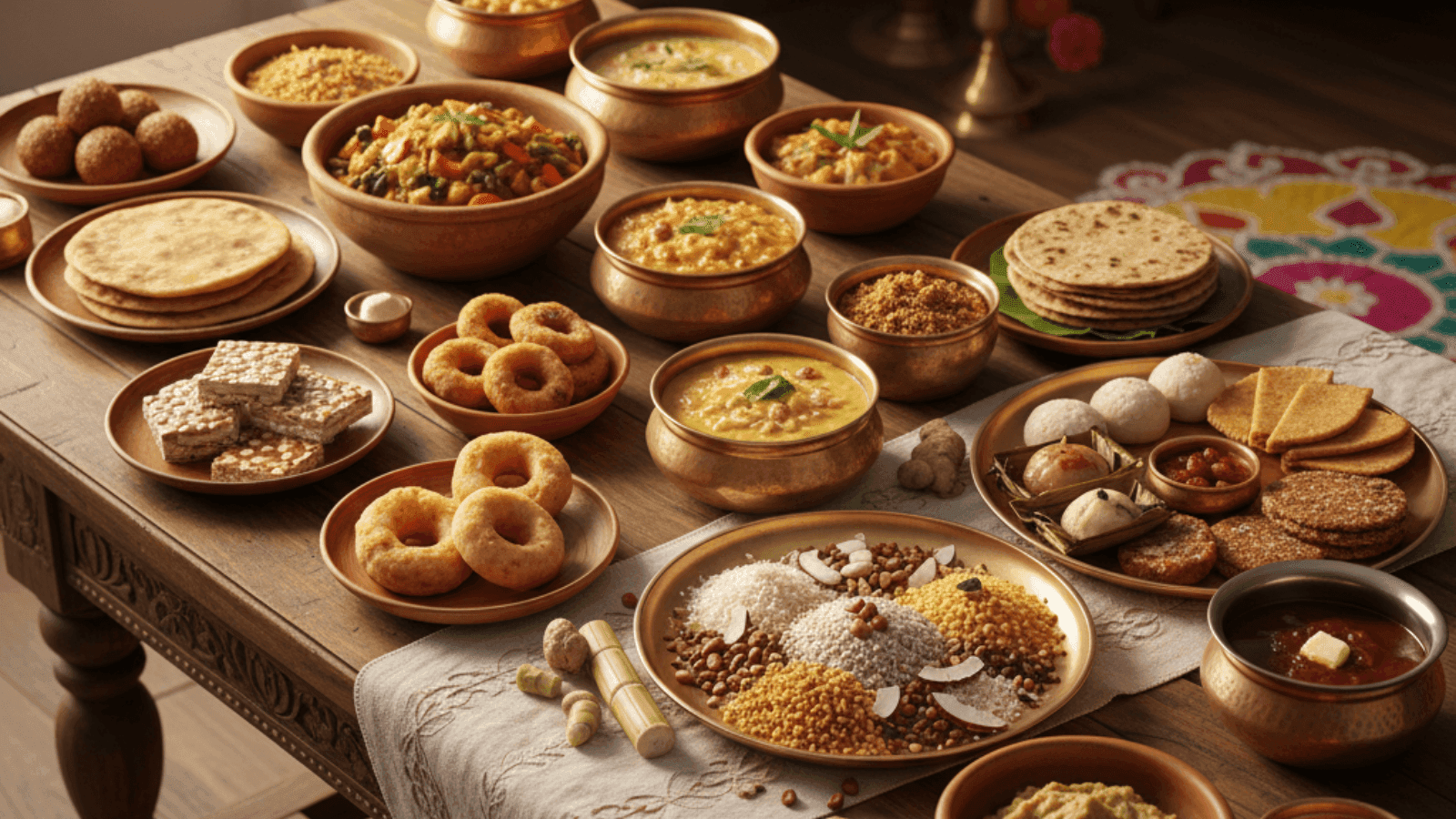
Same Festival, Different Food Personality Across India
Festivals in India feel like a food tour without leaving your hometown. One moment you’re sharing sweet sesame goodies in Maharashtra, the next you’re spooning creamy pongal in Tamil Nadu. Every region brings its own tasty twist to what looks like the same celebration.
Sesame and Jaggery Mean Different Things Everywhere
Across India, sesame and jaggery show up every January, but they behave very differently depending on where you stand. In some regions, they are quiet offerings. In others, they are exchanged with instructions on how to speak, behave, and begin the year. The ingredients repeat, but the intention does not.
Maharashtra
Tilgul
In Maharashtra, tilgul is exchanged with a sentence attached: “Tilgul ghya, goad goad bola.” Eat sweet, speak sweet. The ladoo becomes a reminder to reset social relationships after a year of friction. Made from roasted sesame seeds and jaggery, tilgul is dense, earthy, and warming, suited for January’s dry cold.
Puran Poli
Alongside tilgul sits puran poli, a soft flatbread stuffed with chana dal and jaggery. The texture matters here. Maharashtrian festive food leans toward tender, slow-cooked fillings rather than crunch. Even chikki, which appears brittle, is often balanced with peanuts and jaggery that melt slightly when warm.
Gujarat
Chikki and Til Ladoos
In Gujarat, Sankranti food is made to be handled, passed around, and eaten outdoors during kite flying. Chikki dominates, loud and crunchy, packed with peanuts or sesame bound tightly with jaggery. It snaps cleanly, travels well, and suits long hours on rooftops.
Undhiyu and Bajra No Khichdo
Sweets do not stand alone here. Undhiyu, a slow-cooked mix of winter vegetables, fenugreek dumplings, and coconut masala, anchors the meal. Bajra no khichdo, made from pearl millet, reflects Gujarat’s comfort with coarse grains and robust textures during winter.

Tamil Nadu
Sakkarai Pongal
Pongal food announces itself before it is eaten. Milk boiling over during the cooking of sakkarai pongal is intentional and symbolic. Rice, moong dal, jaggery, and ghee come together in a dish that is soft, glossy, and deeply comforting. Texture is secondary to warmth and fullness.
Savoury Counterparts That Complete the Meal
Venn pongal balances the sweetness with black pepper, cumin, curry leaves, and cashews fried in ghee. Puli pongal adds tamarind and spice. Pongal meals rarely stop at one dish. Payasam, medu vadai, lemon rice, and coconut chutneys turn the festival into a spread that celebrates rice in multiple moods.
Karnataka
A Bowl Meant to Be Mixed
Ellu bella is not cooked into a single sweet. Sesame seeds, jaggery pieces, peanuts, coconut, and fried gram are mixed loosely and shared by hand. The act of mixing matters. Every bite tastes slightly different, mirroring the idea of balance and variety in life.
Regional Additions That Change the Experience
In parts of Karnataka, sugarcane pieces, dried ginger, or even popcorn are added. Ellu bella feels informal and conversational, less ceremonial than ladoos or pongal, yet deeply symbolic.
Assam
Rice
During Magh Bihu, rice is transformed rather than simply cooked. Pitha requires soaking, drying, grinding, kneading, and careful heat control. Gheela pitha, sticky and elastic, contrasts with tekeli pitha, which is steamed, and til pitha, which is rolled thin and crisp.
Sweetness That Stays Subtle
Assamese sweets are rarely heavy. Jaggery and sesame appear, but in measured amounts. Even larus and payokh avoid excessive richness. The emphasis stays on the rice itself and the labour behind it.
Punjab
Lohri’s Relationship With Heat
Lohri food reflects the bonfire around which it is eaten. Til ladoos, gajak, peanuts, and puffed rice are tossed into the fire before being consumed. Warmth dominates both the ritual and the plate.
Makki Di Roti and Sarson Da Saag
The main meal is robust and filling. Maize flour rotis paired with slow-cooked mustard greens cooked with spinach and bathua create a meal designed to sustain physical labour and winter cold. Punjabi pinni, rich with ghee and nuts, finishes the plate with intensity.
Bengal
Nolen Gur
In Bengal, winter jaggery comes from date palms, not sugarcane. Nolen gur brings a smoky, caramel depth to sweets like payesh and patishapta. The same rice-and-jaggery combination tastes entirely different here.
Pancakes, Dumplings, and Soft Textures
Patishapta pancakes, gokul pithe, and various dumplings dominate. Bengali Sankranti sweets lean toward soft, folded, and filled forms rather than rolled or snapped.
Kerala
Puzhukku and Pilgrim Diets
During Makaravilakku, food becomes restrained. Pilgrims consume satvik meals, limiting rice and avoiding indulgence. Puzhukku, made from tubers like yam and tapioca, is boiled, mashed, and lightly seasoned.
Aravana Payasam
Aravana payasam stands out because it is one of the few rich elements allowed. Rice cooked slowly with jaggery into a thick, almost grainy dessert reflects restraint rather than excess.
One Festival, Many Food Personalities
Sesame becomes instruction in Maharashtra, crunch in Gujarat, symbolism in Karnataka, and restraint in Assam. Rice turns celebratory in Tamil Nadu, technical in Assam, comforting in Punjab, and meditative in Kerala. The calendar may agree on the harvest, but the plate never does. If you want to taste these incredible regional festival foods up close, Neomaxer makes it easy to plan your stay in every corner of India.









