
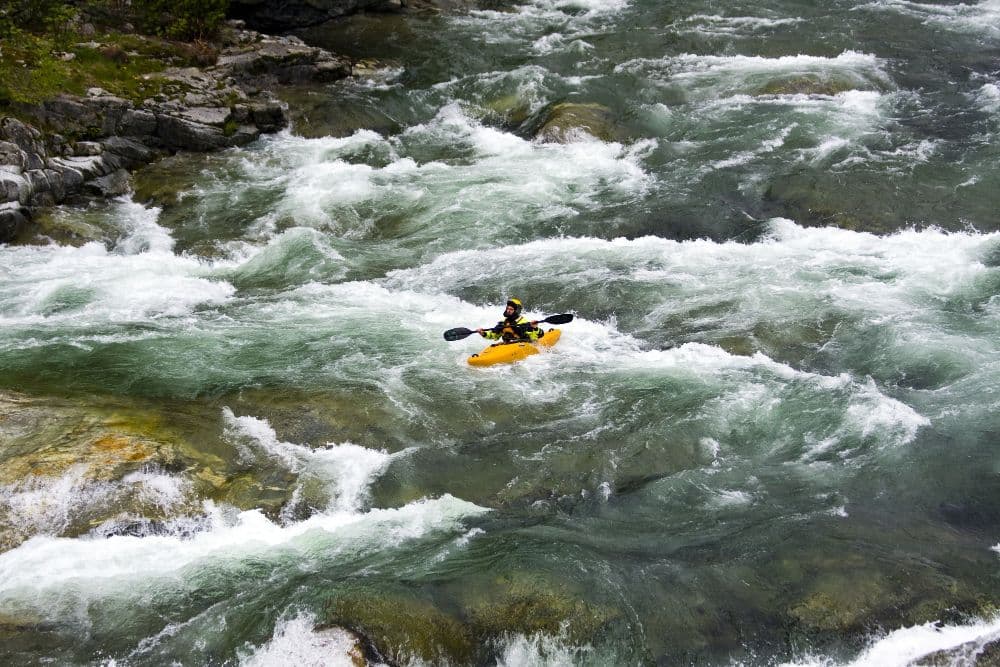
The first icy wave that slaps your shins before the raft even leaves the shore is the river warning you that Rishikesh river rafting is not a ride, it is shared water where you are a guest for a few kilometres.
Reading the river before you step in
Guides on the Ganga do not talk about danger in abstract terms. They talk about signs. A line of foam that curls back on itself over a hidden rock. The tone of the current at a bend. The way sandbanks shift after overnight rain in the hills.
You can ask, “Is river rafting in Rishikesh dangerous?”, but the better question is, “Is this river level right for my experience today?” In peak summer with low water, the same stretch feels forgiving. After fresh rain in May, the waves grow shoulders, and the eddies deepen.
Watch the people who live there:
- If good operators cancel afternoon trips due to rising levels, believe them
- If locals are standing on the bank just watching the water instead of bathing, pay attention
- If rescue kayaks are out in force, know that the river is speaking louder than usual
Choosing the right stretch and distance
Not every section is for everyone. The Rishikesh river rafting distance you pick shapes how cold, tired, and tested you feel at the end.
Common stretches and what they feel like
Approximate runs many agencies offer:
- Brahmpuri to Rishikesh: 8 to 10 km, mostly gentle, good for first timers and families
- Shivpuri to Rishikesh: 14 to 16 km, mix of small and medium rapids, the classic choice
- Marine Drive to Rishikesh: around 24 km, longer day with more Grade III rapids
- Kaudiyala side runs: longer, colder, with higher grade rapids that demand fitness and confidence
Most Rishikesh river rafting packages will push Shivpuri or Marine Drive as “must do.” Choose honestly. If you are not a strong swimmer or you get cold easily, a shorter stretch done well is better than a long one you suffer through.

Price tags that hide true cost
You will hear a dozen agents quote you “the best river rafting in Rishikesh price” in Tapovan and Lakshman Jhula lanes. Cheap is tempting, but safety costs money. A fair rate usually includes:
- Transport from the town to put in and back from take out
- Certified guide and basic rescue cover
- Helmet, high float life jacket, paddle, sometimes wetsuit in colder months If a deal is significantly cheaper than others:
- Ask about the age and condition of rafts and gear
- Check how many people they cram into one raft
- Confirm they carry a throw bag and a first aid kit
A few hundred rupees saved are not worth it if the helmet strap is frayed and the jacket buckles do not lock.
Gear and behaviour that keeps you on the right side of the current
The river does not care about your GoPro. It cares about weight, balance, and obedience to its flow. Essential habits:
- Wear the life jacket correctly, tightened, not loose over your shoulders
- Keep the helmet chin strap snug enough that it does not lift when pulled
- Listen to the safety briefing, especially commands like “forward,” “back,” and “hold.”
If you fall in:
- Stay on your back with feet pointing downstream
- Hold the paddle only if it does not pull you under
- Look for the throw rope or raft, do not swim blindly against the flow
Good guides drill this before launching. If your guide rushes the briefing or jokes through it, that is a red flag.
When to say no
There are days when the river and your body are not in agreement. Respect that. Do not raft:
- After a night of heavy drinking or no sleep
- If you have a serious heart, spine, or recent surgery history that doctors have not cleared
- When reputable outfits have pulled trips due to high, muddy, or debris-filled water
The Ganga at Rishikesh is not an amusement park. It is shared land and ritual space as much as it is a playground for inflatables.
If you want to approach Rishikesh river rafting with that same mixture of respect and readiness, keep following the grounded adventure notes on this blog and get to know more about the Ramnagara trail by Neomaxer, so you can first practice reading rock, slope, and risk under your feet before trusting a guide and a raft with your body in moving water.









