
Rann Utsav 2026 and What Makes Kutch’s White Desert Worth Planning Around
What exactly is Rann Utsav
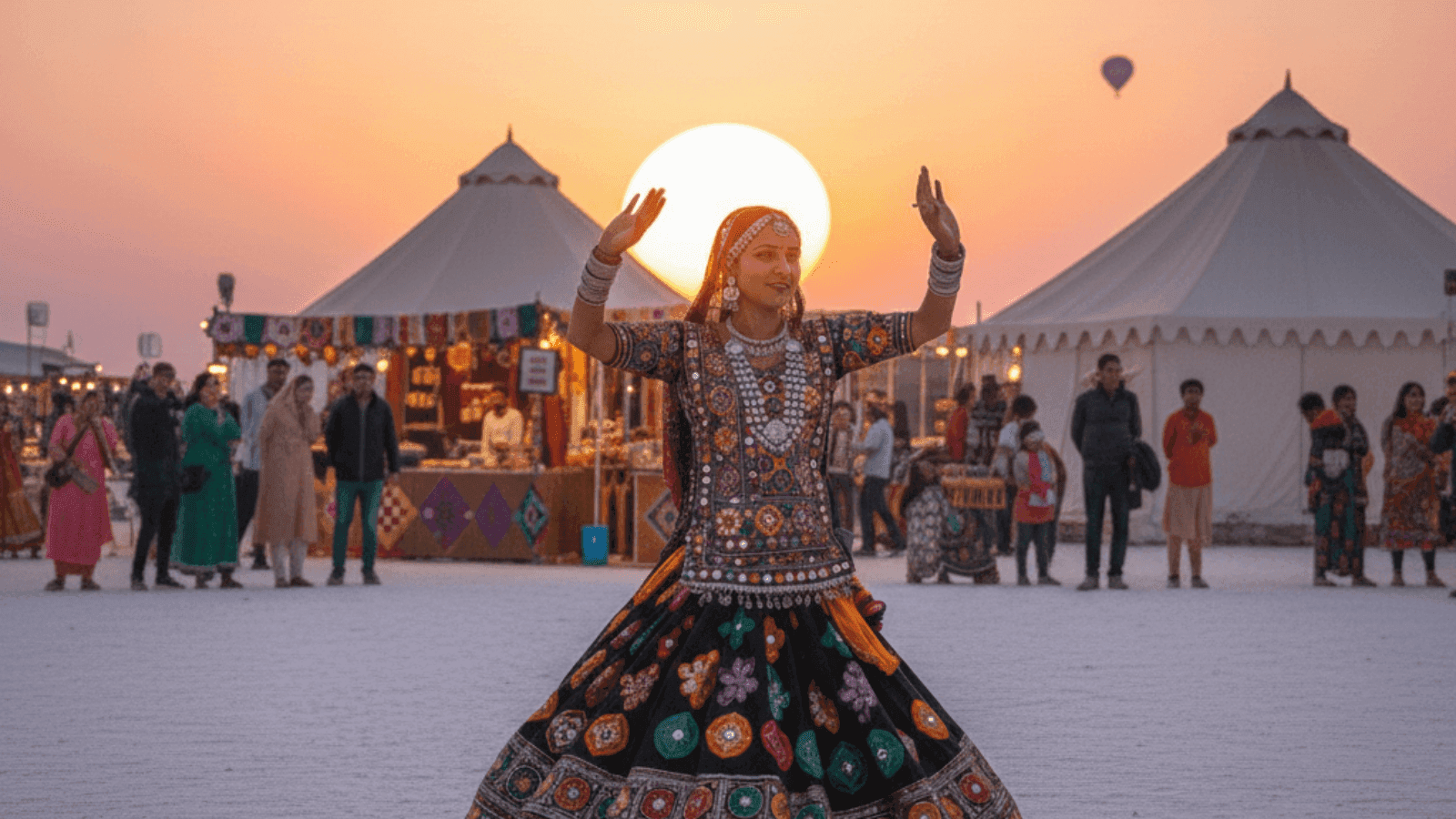
For a few months every year, the vast salt flats of the Great Rann of Kutch transform into a temporary desert city filled with tents, music, crafts, and movement. This is Rann Utsav, a state-organized cultural festival that turns one of India’s emptiest landscapes into one of its most vibrant.
The festival is hosted near Dhordo, a village that has gained international recognition after being named among the world’s best tourism villages. What makes this location powerful is not just the event, but the contrast. You step out of a luxury tent and see nothing but endless white stretching toward the horizon.
Rann Utsav 2026 dates and duration
Rann Utsav typically runs from early November to late February or early March. For the 2025–2026 season, the festival is expected to run roughly from November 2025 to February 2026, with peak activity during December and January.
Winter is when the White Desert is at its best. The heat is gone. The nights are cold enough to sit around bonfires. The sky stays clear, which makes sunrise and sunset feel sharper. Full moon nights are especially sought after. The white salt reflects moonlight so strongly that the desert glows without artificial lighting.
Why the White Desert feels unlike anywhere else
This is not sand. It is salt. The ground is made of hardened salt crystals left behind after seasonal seawater evaporates. When you walk on it, it crunches faintly beneath your feet.
During the day, the desert looks almost unreal. It reflects sunlight so intensely that it appears pure white from every angle. Photographers often arrive expecting good light and leave realizing they underestimated it.
Sunset changes everything quickly. The white ground absorbs orange and pink tones, and the entire desert turns into a shifting canvas. The horizon becomes difficult to define.

Highlights travellers should not miss
- Walking on the White Desert during sunrise when the salt surface looks untouched
- Visiting during full moon nights when the desert glows naturally
- Staying inside traditional tent accommodations with local design elements
- Watching live folk music and dance performances every evening
- Shopping directly from Kutchi artisans selling embroidery, leatherwork, and mirror crafts
- Taking camel rides across the salt flats
- Trying regional Kutchi food including bajra rotla, kadhi, and local sweets
- Visiting nearby villages to see traditional mud houses called bhungas
- Experiencing stargazing in one of India’s least light-polluted regions
- Taking day trips to attractions like Kala Dungar, Kalo Dungar, and India Bridge
Cultural life inside the desert tent city
The tent city itself functions like a small, organized township. Thousands of tents are arranged with pathways, lighting, dining areas, and performance stages.
Music is constant here. Traditional Kutchi folk songs, percussion instruments, and live storytelling happen almost every evening. Performers are often from nearby villages, which keeps the experience rooted in the region.
The craft market is one of the most authentic parts of the festival. Many artisans belong to communities that have practiced embroidery, weaving, and leatherwork for generations. Buying directly from them supports livelihoods that exist far from typical tourist circuits.
Planning around Rann Utsav
The White Desert exists year-round, but access, infrastructure, and cultural activity peak during the festival months. Roads, transport, accommodation, and guided experiences are all organized specifically for travellers during this period.
Outside the festival season, the desert returns to being largely empty. There are fewer facilities, and visiting requires more planning.
During Rann Utsav, everything becomes easier. Permits, accommodation, transport, and activities are coordinated through official channels and tourism operators, including support from Gujarat Tourism.
Travel tips and how to reach
- The nearest airport is in Bhuj, about 80 km from Dhordo
- Bhuj is well connected to major Indian cities like Mumbai, Ahmedabad, and Delhi
- From Bhuj, taxis and festival transfers take visitors directly to the tent city
- Booking accommodation early is important because peak dates sell out fast
- Carry warm clothing since desert nights get cold during winter
- Sunglasses and sunscreen help during daytime visits due to strong reflection
- Government permits are required to enter the White Desert area and are usually arranged with bookings
- Mobile connectivity can be limited in some areas, so download maps and essentials beforehand
- Sunrise and sunset slots tend to be less crowded than late afternoon visits
- Weekdays offer a quieter experience compared to weekends and full moon peak dates.
If waking up inside the desert with culture, comfort, and wide open salt views sounds like your kind of trip, Neomaxer helps you find stays that place you right where the experience feels alive.









