
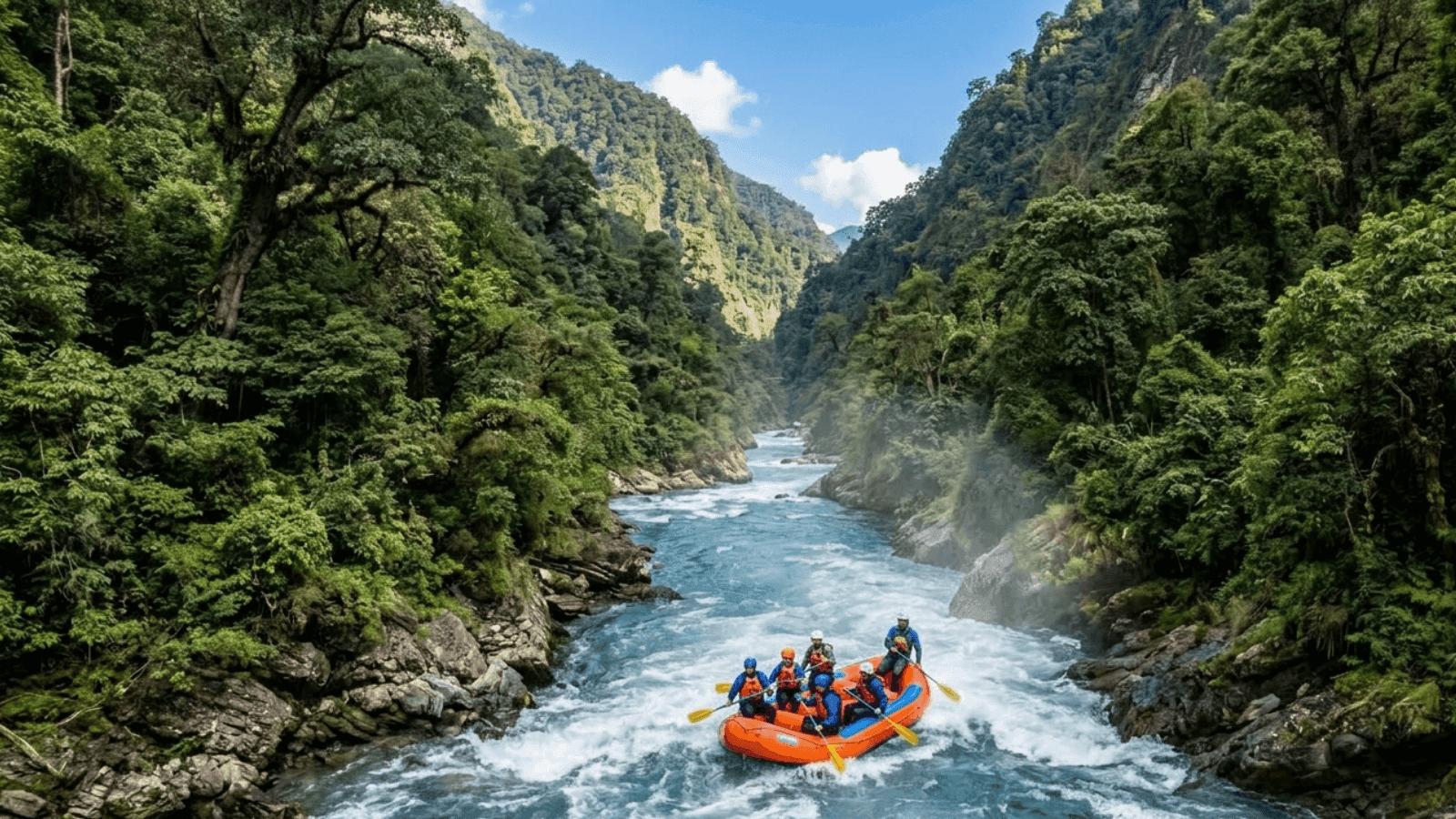
Rafting on the Siyom: A Less-Known Himalayan Water Adventure Near the Indo-Tibet Border
Siyom feels pleasantly different
If you’ve seen rafting spots where it’s all noise and crowds, this is the opposite. The Siyom feels quiet in a way that’s hard to explain until you’re actually there, like the river is just doing its thing and you’re tagging along.
Out in Arunachal Pradesh, especially around Mechukha, it doesn’t feel commercial at all. You’re not lining up with ten other rafts. It’s slower, a little unpredictable, and honestly that’s what makes it fun.
Where this is happening
Everything revolves around Mechukha Valley, which is right near the Indo Tibet border. It’s a small place, not built for tourism in a flashy way, more like a wide open valley where people just live their lives.
The Siyom cuts through it, and most rafting happens on stretches that are manageable but still exciting. You don’t need to be an expert to enjoy it.
Best time to visit
October to April is when you want to be here. The water is calmer, the sky behaves, and you’re not dealing with heavy rains messing things up.
Monsoon months sound tempting because everything is greener, but the river gets rough fast. Not the time to test your luck.
Weather range
It stays cool most of the year, which is honestly a relief if you’re coming from a hotter city. Winters can get cold, around 5 to 8 degrees in the mornings and evenings. During the day, it’s usually comfortable. Somewhere around 15 to 20 degrees, so you’re not freezing but you’ll still want a light jacket.

How many days to plan
You could do this in two or three days if you’re focused on rafting. One day to get there and settle in, one for rafting, and maybe one more to just hang around.
But if you’ve come all this way, it feels a bit rushed to leave that quickly. Giving it four or five days lets you slow down and actually enjoy the place.
Getting there how to reach
- Fly into Dibrugarh Airport
- Drive to Aalo which takes around 6 to 7 hours
- Then continue to Mechukha, another 6 to 8 hours depending on the road
What rafting here actually feels like
The rapids are mostly Grade II and III, so you’ll get that rush without feeling like you’re in over your head. It’s a good mix, especially if you’re not looking for something too intense.
What stays with you more than the rapids though is everything around it. Open land, distant hills, barely any noise. You look around and it just feels wide and quiet.
Things people usually miss
A lot of people come, raft, and leave. That feels like missing the point a bit.
- Early mornings here are really calm, worth stepping out for
- There are small monasteries nearby that hardly have any visitors
- Walking along the river without a plan is surprisingly nice
- Homestays often serve simple food that ends up being the highlight
Practical tips
- Carry enough cash because UPI and cards won’t always work
- Pack layers instead of one heavy jacket
- Start drives early, roads can slow you down later in the day
- Check your rafting operator has proper safety gear
- Keep one extra day as a buffer, just in case
Dos and don’ts
- Do listen to your rafting guide even if the water looks calm
- Do respect local spaces and people
- Don’t expect luxury stays everywhere
- Don’t leave trash behind, especially near the river
- Don’t push for rafting if the weather isn’t right
What to do when you’re not rafting
There’s not a long list of things to do, and that’s kind of the point. You can walk around, visit a monastery, or just sit by the river for a while. Even a simple walk through the village feels nice. No rush, no noise, just people going about their day.
Where to stay
Most places here are homestays or small guesthouses. They’re simple, but comfortable enough, and usually run by local families.
If Mechukha and the Siyom are calling, you’ll want a stay that feels just as easy and unforced as the place itself. Neomaxer helps you find comfortable spots that fit right into the vibe.









