
This Harvest Festival That Refuses to Fit Into One Day in Tamil Nadu
Pongal doesn’t wait for a single date on the calendar. It arrives slowly, spills into streets and courtyards, and stays long enough to be felt rather than finished. In Tamil Nadu, harvest gratitude takes time, and Pongal refuses to be rushed.
A Festival Measured in Days, Not Dates
Pongal stretches across four days, each with its own mood, rituals, and pace, and no single day can carry the weight of what it means to farmers, families, and villages. Celebrated in the Tamil month of Thai, usually in mid-January, it marks the end of the harvest season when rice, sugarcane, and turmeric have already been cut, stored, and thanked for.
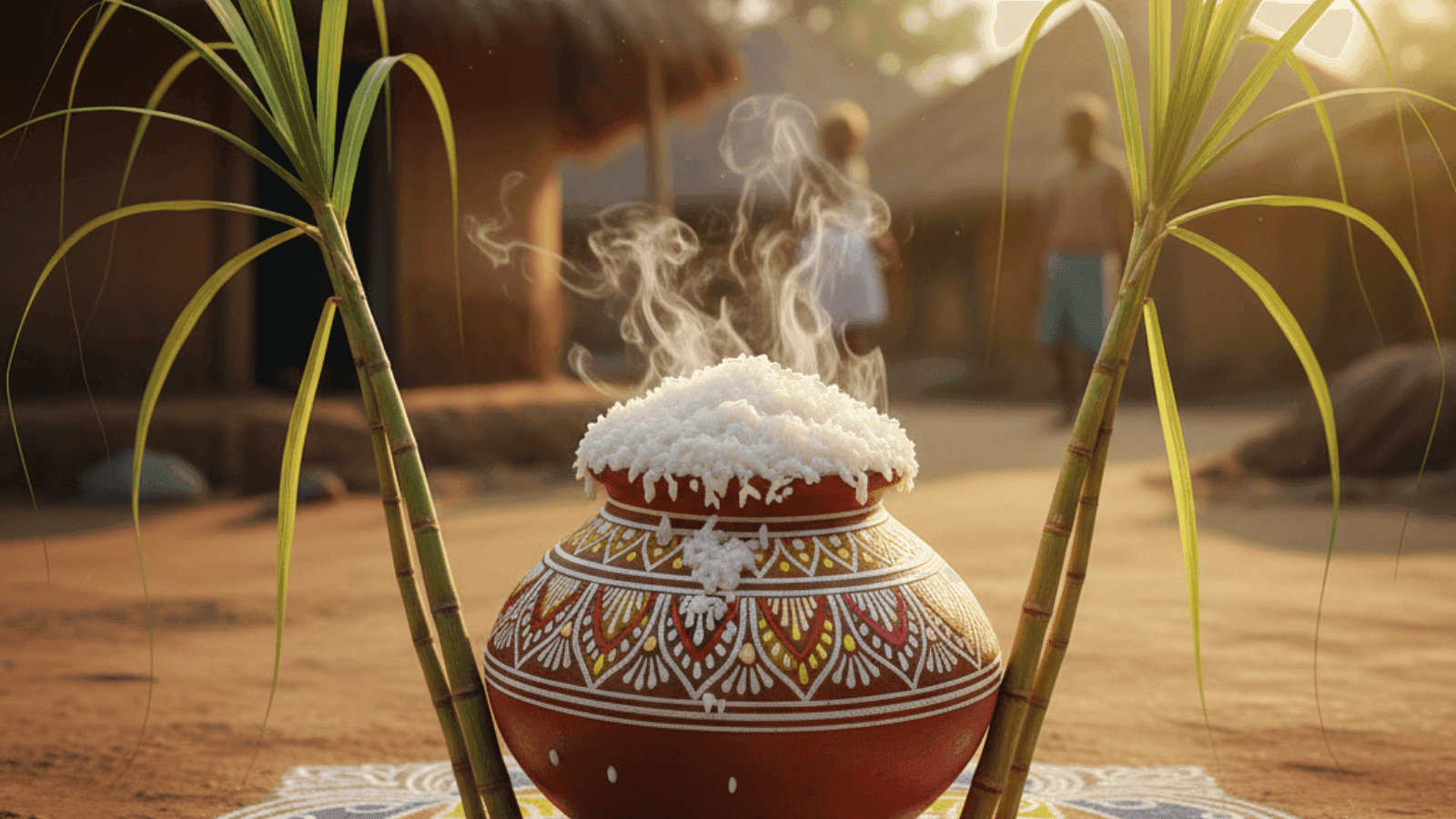
The name itself comes from “pongu,” meaning to boil or overflow, and that image runs through the festival. Milk and newly harvested rice are cooked until they spill out of the pot, watched closely by neighbours and family, because abundance is something you witness together.
Day 1 - Bhogi

Homes are scrubbed, walls repainted, thresholds washed. Young girls circle the fire, singing songs that ask for good winds, good rain, and a clean start. Bhogi is about clearing space before gratitude can enter, and villages take this seriously.
Day 2: Surya Pongal

Rice, milk, and jaggery are boiled outdoors under direct sunlight. When the pot overflows, people shout “Pongalo Pongal,” loud enough for neighbours to hear. The dish is first offered to the Sun God, Surya, without roofs, walls, or shade in the way. This is gratitude done in public view. Utensils used in earlier rituals are often discarded on this day. Nothing old should interrupt a new harvest.
Day 3: Mattu Pongal

This day carries an old story about Shiva’s bull, Basava, cursed to stay on earth and help humans farm because of a misunderstood message. Myth aside, the message is clear. Farming is not human labour alone. Ploughing, transport, manure, and survival depend on animals, and Mattu Pongal acknowledges that openly.
In rural areas, the day can feel loud and chaotic. In cities, it is quieter but still observed, with small rituals done in apartments and streets.
Day 4: Kannum Pongal

Leftover rice, coloured grains, sugarcane pieces, and betel leaves are placed on turmeric leaves and kept outside for birds. Nothing is wasted, and even the final offerings are shared with other lives moving through the land.
Food spreads widen on this day. Dosa, vada, sambar, ven pongal, and sweet pongal appear in generous quantities, served on banana leaves, eaten slowly.
The Food Is Seasonal, Not Decorative
Pongal food follows the harvest calendar closely. Ven Pongal is savoury, made with fresh rice, lentils, ghee, curry leaves, and pepper. Chakkara Pongal leans sweet, with jaggery, milk, cashews, and raisins cooked down until thick.
Sugarcane is chewed between meals, not chopped into desserts. Turmeric plants stand near doorways, roots still muddy. This is not plated cuisine. It is agricultural timing on a plate.
Where Pongal Feels Different
Madurai
In Madurai, Pongal flows around the Meenakshi Temple. The city wakes earlier than usual, and temple corridors fill with families carrying offerings. The festival here feels anchored, older than the traffic that now surrounds it.
Thanjavur
Thanjavur celebrates Pongal with scale. Kolams stretch across entrances, streets fill with colour, and temple spaces feel unusually alive. The agricultural history of the region gives the festival extra weight.
Pollachi
Pollachi’s Pongal unfolds against coconut groves and farmland. Drives between villages pass fields that explain why this festival exists at all. Nearby forests and dams remain quiet backdrops rather than attractions.
Coimbatore
In Coimbatore, Pongal adapts to city rhythms. Homes are decorated, shops stay busy, and rituals happen in smaller spaces. Travel a few kilometres outward, and the festival returns to open courtyards and cattle paths.
A Festival That Refuses Compression
Pongal resists being condensed into a long weekend or a single headline. Each day depends on the one before it, and skipping any part leaves the rest incomplete. Gratitude here is layered, slow, and tied to land, labour, animals, weather, and family routines that do not end when the calendar page turns.
If you want to experience Pongal where these rhythms still shape daily life, staying in the right place matters. Neomaxer helps you find stays that keep you close to local traditions, landscapes, and the pace that makes festivals like this feel real.









