
Pongal Is Not a Day: The Four Days Behind the Festival
Pongal doesn’t rush in and leave. It settles in, changes the pace of the house, and quietly rearranges what matters for four full days. By the time it ends, kitchens smell different, streets look different, and people do too.
Day 1: Bhogi Pongal
What Happens on Bhogi Morning
Before sunrise, streets smell like smoke. Old wooden stools, broken plastic chairs, cracked baskets, unused clothes, farm waste. Everything that no longer belongs to the household is dragged out and burned. Bhogi bonfires are small, local, and deliberate. Each street decides its own pile.
Homes are scrubbed clean the previous day. Walls are wiped down. Thresholds are washed with cow-dung water. Fresh kolams appear, wide and open, usually without elaborate colouring. New clothes are worn, but quietly.
Why Bhogi Comes First
Bhogi is about clearing before receiving. In farming cycles, the field is cleared after harvest so the soil can breathe before the next sowing. Bhogi mirrors that logic inside the home. You do not thank the harvest while still holding on to what no longer serves you.
Bhogi is also linked to Indra, the god of rain. Rain decides everything in agriculture. The bonfire is not rebellion. It is acknowledgment of dependence.
Day 2: Thai Pongal
The Cooking That Cannot Be Rushed
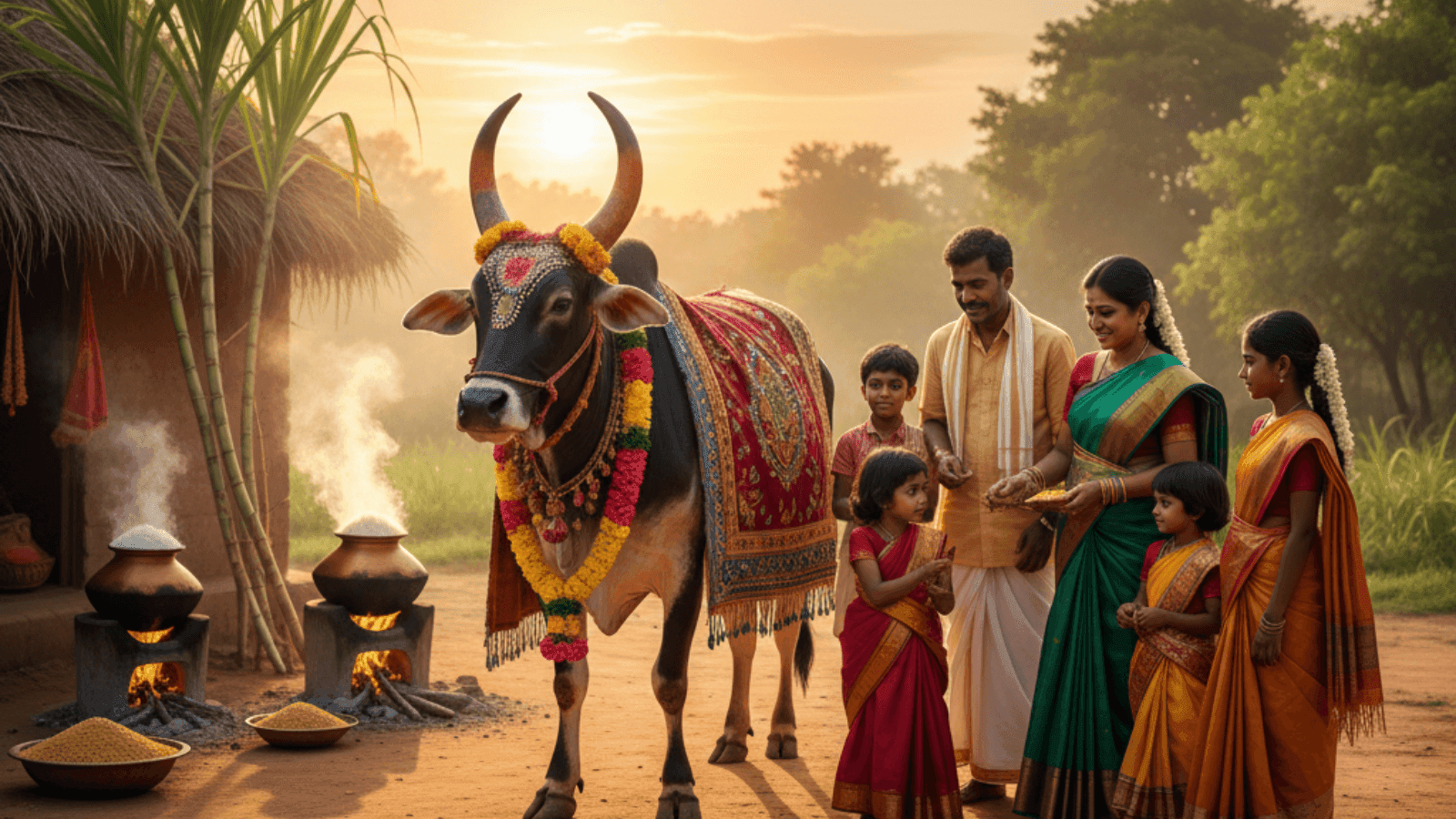
Thai Pongal happens outdoors. The pot faces east. Milk is poured slowly, watched closely. When it rises and spills over, people shout together. Not cheer. A call. “Pongalo Pongal.” It is loud, sudden, and collective.
The dish uses newly harvested rice, jaggery, milk, and ghee. No substitutions. No shortcuts. The pot must be earthen. The overflow must happen naturally. Sugarcane is cut and stacked nearby. Turmeric plants are tied to the pot. The Sun is offered the first serving.

Why the Sun Is Central
Thai Pongal aligns with the Sun’s northward movement, Uttarayana. This is not symbolic poetry. For farmers, the Sun decides crop cycles, water availability, and survival.
Thai is considered an auspicious month in the Tamil calendar. New beginnings are planned here. Marriages, housewarmings, business starts. Gratitude to the Sun is not abstract belief. It is agricultural math. In villages, multiple families cook together. In cities, terraces and balconies take over. The ritual adapts, the logic stays intact.
Day 3: Mattu Pongal
How Cattle Are Treated
Cows and bulls are bathed early. Horns are painted. Foreheads are marked. Bells are tied around their necks. Flowers are added without symmetry or perfection. The decoration is functional, not aesthetic.
They are fed Pongal before humans eat. Special feed is prepared with rice, jaggery, banana, and grass. Children are told to touch the animals’ feet. Elders perform aarti.
Why Animals Get Their Own Day
Mattu Pongal is labour recognition. Cattle plough fields, turn soil, transport harvest, produce milk. Without them, farming collapses.
In parts of Tamil Nadu, especially around Madurai, Mattu Pongal includes Jallikattu. Bulls are known by name. Lineage matters. Strength is preserved intentionally through native breeds.
Elsewhere, cattle processions move slowly through streets. Owners walk beside the animals, not ahead of them. Respect is shown through positioning, not slogans.
Day 4: Kaanum Pongal
What People Actually Do
Kaanum means “to see.” This is the day people leave the house.
Families visit relatives they have not seen during the first three days. Groups travel to rivers, dams, hill viewpoints, and village edges. Food is packed and eaten outdoors. Lemon rice, tamarind rice, curd rice, leftover Pongal.
There are no long rituals. No fixed prayers. Movement replaces ceremony.
Why the Festival Ends Outside the Home
After days of household-focused rituals, Kaanum Pongal shifts attention outward. Relationships are refreshed. Old visits are repaid. Neighbours sit together longer.
Sisters pray for their brothers’ well-being. Brothers give gifts or money. This exchange is domestic and understated. It does not seek audience. Children roam freely between houses. Elders sit outside, watching, commenting, catching up. The festival loosens its grip.
The Order Matters More Than the Celebration
Bhogi clears. Thai thanks. Mattu acknowledges labour. Kaanum reconnects people. This sequence mirrors farming itself. Preparation before sowing. Gratitude after harvest. Respect for tools and animals. Social repair before routine resumes.
Kolams fade after Kaanum Pongal. Sugarcane dries. The Pongal pot is washed and put away. Fields rest. Homes return to habit, carrying traces of smoke, milk, bells, and shared meals into ordinary days.
If you want to experience Pongal in places where these days are still lived, not staged, where you stay matters. Neomaxer helps you find stays that sit inside real celebrations, not outside them.









