
Why Pongal Is Cooked Outside the House, Not Inside
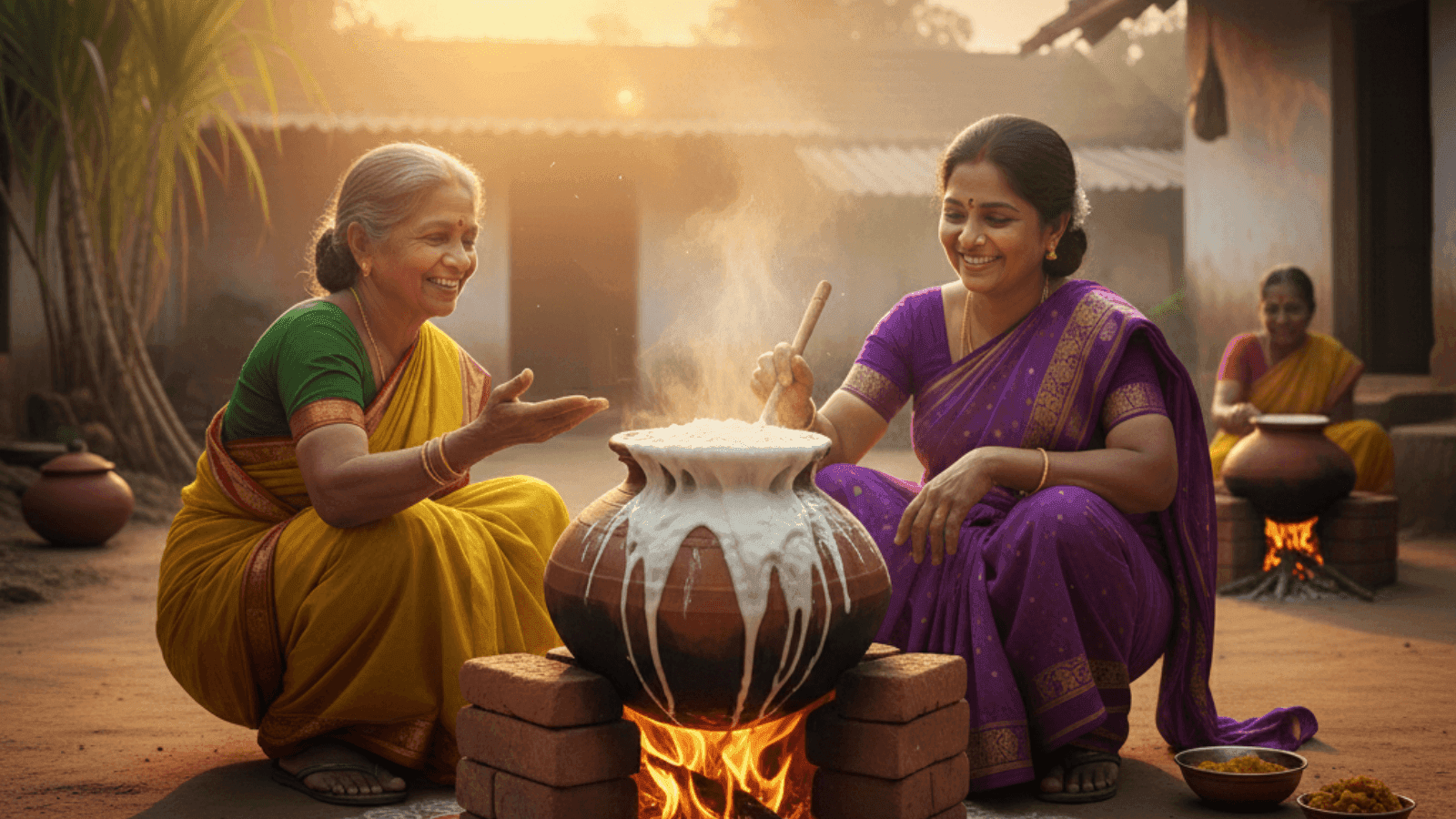
When Pongal bubbles over an open fire, it’s a small celebration you can smell, see, and hear. Cooking outside connects us to the sun, the fire, and the community gathered around. Here’s why Pongal tastes better where the sky is open and the flames crackle.
Letting the Pot Overflow Is Part of the Celebration
The moment when the Pongal boils over the pot’s edge isn’t a mistake - it’s the whole point. Outdoors, no one worries about the spill. Instead, the bubbling milk and rice spilling out is a sign of abundance, a hopeful wish that the year ahead will overflow with blessings.
In a closed kitchen, it would just be a mess to clean, but outside, it becomes part of the joyful noise of the festival.
Cooking in Clay Pots Changes Everything
The clay pot is not just a vessel; it shapes the very flavor of Pongal. It heats slowly and unevenly, letting the rice and lentils soften gently without losing their texture. The porous clay soaks up excess moisture, creating a creamy, thick consistency that metal pots can’t match.
Over time, these pots absorb the essence of countless celebrations, giving each Pongal a familiar, comforting warmth.
Firewood Adds a Flavor You Can’t Copy Indoors

Cooking this way demands your attention - you feed the fire, stir carefully, and watch the bubbling milk like it’s a living thing.
Facing East, Watching the Sun Rise
There’s a reason Pongal is cooked facing east, the direction of the rising sun. This isn’t just tradition for tradition’s sake - it’s a way to honour the sun that feeds the crops and keeps life moving.
Outside, the first sunlight touches the cooking pot and the people gathered around it, grounding the whole ritual in nature. Indoors, you miss out on this quiet moment of connection.
Fresh Rice from the Harvest Makes It Special
Freshly harvested rice tastes different - it’s softer, more fragrant, and rich with natural starch. When cooked slowly over a wood fire, the rice absorbs the spices and ghee evenly, making the Pongal naturally creamy. In a modern kitchen, quick cooking and controlled heat mean you lose some of that delicate texture and deep aroma.
Cooking Pongal Is a Family Affair
Pongal is rarely made in solitude. Outside, family members gather around, children watch eagerly, elders share stories and teach the process. It’s a moment where generations come together, not just to cook but to connect. The courtyard fills with laughter, chatter, and a shared sense of purpose that no indoor kitchen can recreate.
You Cook by Feel, Not by the Clock
Open fire cooking doesn’t come with timers or buttons. You listen to the crackle of the fire, watch the bubbles rising in the pot, and stir when it feels right. This kind of cooking asks for patience and presence - a contrast to the efficiency-driven pace of modern kitchens.
The Open Air Lets the Senses Run Free
Outside, the smell of jaggery and fresh rice mingles with the scent of burning wood and fresh air. The sound of bubbling milk and crackling fire fills the space. There’s room for smoke to rise and wind to carry the aroma across the yard. This sensory experience turns cooking Pongal into a moment that engages body and mind, linking everyone to the earth and the season.
Ready for a stay that feels like home, only better? Neomaxer brings you handpicked places full of character and comfort - perfect for your next getaway.









