
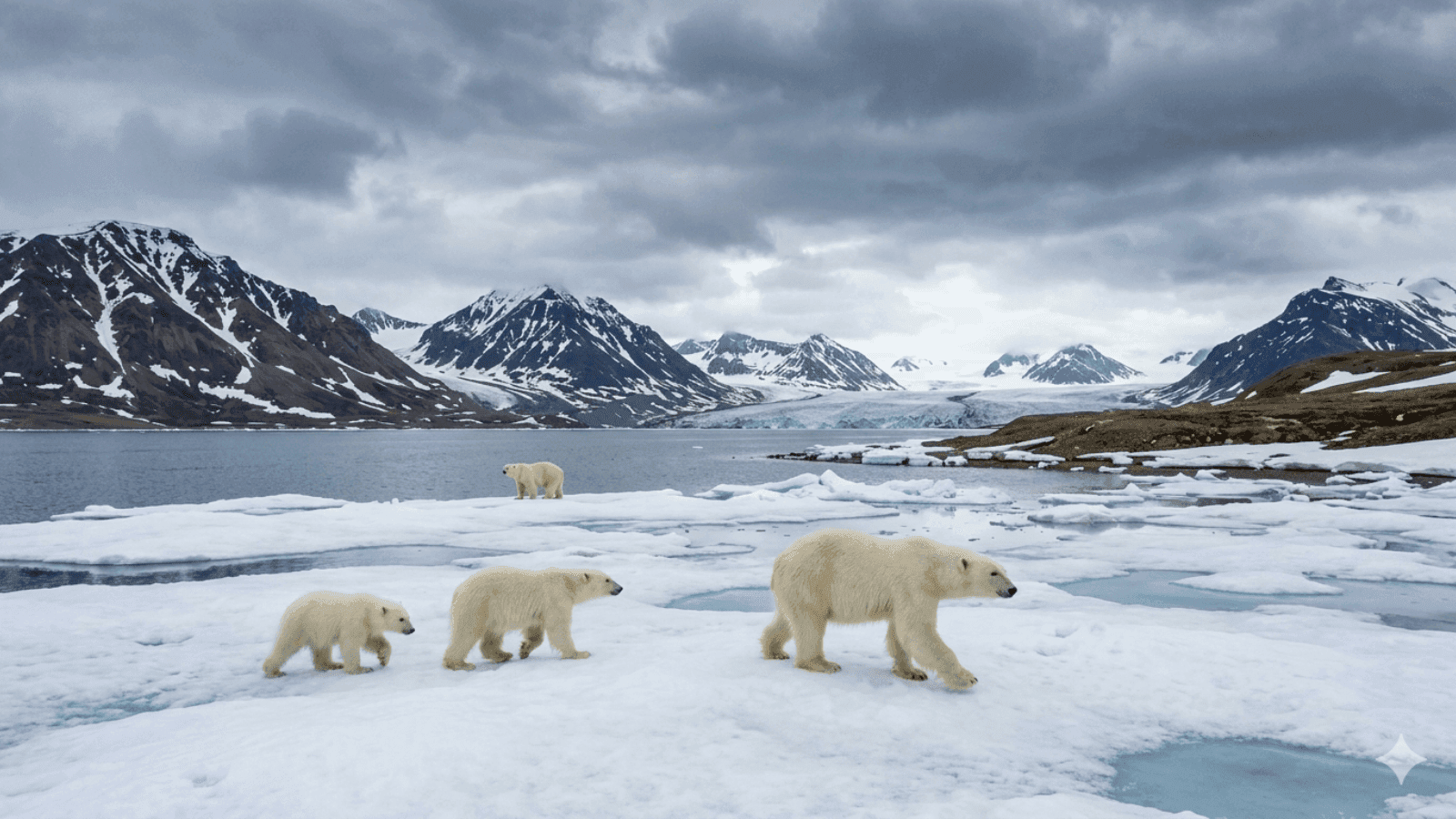
Svalbard: One of the Few Places Where Polar Bears Still Move Across Sea Ice
Sea ice still belongs to polar bears in Svalbard. This is one of the last inhabited regions on Earth where sea ice forms predictably enough for polar bears to use it as a hunting platform. They do not linger near towns. They move with the ice itself, following seals across frozen fjords and drifting floes. Sightings happen far from human noise, often on the quiet edges of islands where ice meets open water.
Polar Bears Hunt on Edgeøya Ice Floes
Edgeøya sits on the eastern side of the archipelago, exposed to the cold currents that preserve sea ice longer than elsewhere. The ice here breaks into slow-moving platforms, and polar bears use these floes to hunt ringed seals, their primary food source. From a distance, they look motionless, conserving energy until the right moment.
These bears are not wandering randomly. Their movement follows the rhythm of ice formation and retreat. When sea ice connects islands, bears cross between landmasses with ease. When it breaks apart, they remain on floating ice for weeks, drifting with currents while continuing to hunt.
Svalbard Sea Ice Holds Till May
Sea ice around eastern and northern Svalbard typically lasts through late spring, often until May. This extended season is critical because it allows polar bears to build the fat reserves they need to survive the summer months when hunting becomes harder.
By June, the ice recedes quickly. Bears move onto land or remain near the last fragments of floating ice. Their survival depends on how long that ice stays intact. In years when ice disappears early, bears must travel farther and expend more energy.

Guided Zodiac Trips Keep Safe Distance
Most visitors encounter polar bears from expedition vessels or small Zodiac boats. These inflatable boats allow guides to approach ice edges slowly and safely, without disturbing wildlife. The distance is always maintained. Polar bears are powerful predators, and safety protocols are strict.
Guides scan constantly using binoculars. A single white shape against blue ice can appear suddenly. Engines remain low and movement stays controlled. The goal is observation, never interaction.
Walrus Haul-Outs Near Bear Patrols
Walruses gather on beaches and ice edges across Svalbard, sometimes in large groups. These haul-outs attract polar bears, especially younger individuals testing their hunting instincts. Adult walruses are difficult prey, but bears patrol these areas regularly.
From a boat, visitors often see both species in the same region. Walruses lie in dense clusters, while polar bears move along the perimeter, watching carefully. The tension is quiet but constant.
How to Reach Longyearbyen from Oslo
- Direct flights from Oslo to Longyearbyen take about 3 hours on Scandinavian Airlines, with return fares starting around NOK 2500 depending on season
- Flights via Tromsø on Widerøe take about 4 hours total and can cost around NOK 2000
- Expedition cruises depart from Bergen during May and early summer, taking several days to reach Svalbard
- Airport buses connect Longyearbyen Airport to town in about 20 minutes, with tickets costing roughly NOK 100
- Longyearbyen itself feels small and exposed. Snow-covered mountains surround it on all sides. There are no roads connecting it to other settlements. Everything arrives by air or sea.
Packing for -20°C Zodiac Landings
- Insulated waterproof boots that allow stable footing on ice and wet surfaces
- Thermal base layers made of wool or synthetic materials that retain heat when damp
- Windproof outer shell jackets and pants designed for Arctic conditions
- Thick gloves, preferably layered, along with a separate inner liner
- Face protection including balaclava, scarf, or thermal mask
- Polarized sunglasses to reduce glare from snow and ice
- Temperatures shift quickly. Wind chill often makes conditions feel colder than the actual temperature. Even short Zodiac rides can expose hands and face to freezing air.
Mandatory Guide Rules for Land Trips
Leaving settlements without a certified guide is restricted in Svalbard. Polar bears move unpredictably, and encounters can happen anywhere beyond town limits. Guides carry rifles and flare guns strictly as protection, not for hunting.
Visitors must stay close to their group and follow instructions immediately. There are no fences, no warning signs, and no safe zones once outside the settlement perimeter. The land belongs entirely to the wildlife.
Seeing polar bears on sea ice calls for the right base, and Neomaxer lists stays that place you close to Svalbard’s Arctic routes and expedition departures.









