
Planning a Trip to Hola Mohalla in Anandpur Sahib this March
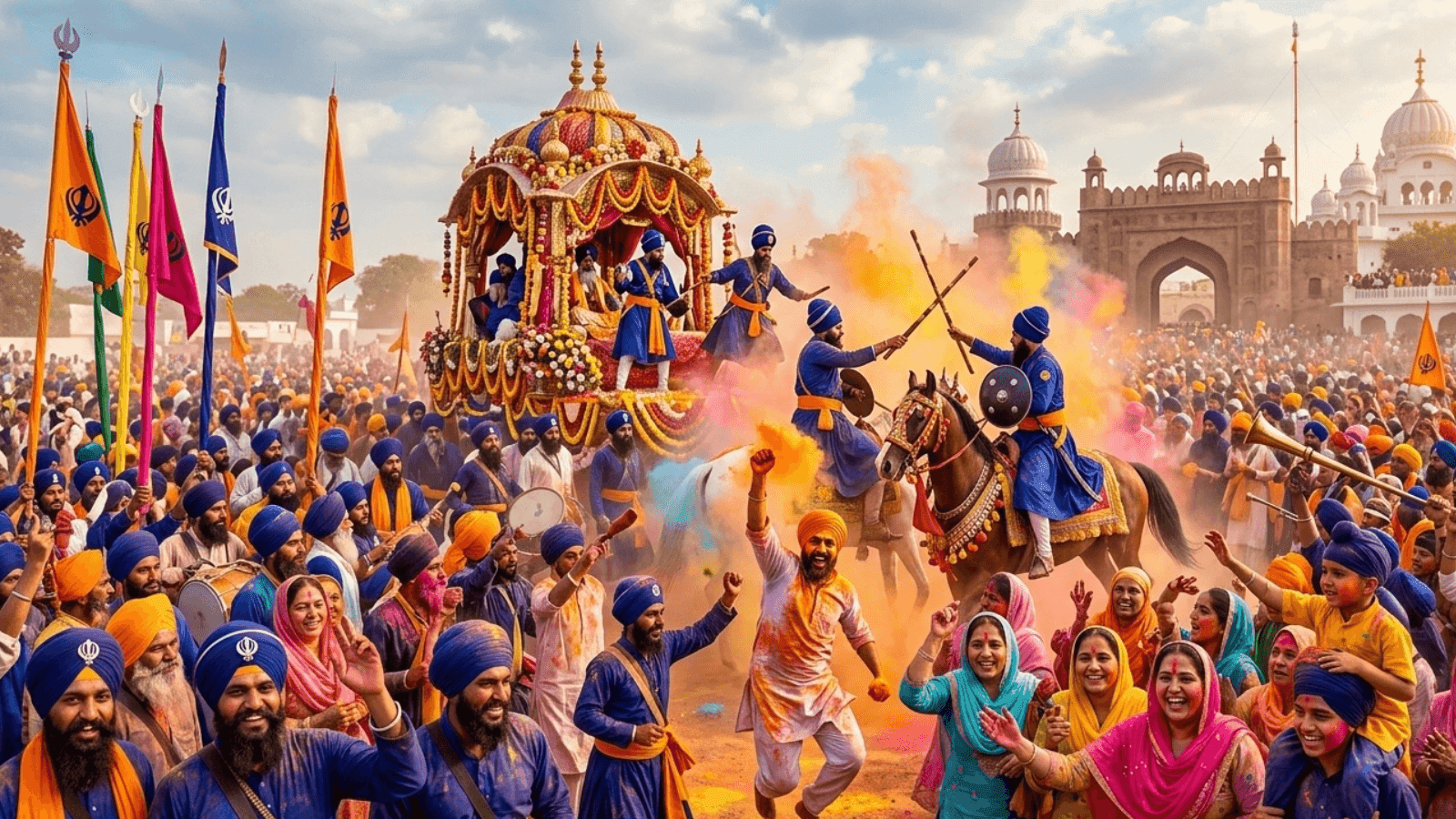
Every March, the quiet town of Anandpur Sahib turns into a roaring stage of Sikh martial tradition, drums, horses, and thousands of pilgrims and travelers moving through narrow streets. Hola Mohalla is not a quiet religious gathering. It is loud, athletic, and intensely visual, and that is exactly what draws travelers here.
Hola Mohalla Runs March 18–21, 2026 at Anandpur Sahib
Hola Mohalla begins a day after the Holi celebrations and continues for several days across Anandpur Sahib. The main activities gather around Takht Sri Kesgarh Sahib, one of the most sacred Sikh shrines, where martial demonstrations unfold throughout the day.
Nihang warriors dressed in deep blue robes and towering turbans lead much of the spectacle. They ride decorated horses through the grounds, perform sword fighting drills, and show traditional weapon techniques that date back centuries.
The town itself becomes a continuous movement of pilgrims, travelers, and volunteers serving langar. Huge community kitchens operate day and night, and anyone walking past can sit down for a meal.
Kesgarh Sahib Hosts Sword Fights Dawn to Dusk
The open grounds near Kesgarh Sahib become the center of the action. Early in the morning, groups of Nihang warriors gather for practice drills before crowds start filling the space.
By mid-morning the demonstrations begin. Sword fighting, mock cavalry charges, archery, and spear throwing all appear in sequence. The performances are not staged like a show. They are closer to training displays, which gives the entire event a raw and energetic atmosphere.
Visitors often stand only a few meters away as riders charge across the fields or arrows shoot across practice ranges.

How to Reach Anandpur Sahib from Chandigarh
Chandigarh is the easiest gateway for most travelers heading to Hola Mohalla. The distance is roughly 85 kilometers, and the road journey takes around two hours depending on traffic during festival days.
Many visitors arrive the evening before the main events begin. Roads get crowded quickly once the festival is underway, so early travel makes the trip smoother.
Those coming from Delhi often take overnight buses or trains toward Nangal or Rupnagar and then continue by road into Anandpur Sahib.
Transport Options Travelers Commonly Use
- PRTC bus from Chandigarh to Nangal, about 2 hours and roughly Rs 150
- Taxi via Kiratpur Sahib highway route, about 90 minutes and around Rs 2000
- HRTC overnight bus from Delhi reaching Nangal in around 7 hours, roughly Rs 500
- Rental motorbike from Rupnagar for the 45 km ride to Anandpur Sahib, about Rs 800 per day
- Local shared autos operating between Nangal and Anandpur Sahib during festival days
Martial Arts Displays
The lawns near the Virasat-e-Khalsa museum turn into one of the busiest viewing areas during Hola Mohalla. Many of the large gatka performances happen here because the open space allows riders and fighters more room to move.
Groups of Nihang warriors demonstrate complex combat techniques using swords, sticks, and shields. The rhythm of the performances often follows the beat of traditional drums, and the crowd forms a wide circle around the fighters.
Visitors who arrive around noon often catch some of the most dramatic moments, when sunlight lights up flying arrows, spinning weapons, and charging horses.
Ideal for Festival First-Timers
First-time visitors often expect a quiet cultural gathering and end up surprised by the scale of the crowds and the intensity of the martial demonstrations.
The town fills up early in the morning, and moving through the streets becomes slower by mid-day. Many travelers choose to stay in nearby towns like Nangal or Rupnagar and commute in for the main events.
Even with the crowds, the atmosphere remains welcoming. Volunteers continuously guide visitors, offer water, and direct people toward langar halls.
Small Tips That Make the Day Easier
- Solo travelers often secure tent or resting spots by 6 am near the rally grounds
- Families usually plan lunch stops at dhabas operating close to the festival routes
- Photographers prefer midday light when archery demonstrations happen
- Couples often stay until evening when kirtan echoes through the illuminated fort complex
- Carrying earplugs helps during late-night gatka drum rehearsals near the camps
- Comfortable walking shoes matter because most movement happens on foot across town.
Planning to stay close to the festival grounds so you can catch the morning cavalry rides and evening kirtan? Browse handpicked stays at Neomaxer.









