
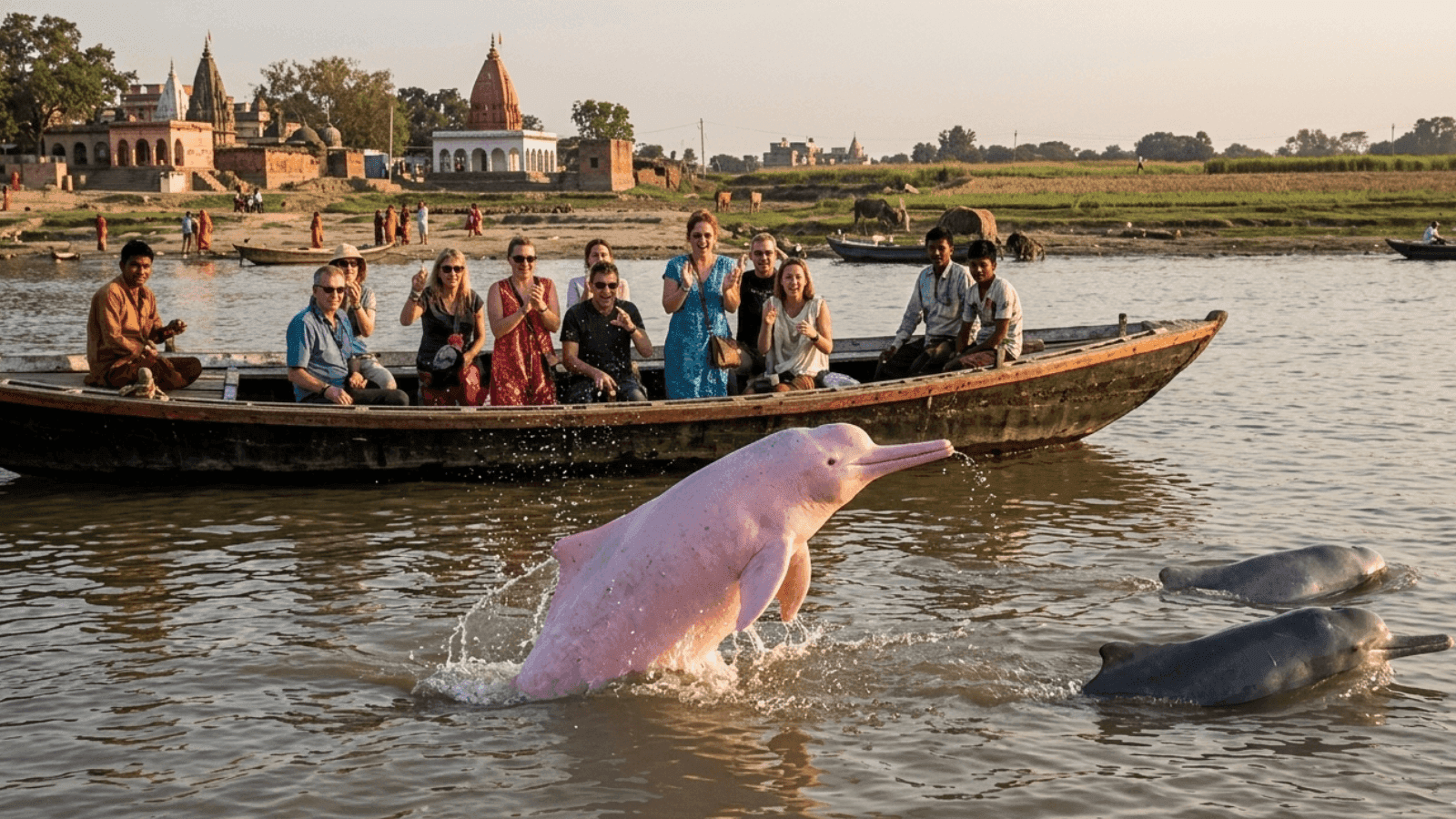
The Ganges Is One of the Few Rivers Where Pink Dolphins Still Appear
Pink dolphins swim in the Ganges, and that sentence still feels unreal. Yet near Bhagalpur, they surface almost every day in calm winter water. It is one of those rare wildlife moments that belongs to India and nowhere else.
Ganges River Dolphins Surface at Vikramshila
The most reliable sightings happen inside the Vikramshila Gangetic Dolphin Sanctuary in Bihar. This protected stretch runs about 50 kilometers along the river and holds one of the largest known populations of Gangetic dolphins in India. Mornings are best. The water is smoother, boats are fewer, and you can often see adults and calves surfacing in pairs.
Between October and March, dolphins are frequently seen leaping in the shallow channels near Bhagalpur. When the river level drops slightly after the monsoon, visibility improves and the animals come closer to the surface to hunt fish in the narrowing currents. Boatmen who have worked here for years can read subtle ripples and guide visitors toward likely surfacing points without chasing the animals.
How to Reach Dolphin Spotting Bases
Most travelers begin in Patna and move east toward Bhagalpur or Kahalgaon, which serve as entry points to the sanctuary.
- Shared jeep to Kahalgaon via NH80 takes around 4 hours and costs roughly Rs 300
- Train to Sahibganj, then a short boat ride, takes about 5 hours total and costs around Rs 200
- Private cab direct to Vikramshila takes close to 3 hours and costs about Rs 2500
- Taxi from Patna airport to the nearest jetty takes 3.5 hours and costs around Rs 3000

Who Signs Up for Ganges Dolphin Boat Trips
The boats here are simple wooden vessels with a local oarsman or small motor. The river decides the pace.
- Families book early morning rides when the water is calm and the light is soft
- Photographers bring 300mm or longer lenses hoping to capture a breach
- Birders scan the banks for fishing cats and river terns between dolphin sightings
- Solo travelers join small shared boats, sometimes even traditional coracles
Best Months to See Calves in Clear Water
October through March remains the most consistent window. Post monsoon sediment begins to settle, and the river widens into gentler channels where dolphins surface more visibly. Winter mornings carry mist, but by mid morning the haze lifts and the sun reflects off smoother water.
Calves are often spotted alongside adults in this period. They surface more frequently to breathe, making them easier to identify if you stay still and quiet. Boatmen avoid crowding and cut their engines when they sense movement nearby.
What to Pack and What to Leave Behind
Carry drinking water in reusable bottles and skip single use plastics entirely. The sanctuary authorities and local guides actively discourage plastic waste because it ends up back in the same waters where dolphins feed.
Wear muted colors. Bright clothing can reflect sharply on the water and disturb wildlife. A light jacket helps during winter mornings, and a simple cap reduces glare while scanning the surface.
Safety Tips on the River
Life jackets are not optional, even if the river looks calm. Currents shift quickly and sandbanks move without warning. Choose licensed local operators who know the sanctuary boundaries and follow wildlife guidelines.
Avoid leaning too far over the edge for photographs. Boats are narrow and sudden movement can tilt them. Keep equipment strapped and hands free when boarding or stepping off at muddy jetties.
The Reality of Seeing Pink in the Ganges
Gangetic dolphins are not bright flamingo pink like their Amazon relatives. Their color ranges from grey to a faint pinkish hue, especially when sunlight hits wet skin at a certain angle. That soft blush is what most visitors remember.
They surface for a breath that lasts barely a second. You hear the exhale before you see the arc of the body. Then the river closes again, carrying the ripple downstream, as if nothing surfaced at all.
If you want to sit on that quiet boat at sunrise and watch the Ganges come alive, Neomaxer helps you plan stays and routes that make it easy.









