
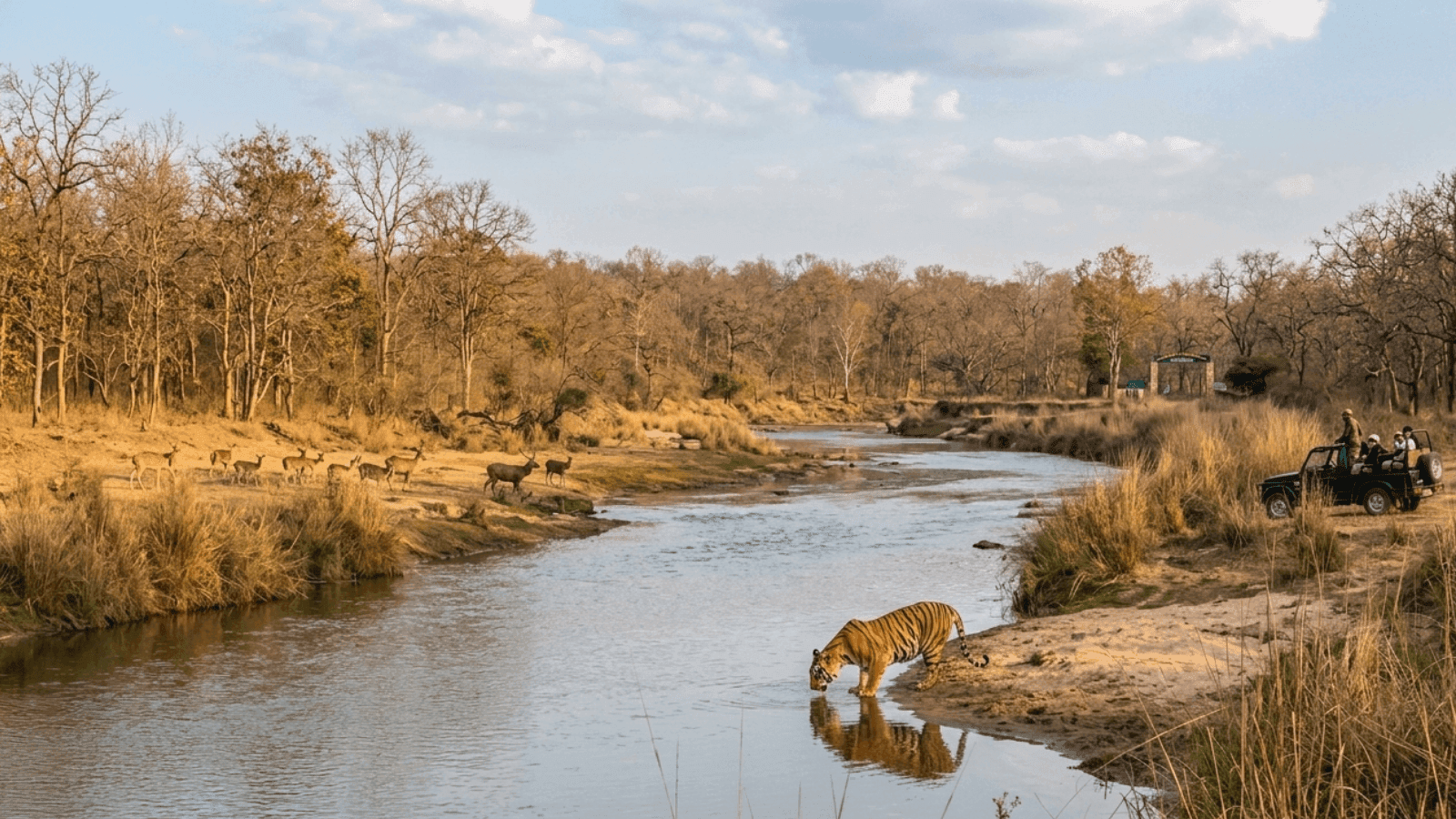
The Tiger Reserve Near Khajuraho That Remains Less Explored
Most people land in Khajuraho for the temples and don’t realize there’s a tiger reserve just 65 km away. The drive takes about 90 minutes, and suddenly you’re at a forest gate instead of a monument entrance. Jeeps line up, permits get checked, and the day begins inside Panna.
Panna Tiger Reserve Sits 65km from Khajuraho
The reserve lies about 65 km from Khajuraho, making it one of the easiest tiger habitats to access without committing to long travel days. Most visitors reach the Madla or Hinauta gates in around 90 minutes by road. The route passes small farming settlements, where tractors outnumber cars and the pace of life stays unhurried.
This proximity makes it possible to do a morning safari and still return to Khajuraho by afternoon. It changes how the experience feels. There is less pressure to chase sightings and more room to observe the forest itself.
The Reserve Rebuilt Its Tiger Population From Zero
In 2009, Panna lost every tiger to poaching. The forest went silent in a way that felt permanent.
The recovery effort that followed became one of India’s most closely watched conservation successes. Tigers were relocated from Bandhavgarh and Kanha, and careful monitoring helped them settle. Today, the reserve holds more than 50 tigers, and sightings have become part of regular safari routes rather than rare events.

Safari Zones Follow the Ken River and Plateau Edges
Panna’s landscape is defined by plateaus and deep gorges carved by the Ken River. The Madla zone runs along the riverbanks, where animals come to drink, especially in the dry months. These routes often reveal crocodiles resting on sandbars and herds of chital moving cautiously through open grass patches.
The Hinauta zone climbs higher into forested plateaus. The terrain here feels more rugged. Leopards prefer these elevations, and the forest canopy thickens enough to change the light entirely.
Core Zone Safaris Run Twice Daily
Morning safaris begin shortly after sunrise. The forest feels colder than expected, and the light filters through the trees in narrow beams. This is when tigers move most, returning from night patrols or approaching water sources.
Afternoon safaris reveal a different rhythm. The heat slows everything down. Animals emerge carefully, conserving energy. Sloth bears, nilgai, and wild boar become easier to spot during this time.
How to Reach Panna from Khajuraho Airport
Khajuraho Airport connects directly with cities like Delhi and Varanasi, and it serves as the closest air access point to the reserve. From the airport, taxis are available immediately outside the terminal.
The drive to the reserve takes around 1.5 hours. The roads remain mostly smooth, with the final stretch narrowing as the forest approaches.
Alternative Routes Via Satna Railway Station
Satna lies about 90 km from the reserve and offers broader train connectivity. Visitors arriving here can hire taxis or shared jeeps toward Madla gate.
The route from Satna takes roughly three hours, depending on road conditions. Early morning departures align well with afternoon safari slots.
Safari Bookings Open 60 Days in Advance
Online booking through the Madhya Pradesh Forest Department portal allows visitors to reserve specific zones and time slots. Weekends and winter months fill faster, especially Madla gate entries.
Booking early helps secure core zone access, which increases the chances of tiger sightings. Identity details must match the visitor carrying the booking confirmation.
Gypsy Packing List for Dry Season Safaris
- Neutral-colored clothing in cotton or linen
- Light jacket for early morning drives
- Binoculars for distant sightings
- Dust protection like scarves or masks
- Water bottles and sun protection
- Camera with zoom lens
Best Months to Visit Panna Tiger Reserve
- October to March for comfortable temperatures
- April and May for higher tiger visibility near water
- November for post-monsoon greenery
- February and March for active wildlife movement
- Avoid peak monsoon months when zones remain closed
Vehicle Limits
Each safari zone allows only a fixed number of vehicles per session. This restriction prevents overcrowding and protects animal movement patterns.
The result is noticeable. Long stretches of forest remain undisturbed, and encounters with wildlife feel unforced rather than staged.
If waking up close to tiger territory and river forests sounds like your kind of trip, finding the right stay makes all the difference. Neomaxer helps you book thoughtfully located stays near Panna.









