
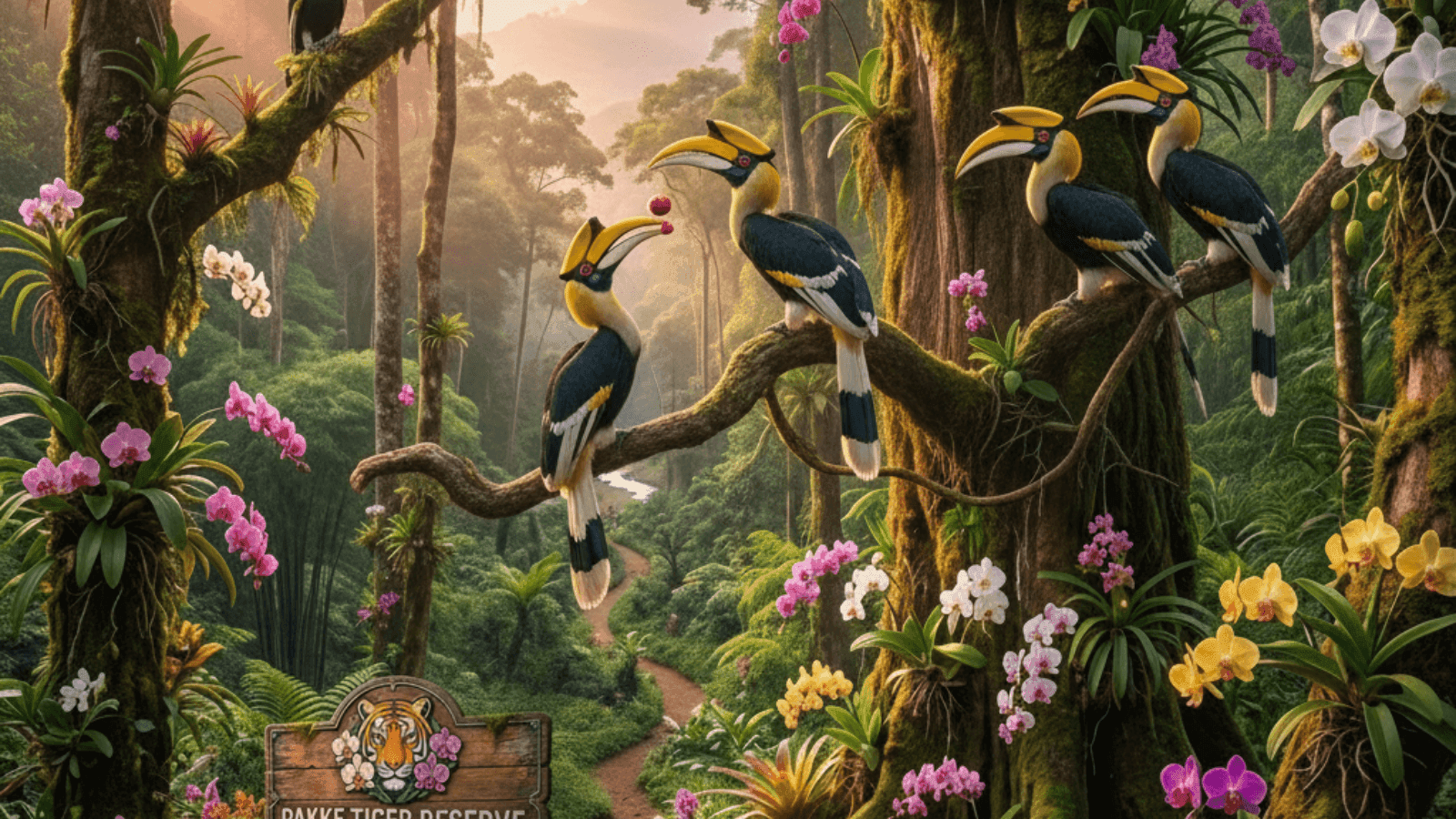
Pakke Tiger Reserve, A Rainforest Where Orchids Grow as Freely as Birds Fly
Pakke Tiger Reserve has a way of keeping the sky busy. Hornbills glide from tree to tree while orchids settle comfortably on trunks that have stood here for decades. Give the forest a little time and it begins to show off birds, bamboo thickets, and winding streams without any hurry.
Pakke’s Location in the Wild Forests of Arunachal Pradesh
Pakke Tiger Reserve sits in the foothills of the Eastern Himalayas in Arunachal Pradesh, near the border of Assam. Dense rainforest stretches across hills, bamboo groves, and rivers, forming one of the most biologically rich pockets of northeastern India.
The reserve is also known as Pakhui Tiger Reserve and covers more than 860 square kilometers. What sets it apart is its rainforest character. Moist forests support wild orchids, towering trees, and a bird population that feels almost tropical in diversity.
The Hornbill Capital of Arunachal
Pakke is widely known among birders because four species of hornbills live here. The forest has become one of the most reliable places in India to see these massive birds flying above the canopy. Researchers and conservation groups working with local Nyishi communities helped protect hornbill nesting trees here. As a result, sightings of species like the great hornbill and wreathed hornbill are now common during the early hours of the day.
Safari Timings, Entry Fees, and Permits
- Park gates generally open from 6:00 am to 5:00 pm for safari visits.
- Entry fee is around ₹40 for Indian visitors.
- A jeep safari costs about ₹1500 for a half-day ride inside the reserve.
- Morning safari slot runs 6:00 am to 9:00 am, when hornbills and other birds are most active.
- Evening safari slot runs 1:30 pm to 5:00 pm, when forest light reveals orchids and butterflies along trails.
- Access to the core area requires a permit from the forest office at least 48 hours in advance, usually free but subject to availability.

When the Forest Is at Its Best
November to March is the most comfortable season to explore Pakke. Winter dries the forest trails, making jeep routes accessible and wildlife easier to spot along riverbanks.
The monsoon from June to September transforms the rainforest but also closes many interior tracks. Heavy rain can swell streams and make parts of the reserve inaccessible for safaris.
February is also when the Nyokum festival takes place in nearby Nyishi villages. Camps and homestays fill quickly during that period as visitors come to experience the cultural celebrations alongside the forest.
Orchids Hidden in the Rainforest
Pakke is not only about big wildlife. Botanists have documented dozens of orchid species growing naturally in the forest.
These orchids often grow high on tree trunks or on mossy branches where moisture lingers. During the dry months, sunlight reaches deeper into the forest and makes many of these blooms easier to notice along trails.
Butterflies, frogs, and insects thrive in the same humid environment. Even a slow walk near streams can reveal tiny ecosystems unfolding under fallen leaves and bamboo roots.
Getting to Pakke Tiger Reserve
- Tezpur to Seijosa gate: Taxi takes about 2 hours and costs roughly ₹2500 for a round trip.
- Itanagar route: Bus journeys require a change at Potasali and take around 3 hours, costing about ₹300.
- From Nameri National Park: A cab ride of about 1 hour connects the two parks for around ₹1000.
- From Guwahati airport: Shared Sumo vehicles run toward Arunachal routes and reach Seijosa in roughly 5 hours for about ₹800.
Staying Near the Forest
Seijosa village acts as the main base for visitors entering Pakke. Forest rest houses and small eco-lodges operate here with basic but comfortable facilities. Meals often include rice, smoked meat, and bamboo shoot preparations that reflect local cooking traditions.
Some camps charge around ₹2000 per night depending on facilities and safari arrangements. Electricity and mobile connectivity can be limited, which is exactly why many travelers prefer staying here.
If rainforests, hornbill flights, and slow forest mornings sound like your kind of travel, the right stay makes all the difference. Find nature stays and quiet forest getaways through Neomaxer.









